Places to Watch Wildlife

BUENOS AIRES NATIONAL WILDLIFE REFUGE
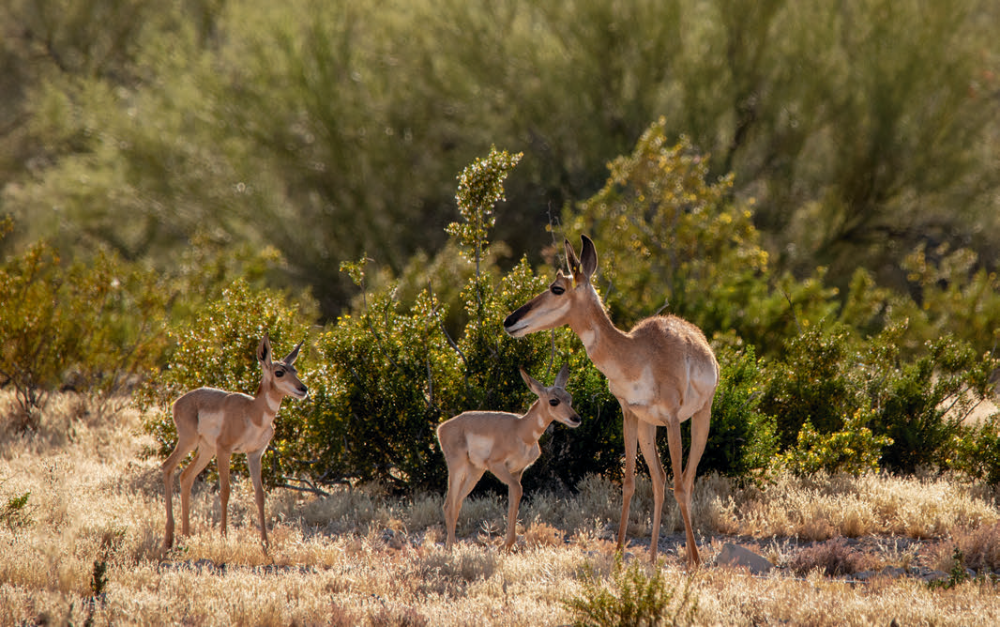
Photographer Jack Dykinga, a longtime Arizona Highways contributor, says the grasslands of Buenos Aires National Wildlife Refuge remind him of Africa’s Serengeti — but with mule deer instead of Thomson’s gazelles. The 117,464-acre sanctuary, located near Baboquivari Peak southwest of Tucson, offers many opportunities to see wildlife. More than 330 bird species have been documented at the site, and the refuge covers most of the U.S. range of the masked bobwhite quail, an endangered species. There are pronghorns, too. And Pronghorn Drive, a 10-mile loop that winds through the habitat of the fastest land mammal in North America. Buenos Aires also protects Brown Canyon, a pristine example of a “sky island” ecosystem.
Information: [email protected], fws.gov/refuge/buenos-aires
CHIRICAHUA NATIONAL MONUMENT
Coues deer, mule deer, black bears, mountain lions, ringtails, coatis, jackrabbits, spotted skunks, lesser long-nosed bats, gray foxes, badgers, porcupines, Botta’s pocket gophers, Chiricahua fox squirrels, bald and golden eagles, owls, hawks, Sonoran mountain kingsnakes … there’s a good chance of seeing some critters in the Chiricahua Mountains, the largest “sky island” in the Madrean Archipelago. In all, there are 70 species of mammals in the area, plus dozens of birds, reptiles, amphibians and invertebrates. A good place to start is the Echo Canyon Loop, which descends through natural stone tunnels into a lush riparian area that’s fed by a small creek.
Information: 520-824-3560, nps.gov/chir

IMPERIAL NATIONAL WILDLIFE REFUGE
Arizona is home to eight national wildlife refuges, but Imperial is unique, offering a dramatic mix of desert badlands and river oases. In the calm, blue backwaters of the Colorado River, native and migratory water birds forage; they include phainopeplas, Western tanagers, hummingbirds, black and Say’s phoebes, ash-throated flycatchers, cliff swallows, verdins, herons, Western grebes, killdeer and buffleheads. In the winter, as many as 200 migratory bird species pass through. In addition, the refuge protects mule deer, desert tortoises and bighorn sheep, which you might see drinking from the river. But you’ll need to set an alarm. They’re early risers.
Information: 928-783-3371, fws.gov/refuge/imperial
SIPE WHITE MOUNTAIN WILDLIFE AREA
The emerald-and-gold highlands of Eastern Arizona sustain many montane species, including the elusive Mexican wolf. Although there are dozens of wildlife areas in Arizona — and all are worth exploring — few have services like Sipe, which has a lovely visitors center along the greenbelt of Rudd Creek. Birds fly around the orchard, summer beavers dam the rippling stream, and amphibians chirp from the dewy wetlands. Hike up amid bushy piñon pines, where wild turkeys are known to roam, and enjoy a stunning view of Escudilla Mountain, which climbs to an altitude of 10,912 feet. Or hike across the high-elevation meadows — stretches of amber grass that conceal Montezuma quail and draw graceful herds of elk and pronghorns.
Information: 928-367-4281, azgfd.com/location/sipe-white-mountain-wildlife-area
SONOITA CREEK STATE NATURAL AREA
We’re fortunate to have so many state parks in Arizona, including Sonoita Creek. This verdant riparian corridor covers nearly 10,000 acres and includes a portion of its namesake, a perennial tributary of the Santa Cruz River. Created to protect the area’s natural resources, the site is home to 36 species of reptiles and amphibians, 106 identified species of birds, 49 species of damselflies and dragonflies, more than 130 butterfly species, five species of bats, and many mammal species. The natural area also protects the federally listed Gila topminnow and was designated as an Important Bird Area by the National Audubon Society. To help you see any of the above, there are 20 miles of trails in the natural area — some of which are open to equestrians.
Information: 520-287-2791, azstateparks.com/sonoita-creek
Already a member? Login ».