

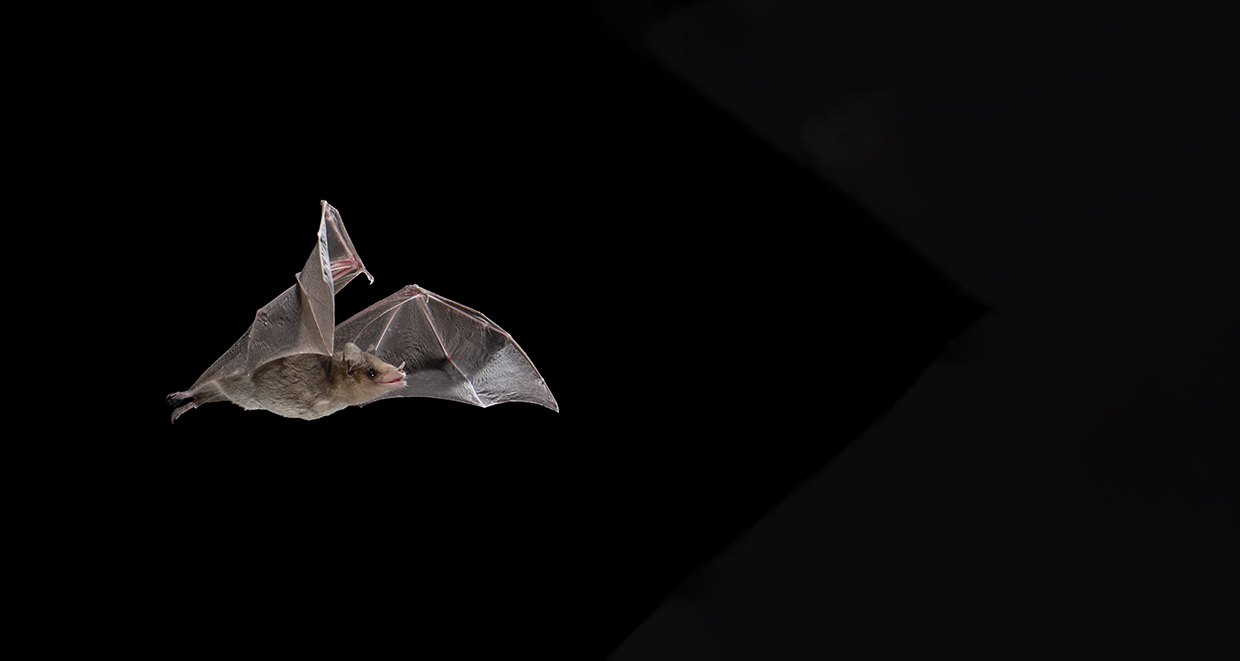
In the world of Arizona pollinators, there are the four “B’s”: the birds and the bees, and the butterflies and the bats.
Pollinating birds are beloved, whether for the shimmering iridescence of hummingbirds darting about a garden or a Bullock’s oriole calling from a blooming saguaro on a late-spring morning. Bees make honey, of course, and after undergoing their miraculous metamorphosis, butterflies, in colors from deep purple to dusty orange, emerge from chrysalises to flutter among the flowers. It’s all very pretty.
But bats are still dealing with a centuries-old PR problem, what with vampires and Dracula and all that fake news about “flying rodents.” The old myths die hard, yet die they slowly do, and bats are increasingly getting their props for the vital roles they play in ecosystems around Arizona.
Among U.S. states, Arizona, with 29 bat species, is second only to Texas. And last year, the state cut that deficit by one when the endangered Mexican long-nosed bat (Leptonycteris nivalis), a nectar-eating species, was officially confirmed in Southeastern Arizona.
In a program launched by Bat Conservation International, citizen scientists in Cochise County gathered environmental DNA, or eDNA, from hummingbird feeders; it then was analyzed at Northern Arizona University’s Bat Ecology and Genetics Lab.
Migrating from south-central Mexico in the summer to give birth to a single pup in northern Mexico and the American Southwest, Mexican long-nosed bats are one of three nectar-eating species in Arizona. But on both sides of the border, habitat loss and fragmentation, along with roost loss and disturbance, have caused their numbers to plummet by 50 percent in recent decades, according to BCI.
Saving bats means saving agaves, and a key part of BCI’s efforts to help the Mexican long-nosed bat is the organization’s ambitious Agave Restoration Initiative. The binational program aims to create a connected nectar corridor that runs for more than 700 miles, from the Southwestern U.S. deep into Mexico.
In Arizona, the Mexican long-nosed bat depends on two agave species: the Palmer’s and, to a far lesser degree, the Parry’s. Since the initiative began in 2018, about 185,000 agaves have been planted, but the effort, says bat conservationist and program director Dr. Kristen Lear, can’t be measured solely by how many of these succulents end up in the project area, which encompasses more than 150,000 square miles across 14 U.S. and Mexican states.
“In terms of landscape-scale initiatives, there are great ones out there, like the Yellowstone to Yukon Conservation Initiative,” she says. “But there really hasn’t been anything focused on migratory bats and restoring food resources all along a corridor. We’re having to tailor it to this system, to these bats, to this keystone plant species. There has been a lot of learning as we go.”
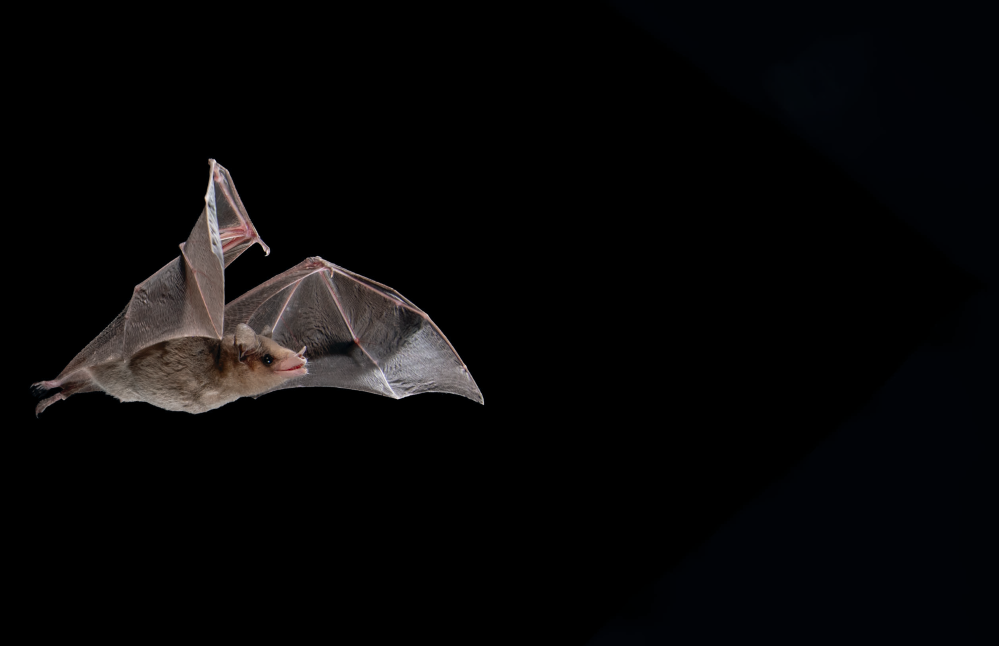
Bats sometimes receive grudging credit for being ugly-cute. The Mexican long-nosed bat, it can be argued, qualifies as cute-cute, presuming you don’t suffer from chiroptophobia — the irrational fear of bats.
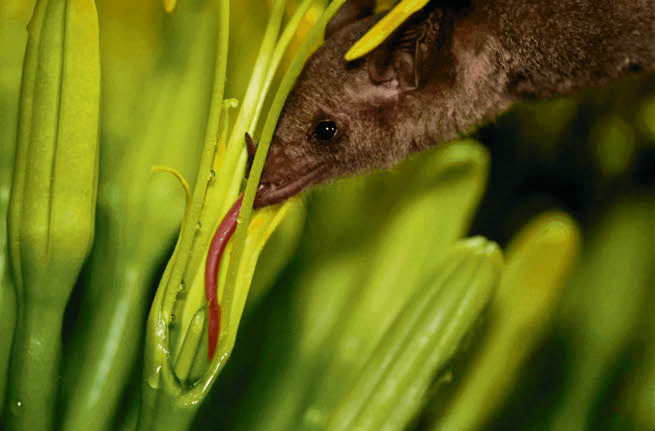
With a winsome expression, prominent ears and that little triangular nose leaf upturned at the tip of their snout, Mexican long-nosed bats are hardly the stuff of nightmares. They’re rather fluffy and have 3-inch tongues roughly as long as their bodies. (Imagine a gargoyle by Pixar.)
Mexican long-nosed bats are also tough little things. They can fly more than 60 miles round-trip in a single night from their roosts in abandoned mines and limestone caves. And with a range extending up to elevations of 7,500 feet, they thrive in lower temperatures that other nectar-eating species can’t tolerate.
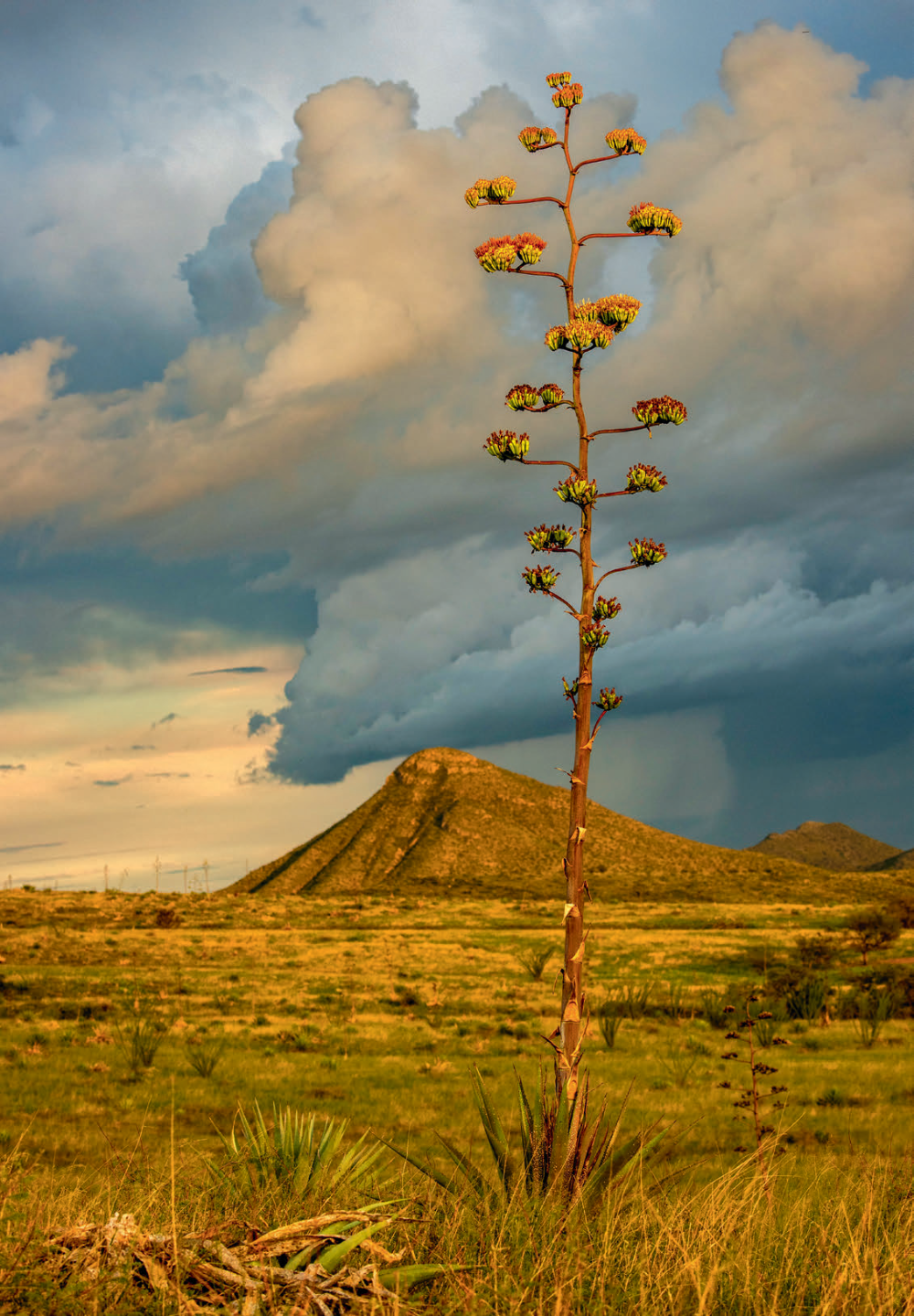
These bats pollinate an assortment of desert plants, including saguaro and organ pipe cactuses, but their fate in Arizona is most tied to the Palmer’s agave, the largest agave in the U.S. The bats and agaves have co-evolved a mutually beneficial relationship — what most of us would call a win-win.
As pregnant Mexican long-nosed bats migrate north into Arizona during late summer, the Palmer’s agave is the only available blooming plant for them to feed on. The agaves bloom at night; releasing nectar after dark, the plants make a natural food source for bats. Especially because the nectar is rich with simple, easily digested sugar.
The bats are particularly effective pollinators for these agaves. While hummingbirds hover and pick up small amounts of pollen as they feed, the bats fly more erratically, throwing themselves among the hundreds of blossoms arrayed on stalks up to 20 feet tall. In the process, their bodies become dusted with pollen. The bats also range farther than hummingbirds, visiting multiple agave patches across a wide area — thus promoting genetic diversity through cross-pollination.
“It’s one of those hidden relationships that people miss,” Lear says, “because bats are so mysterious — they’re unsung heroes. Bats aren’t out during the day. They’re not seen like the butterflies and hummingbirds doing this service.”
But the agaves’ role is critical, too. “Agaves really are a keystone species, and the bats are making sure through their pollination that we have healthy agave populations,” Lear says. “That means healthy soils, healthy lands, healthy wildlife.”
At the risk of oversimplifying: No bats, no agaves. No agaves, no bats. And, for what it’s worth, no bats, no tequila and mezcal. Nectar-eating bats, including the Mexican long-nosed, were historically the primary natural pollinators of the agaves used to produce these spirits.
To confirm the bats’ presence in Arizona, it took a village. Specifically, the unincorporated community of Portal.
Located at the entry to Cave Creek Canyon in the Chiricahua Mountains, Portal, population 300 or so, is a little bit of “sky island” nirvana. Its post office operates out of an old schoolhouse built in 1910. There’s a local seed library housed inside the Myrtle Kraft Library, the facility Portal shares with Rodeo, New Mexico — less than 10 miles away as the Chihuahuan raven flies.
And when it comes to birds, Portal draws visitors from around the world with the chance to add such rarities as Lucifer hummingbirds, plain-capped star-throat hummingbirds and elegant trogons to their life lists. These birds are among the nearly 400 species spotted around Portal, where the biodiversity rivals just about anywhere in the country.
“We’re up against the Coronado National Forest boundary and can sit on our patio and look up at the mountains,” says Portal resident John Roser. “With a spotting scope, I see prairie falcon aeries. There are coatis, and all four species of skunks, and bobcats and coyotes and bears and lions. Foxes every night, and raccoons and ringtails. They all come through here. It’s a fabulously beautiful place. And if you’re a field biologist, there are a lot of kindred souls here.”
Portal is a pollinator’s paradise. Lori and Mark Conrad have lived there full time for 11 years since moving from California. Birds were the original draw when the couple started visiting decades ago. Then, while birding in Mexico and South America, the Conrads also began to focus on butterflies. Now, Lori directs Portal’s count for the Southeast Arizona Butterfly Association.
“There are butterflies found around Portal that you can only see here and in Southeast Arizona,” she says. “We have a really beautiful butterfly called the red-bordered satyr, and it’s only around for four or five weeks in the fall. People come to see them, just like they come to see the elegant trogons.”
The Conrads and Roser enlisted in the brigade of citizen scientists that BCI assembled to take samples of eDNA to confirm the presence of Mexican long-nosed bats in Arizona. Other nectar-eating bat species, though, are hardly unknown in this part of Arizona — and can even be a bit of a nuisance. “If you don’t pull your hummingbird feeders at dusk, the bats will drain them in 20 or 30 minutes,” Roser says.
Participants filled hummingbird feeders nightly and cleaned them in the morning, taking samples every few days with a sterile polyester swab on a stick. Notoriously sloppy eaters, the bats left plenty of spit. The swabs were sealed in vials, then labeled with dates and locations before freezing and analysis at the NAU lab — poetically dubbed the “Species From Feces” facility.
Under the direction of research professor Faith Walker, the lab specializes in evaluating eDNA collected at sites such as wind farms and highway infrastructure projects to determine whether any rare or endangered animals might be present. Its projects have spanned the globe — as far afield as Rwanda and Indonesia — and time, too: Walker says she’s testing mummified bats from a Grand Canyon cave. “They’re maxing out at the age where you can carbon-date, which is about 48,000 years,” Walker says. “The bats look like they died last year, because the caves are so dry. A lot of them are still hanging.”
If not born to this role, Walker showed an early affinity for the raw material of her work. “When I was a little kid, I gave my mom a case of poop,” she says. “I spray-painted them gold and put little species labels on each one. It was clear I was going to become a biologist.”
Despite the lab’s nom de guano and its credo — “We strive to be number one at number two” — the focus isn’t all poop, all the time. Because DNA is everywhere. “We can even get DNA from the air,” Walker says. “That’s a very recent development where we’ve just figured out how rich the air is in DNA. Everything is shedding cells all the time.”
Environmental DNA testing was especially critical for identifying the Mexican long-nosed bat, which is notoriously difficult to distinguish from the lesser long-nosed bat, a close relative. Lear says the two species' sound signatures are so similar that acoustic testing methods can't distinguish between them. Until eDNA testing, the most reliable method was to measure a bat's third finger — the Mexican long-nosed bat's is about 5 millimeters longer — but capturing animals to record that measurement is time-consuming, invasive and potentially traumatic for the bats.
Portal’s gardens, with their blooming agaves and hummingbird feeders, are to pollinators what watering holes on the savanna are to African wildlife: Everybody stops by. Moser describes a daytime scene busy with orioles, hummingbirds, wasps and bees. At night, swarms of nectar-eating bats flutter about while insectivorous bats descend to gorge on moths.
Thus, there's no shortage of genetic material on the feeders. Walker says the lab created an assay designed to identify Mexican long-nosed bats. “It took us months to develop the assay, but once it's made, you can screen samples really quickly,” she says. “We got results within days of receiving samples. It was very exciting. People thought the Mexican long-nosed bat was maybe in the Chiricahuas. But there was no proof. Now, it's a new bat species for Arizona. This is a big deal.”
It was certainly a big deal for Lear. The Cincinnati native has loved bats since she was a girl and remembers taking night hikes as a Girl Scout and seeing “these little creatures flitting around.” She wanted to learn more — and, in that pre-internet era, went to the library to find books about bats. She then built four bat houses for her Girl Scouts Silver Award project when she was 12.
Lear went on to study bats as an undergraduate and focused on Mexican long-nosed bats in northeastern Mexico for her Ph.D. “I worked with rural ejido communities to understand their relationship with agaves,” she says, “and how we could establish agave restoration in a way that supports both bats and people.”
Agaves have struggled with the effects of drought, wildfire and unsustainable grazing practices. Cattle can trample young plants and feed on baby agaves, and especially during times of drought, livestock also eat the plant's sugarcane-like stalk as it emerges, preventing the agave from flowering and reproducing through seeds.
The project area encompasses more than 100 partners, Lear says, including federal and state agencies, in both the U.S. and Mexico, and area ranchers. “We're looking at how we can integrate agave conservation, on working rangelands, that supports the regeneration of the soil and healthy forage for cattle, as well as to help the bats,” she says. “The landowners can come at this from their own angle. They don't have to be bat enthusiasts.”
But establishing a nectar corridor doesn't just span huge distances; it's also a decades-long effort. Raised from more than 1 million seeds gathered locally, the agaves aren't planted in the wild until they're 3 years old, then might require 10 to 20 years before flowering.
In time, the initiative aims to improve erosion control, enhance native vegetation and restore habitat where these succulents do best. It's a story of connections — not only between Mexican long-nosed bats and agaves, but also between the two nations along the nectar corridor.
“Coming together and bringing partners together across that binational corridor is so important,” Lear says. “With a migratory species like these bats, you can't work in isolation from each other, then cross your fingers that what you're doing is somehow going to save the species.”
To learn more about Bat Conservation International and its Agave Restoration Initiative, visit batcon.org.