MY GRANDFATHER NEVER GOT TO MEET SANTA CLAUS. Not once. He was always down in the basement, putting wood in the furnace. Or outside, shoveling snow. Or in the kitchen, making Grasshoppers. I never knew where he was. But he wasn't ever in the family room when Santa dropped in on Christmas Eve. That always made me sad. I remember wanting those two to meet, because they looked so much alike. Same round belly. Same twinkling eyes. My grandfather didn't have a white beard. Otherwise, they could have been twins.
As a boy, there was nothing better than Christmas Eve. The big day always began in the forest, where my brothers and I would cut firewood with our father. We'd work for hours in the deep snow, our soaking-wet gloves turning to ice. It was cold. And tiring. Reading those words, I suppose, makes it sound miserable. And it was. But it wasn't.
“Nothing will work unless you do,” Maya Angelou said. And so we did. And then the magic happened. It was a bacchanalia of tinsel and garland and candy canes and jingle bells and flooflovers and tartookas and Dasher and Dancer and Prancer and Vixen. And Christmas presents. In the German tradition, we opened most of our gifts on Christmas Eve. First at home, then on the farm with my paternal grandparents, and then across town at the home of my mother's parents.
Like the whirling and dancing in Fezziwig's warehouse, the energy across town was high-spirited, and the happiness it gave was “quite as great as if it cost a fortune.” Santa never missed the party. I'd tell my friends about his visits. They were dubious. Or envious. Maybe more of the latter. Everyone wanted to see Santa Claus. That's why John McPhee did what he did.
Mr. McPhee was our fourth editor. Not the master wordsmith who won a Pulitzer Prize and wrote more than a hundred pieces for The New Yorker, but the well-intentioned civic leader who came to be known as “the man who killed Santa Claus.” That distinction is rooted in the Christmas season of 1932, before he took the helm at Arizona Highways. With the effects of the Great Depression still distressing most families, shopkeepers in Mesa, the small town where he lived, were looking for something to lighten the mood during the holidays. Mr. McPhee, the 26-year-old editor of the Mesa Journal-Tribune, had a suggestion.
“I dreamed up the bright idea of having Santa Claus jump from an airplane at the edge of town and lead a parade,” he said. “I'd arranged with a barnstormer to jump, land in a field and suddenly appear in a car, leading the parade. The town was filling with the largest crowd in its history when I learned my daredevil was so full of Christmas cheer that he couldn't jump.”
Or walk across the floor.
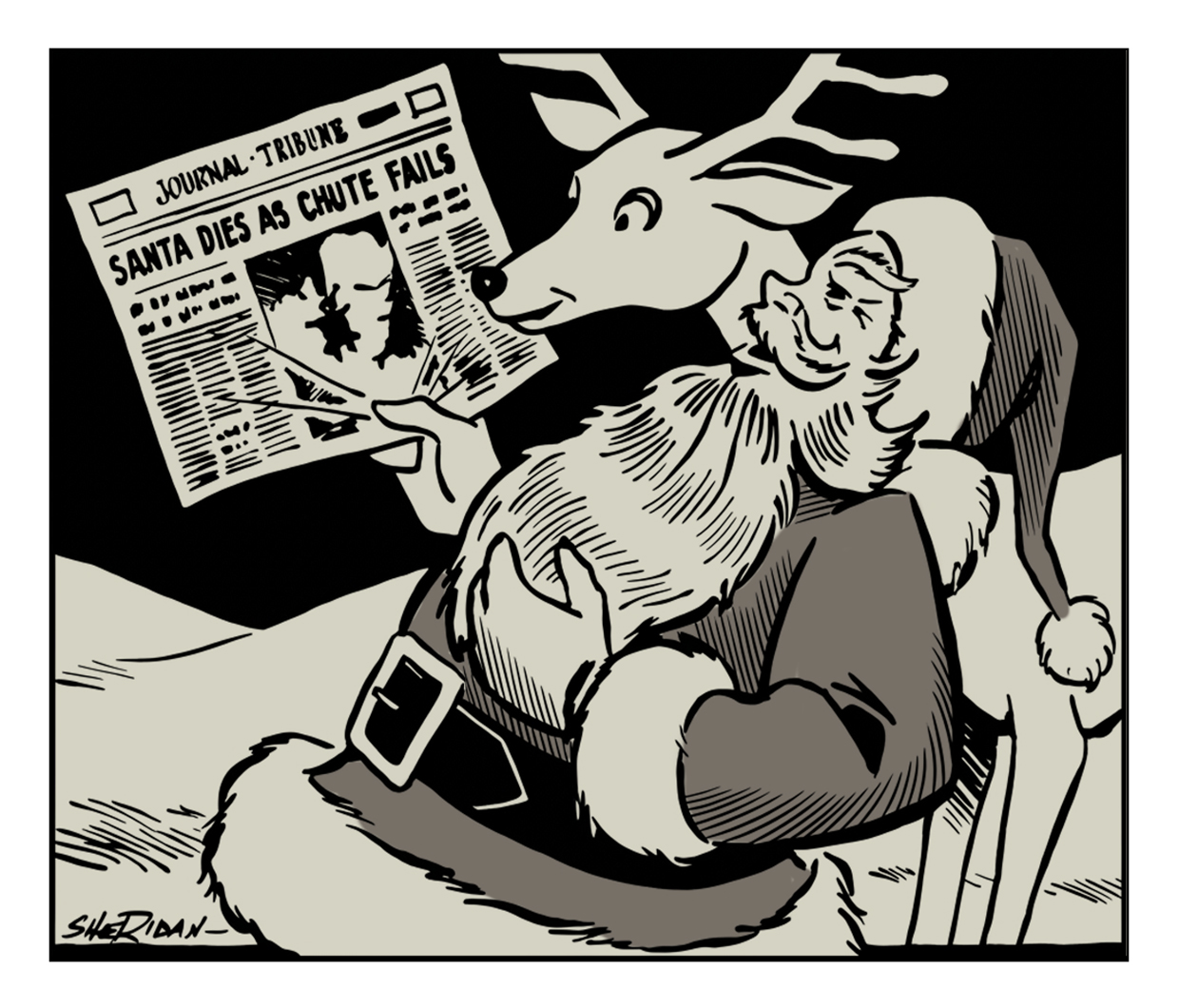
“I rushed to a clothing store,” our editor said, “grabbed a window dummy, dressed it in a Santa suit and sped to the airport. My new scheme was to have the pilot toss ‘Santa’ out of the plane with his parachute billowing in the wind. Then I'd make the switch from the dummy to a live Santa in the field. The plane circled town three times. Kids were hanging from building tops and telephone poles. At the prearranged spot the pilot hurled ‘Santa’ from the plane.”
This should work, Mr. McPhee thought. But as soon as Santa “jumped,” the conspirator started to panic. For some reason, the parachute wasn't opening. And wasn't opening. And wasn't opening. The crowd, which had been cheering loudly at first, was suddenly quiet and gripped with fear. Then, just like that, “Santa Claus” crashed into a lettuce field on the northeast corner of Dobson Road and Main Street. A group of nearby farm workers tore through the fence and fled in terror.
“Children cried, mothers screamed and the town was in an uproar,” Mr. McPhee said. “From behind closed doors you could hear the wails of heartbroken children.”
Ho, ho, holy moly.
Not everyone who reads this magazine believes in Santa Claus or celebrates Christmas, but everyone can embrace the spirit of Christmas. That feeling of lightheartedness, love and good cheer. Of peace on Earth, human righteousness and decency.
“It is not how much we do, but how much love we put in the doing,” Mother Teresa said. “It is not how much we give, but how much love we put in the giving.”
That's a sentiment that's echoed throughout the holiday season, but it's not limited to December. It's just as important the rest of the year. Perhaps you'll keep it in mind when you're making your resolutions. Meantime, whether you celebrate Christmas, Hanukkah, or just some time alone with your family and friends, happy holidays. And to my dear friend and longtime subscriber Helen Henderson Roe, who turned 100 on November 9, happy birthday. I hope your special day in New York was as wonderful as you are.