
When snow began to sift from heavy gray clouds on December 12, Mary Lou Morrow didn’t give it much thought. By the time she realized it was something more, it was already too late.
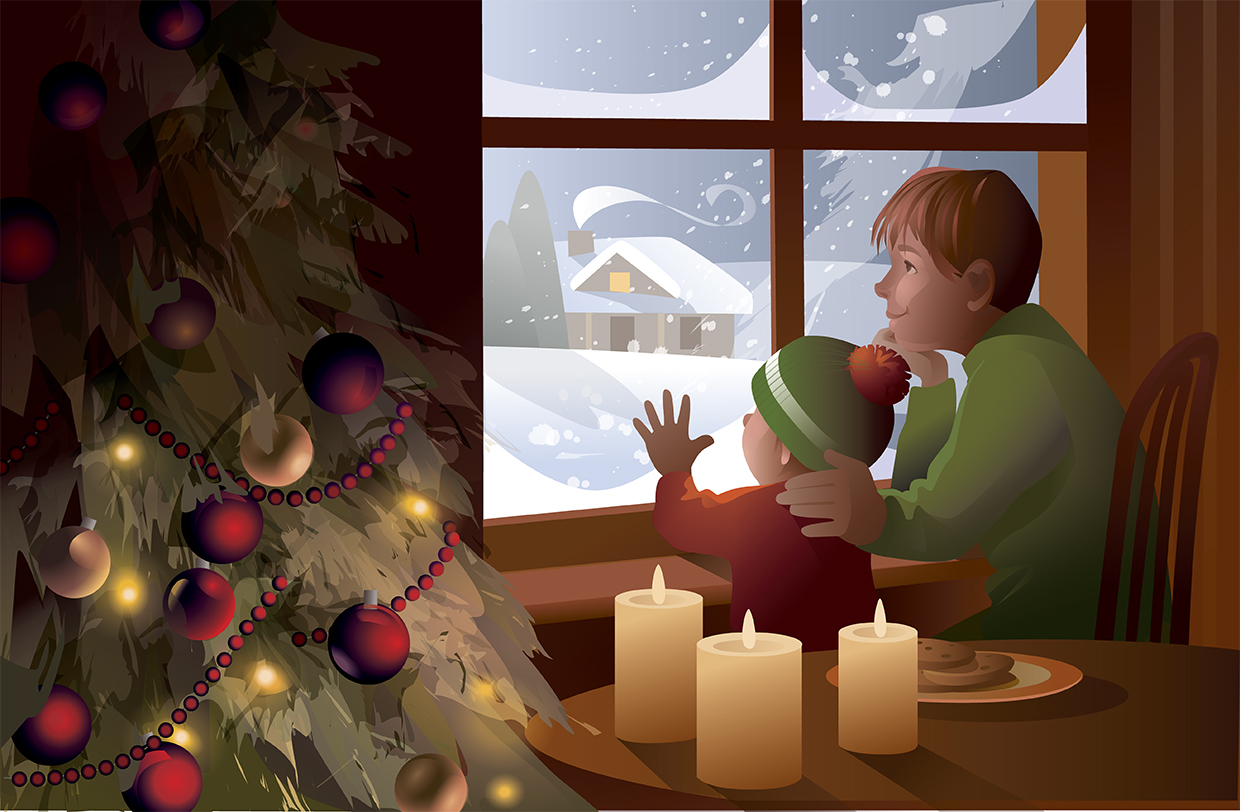
“I was watching a few snowflakes fall and decided I better go to the grocery store,” Morrow recalls. With her husband out of town, she bundled her three kids into their winter clothes and herded them to the car, which was parked in front of their house. Just as she was ready to pull out, a snowplow came by and plowed them in.
“I got the kids all back in the house, and we watched it snow,” she says. “It got heavier and heavier and deeper and deeper, and the car was totally covered.”
Eventually, there was so much snow that they could see just a thin strip of sky from their living room window. Unfortunately, Morrow had hidden the children’s Christmas gifts inside the car, and it was well past Christmas by the time they saw the car again.
“It was a great hiding place!” she says now, laughing.
By the time it stopped snowing, on December 20, 1967, the snowfall officially added up to a record 86 inches. Then a record cold temperature of -6 kept it from melting. The storm — or, more accurately, two back-to-back storms — closed highways, stopped trains and collapsed roofs. In one case, an entire house collapsed from the weight of the snow. And it created dire conditions in parts of Northern Arizona.
But for many of Flagstaff’s kids, the city became a winter wonderland.
“I’m sure all the adults were worried,” says Morrow’s daughter, Tami Brinson. “But we thought it was great. We got an extra week off of school, and I remember they built a kind of sled run in our backyard, and we had caves all over the front yard. We would just play out there for so long we would get soaking wet, and once we came in and put stuff in the dryer, we couldn’t go out anymore until the next day. It was too much of a production.”
Even better, Brinson and her siblings got to celebrate two Christmases. Santa somehow made it to their house on Christmas Eve. Then there were more gifts from family members once the snow finally released the car.
“We were so excited when we could see the aerial sticking up out of the snow,” Brinson recalls. “It took forever.”
Santa also made it to Richard McGaugh’s house, despite his father’s doubts that Santa would get through.
“I was thinking, Well, gosh, he lives at the North Pole and he’s got reindeer and his sleigh,” McGaugh recalls. “How is a little bit of snow gonna stop Santa?”
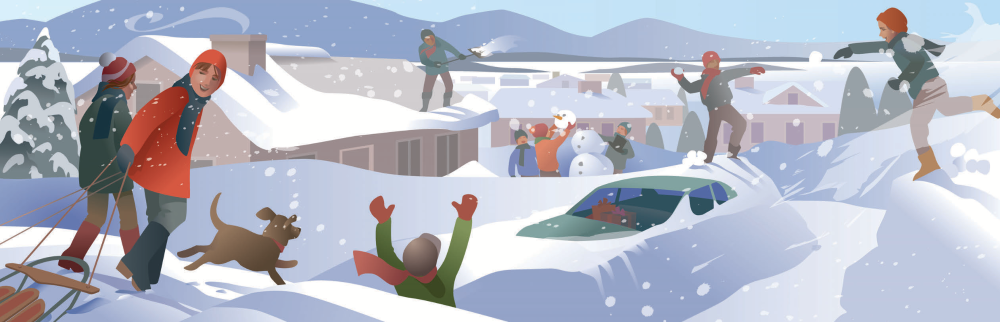
Meanwhile, he enjoyed the extended break from school. “When the tractors came out, they made all these huge snow piles,” he recalls. “Each of us had a fort on top of this big, huge snow pile. We would build balls of snow and carry them up and kind of hang out throwing snowballs at each other.”
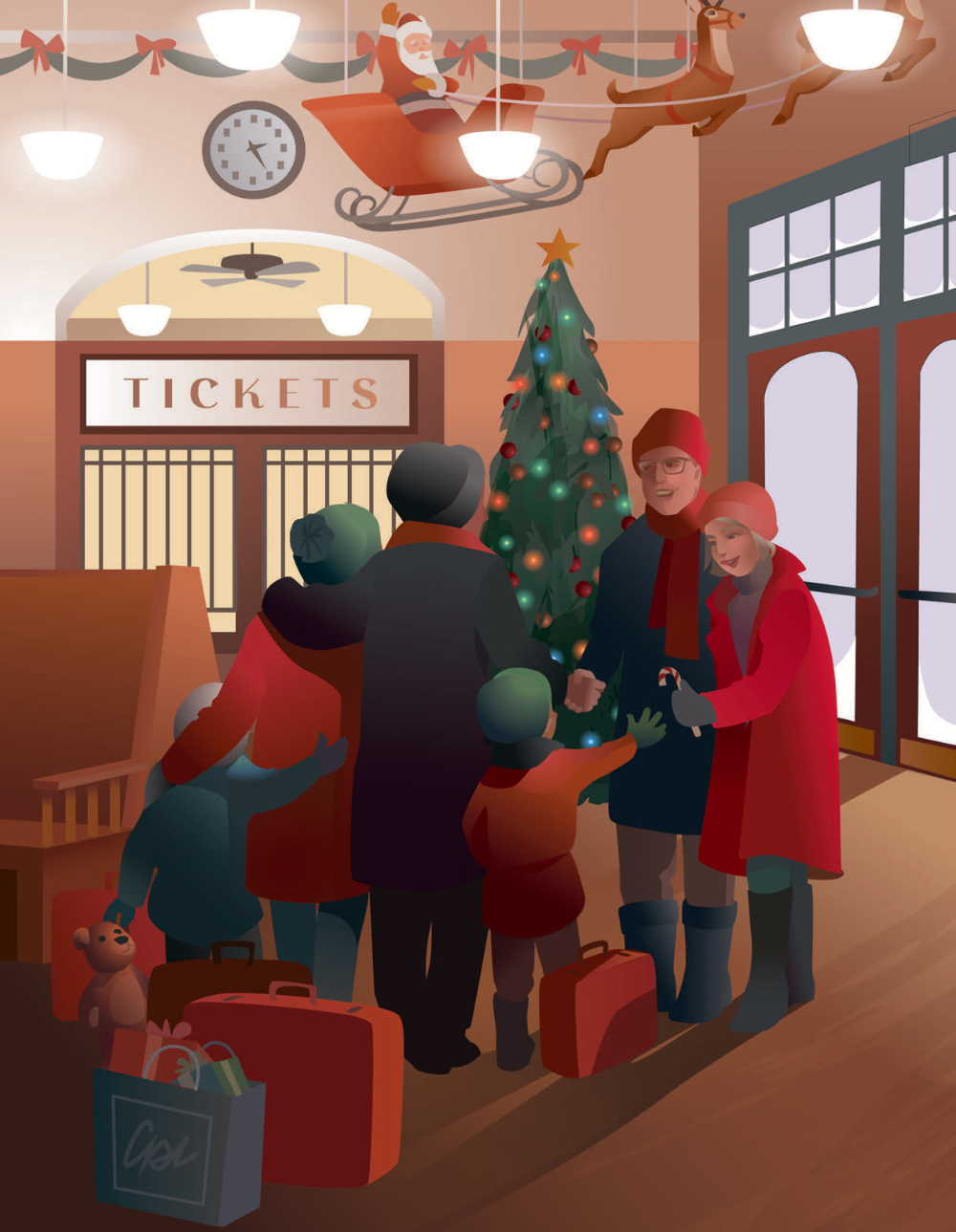
Robert Wren, who was 8, remembers Flagstaff was always fun at Christmas. “They would decorate it up downtown,” he says. “And the train depot had a Santa and his eight tiny reindeer.”
He remembers feeling disappointed that the storm meant that The Wallace and Ladmo Show wouldn't make it to Flagstaff for a planned show and that he'd have to miss the class Christmas party. He always had a gift for his teacher, so he walked to her house to deliver it. But for the most part, he says, “It was really cool.”
“I remember my dad shoveling snow off the roof, like so many did,” he says. “And the snow was so high he could walk right off the roof onto the snowbank to get down.”
One day, Wren decided to check on his dad and maybe help him out: “I remember my dad had some boards and a stepladder to get up on the roof. And I got up to about the point where I could get up on the roof. And I thought, Man, this is really slippery. I think I'm just gonna get down. I jumped into the bank of snow, and I couldn't get out. My feet were stuck in the snow, and the snow was piling in around my legs inside my snow boots and starting to melt.”
He began calling for help. His mom came out but couldn't pull him out. So, she called for his dad. “He thought something was tragically wrong,” Wren recalls. “So, he jumps off the roof into a pile of snow ... comes over and pulls me out, but basically pulls me out of my boots. The boots were still stuck in the snow.”
Wren's dad had already put up Christmas lights on the eaves of the house and around the bushes, and they glowed underneath the snow. “I remember digging tunnels in the snowdrifts,” Wren says. “And that was a fun thing for a kid, building these tunnels.” A Christmas light even melted enough snow in one tunnel to illuminate the space.
“I don't think we ever quite sensed the gravity of the situation,” Wren says. “I didn't realize until later that the grocery shelves were empty. People couldn't shop. People couldn't get in or out of town. But I remember roofs collapsing. We'd drive around town, and we'd see the end result of it. I remember a major drugstore in a shopping center, their roof collapsed under the weight of the snow, because it was not only a deep snow, but a wet, heavy snow.”
He also recalls trucks piling snow in the center of the road: “Sometimes you'd have these busy side streets where you'd have one lane you could drive down. ... Later, they came along with their huge truck-driven snowblower, and it would blow snow that had been piled in the center of the roads into dump trucks.
“One of the main dumping spots was right across from my elementary school,” he says. “As the spring came and the snow melted, there ended up being a huge pile of cinders in this field, because that’s what they used to give cars traction in the snow.”
He also recalls seeing military jets fly overhead on their way to drop food for people and livestock on the Navajo Nation and in other remote areas.
Dorothy and Tom Pollock were among the recipients of those drops. The couple were living at their ranch, about 45 miles southeast of Flagstaff. Because they had recently sold the ranch and were planning to move, they hadn’t stocked up on essentials.
Their daughter, Ann, was attending Northern Arizona University and remained in the dormitory because she couldn’t get to the ranch. Two of her friends coordinated a rescue operation. With a commercial-size snowplow, followed by two pickup trucks with blades, they cleared the road to the ranch enough to allow diesel and propane deliveries on Christmas Eve.
Her mother later summed up the experience by saying, “Governor Williams air-dropped hay to the cattle and beanie weenies and sardines to us at the headquarters, but no whiskey or cigarettes!”
Meanwhile, in Donney Park, about 15 miles east of Flagstaff, Martha Shidler found herself stuck on the 5 acres she’d recently purchased. On her own for the first time in her life, she’d bought and had been living in an old mobile home without electricity or plumbing. Before the storm, she’d been using a Coleman lantern for light, buying ice to keep her food cold and hauling water in 5-gallon jugs. With no road in, she needed four-wheel-drive to get to the mobile home even in good weather.
Shidler was preparing for a trip to Southern California to spend Christmas with her parents when the snow began to fall. At first, she felt happy to be warm and safe with her dog and two cats. The snow just added to the beauty of the landscape. But as the snow kept falling, she realized her car wouldn’t make it out.
Her only option was to walk the half-mile to the highway through the 4 feet of snow that had fallen at that point. Once she got to the highway, she saw it had been plowed, but there were no cars. So, she walked another mile and a half to a friend’s house. He wasn’t home, but the door was unlocked. So, she took three eggs and a box of oatmeal and left a note explaining her situation.
Her friend appeared at her door the next morning, saying, “You have to get out of here.”
Having already packed for her trip, Shidler grabbed one suitcase and a cat, while her friend took the other suitcase and the other cat. With the dog scrambling along behind them, they trudged to the highway, where her friend had parked his car. After boarding her pets, she stayed in a hotel, walking every day to the train station to see if the trains were running, climbing over the 10-foot mountain of snow piled up in the center of the road to get there and back.
Eventually, one lane of one highway was cleared, and one Greyhound bus was allowed to leave. Shidler bought a ticket to Phoenix, where she was able to buy a ticket to Pasadena. Her parents picked her up at the station on Christmas Eve.
“I arrived, but my suitcases didn’t,” she says. “My Christmas presents and clothes were now somewhere between Phoenix and Pasadena, and I was still wearing snow boots and a parka when my parents picked me up in sunny Southern California. We celebrated Christmas two days late — after I rushed out to buy a few replacement gifts and some more appropriate clothes.”
She wasn’t able to return home for weeks, and even then her car remained buried.
Other stories of kindness filled the pages of the newspapers. Two deputy sheriffs transported a woman in labor to the hospital on a snowcat. The Arizona Daily Sun reported that nameless citizens “battled the storm to bring in consumer goods, deliver parcel post, shop under hazardous conditions and generally keep the Christmas spirit alive.”
And Flagstaff residents Layton and Louise Beamer took in a distantly related young couple from Iowa and their two small children who were stranded at the train station on their way to Phoenix for Christmas. The Beamers cared for the family until someone from Phoenix could arrive to collect them.
“As we left, I hugged Louise and spoke from the heart,” wrote Karen Brotherson 50 years later in the Deseret News. “ ‘How can I ever repay you?’ Louise replied, ‘You can’t. But you can pass it along.’ ”
On their way back to Iowa, they did just that, helping a pregnant woman who was alone, destitute and in labor. That woman’s son told the newspaper it was a story his mother told all her life.
As Shidler said, “Not many of us who were alive during those days in December will ever forget how we spent Christmas in 1967.”