

WE AMERICANS ARE, at heart, a romantic people. Give us a choice and we’ll take the mysterious over the mundane, the poetic over the pragmatic. And why not? Life is more interesting in the realm of the right brain.
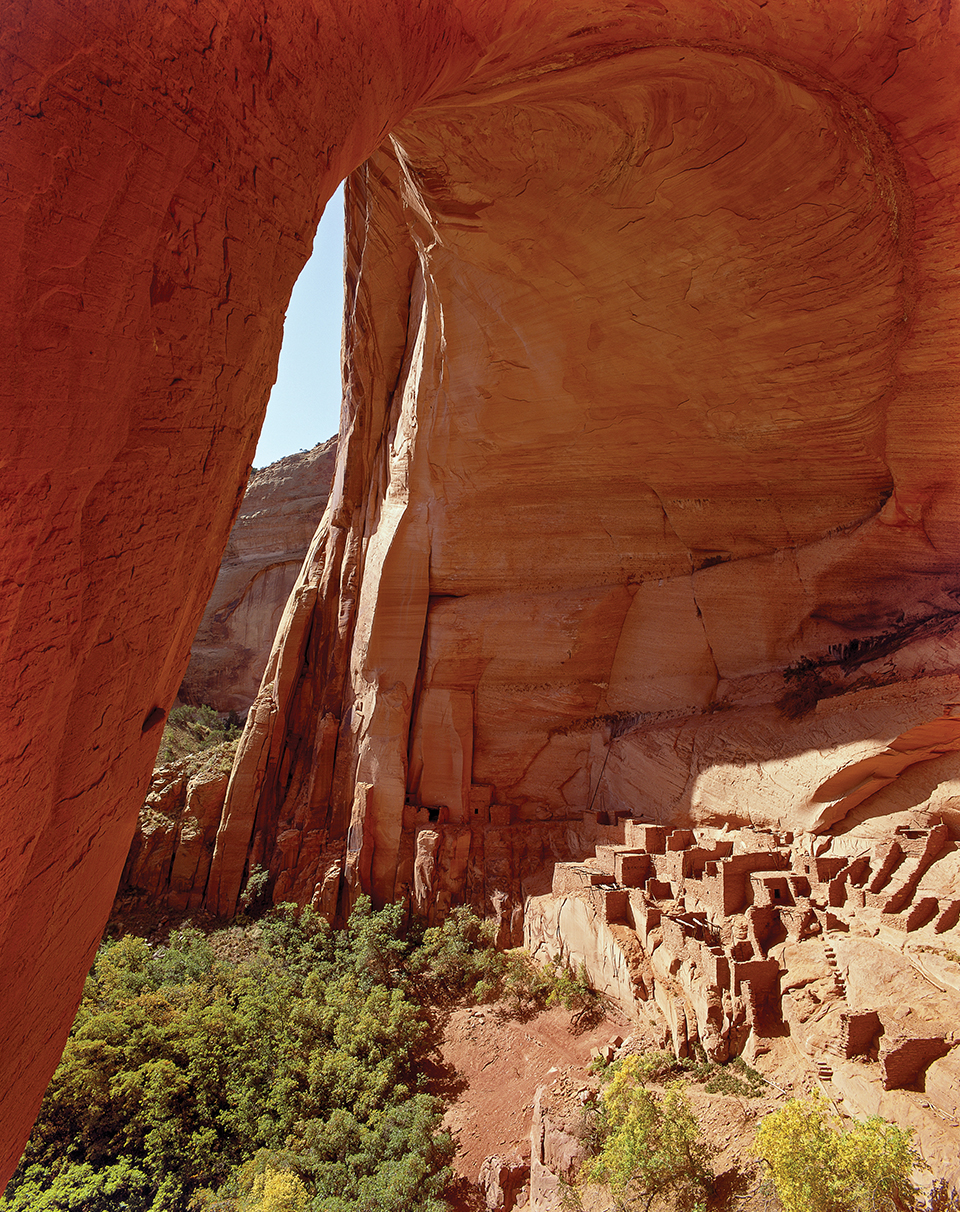
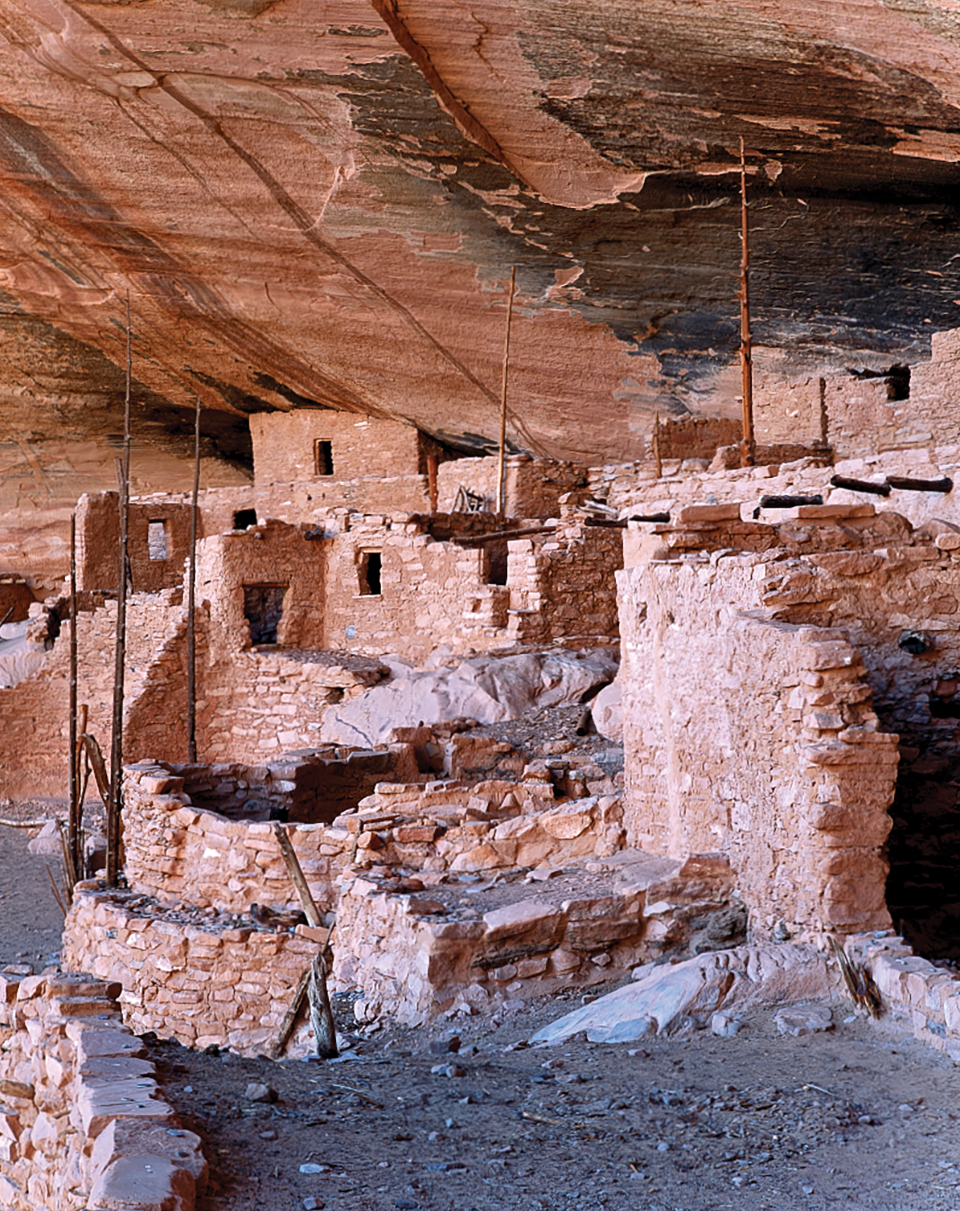
Seditious thoughts for someone committed to the science of archaeology, as I am, but in this setting — a whisper-quiet spring morning, facing the great sandstone proscenium that frames the ruin of Betatakin — they will not clear away. The ruin, a 135-room pueblo begun in 1267 and abandoned a generation later, is simply beautiful. In our time, squarish architecture meets curvish earth with a jarring thud, but this miniature village, like so many of its contemporaries, seems to bud from the floor and walls of its alcove as gracefully as a living organism. Architects today would say that its “siting” and “massing” are masterful.
But did its builders have beauty on their minds?
The pueblo form literally emerged from the earth in what we now call the Southwest — Arizona, New Mexico, Utah and Colorado — over several centuries, beginning in the a.d. 700s. Before this, early Southwesterners took shelter in pit houses scooped out of the ground and built up with walls and roofs of logs, sticks and patted mud. They were dark, dingy and inclined to catch fire, but also thermally efficient; archaeologists say they would have been more comfortable in winter than the aboveground compounds that followed.
But the compounds, which Spanish explorers later termed pueblos (“towns”), were more durable, and they reflected increasingly sophisticated social organization. Between 700 and 1100, the Southwest’s population exploded by 1,000 to 2,000 percent, which meant more dependence on agriculture and community cooperation. Food could be better preserved from spoilage and scavengers in stone masonry buildings, and extended family ties could be expressed in the joined rooms of a pueblo.
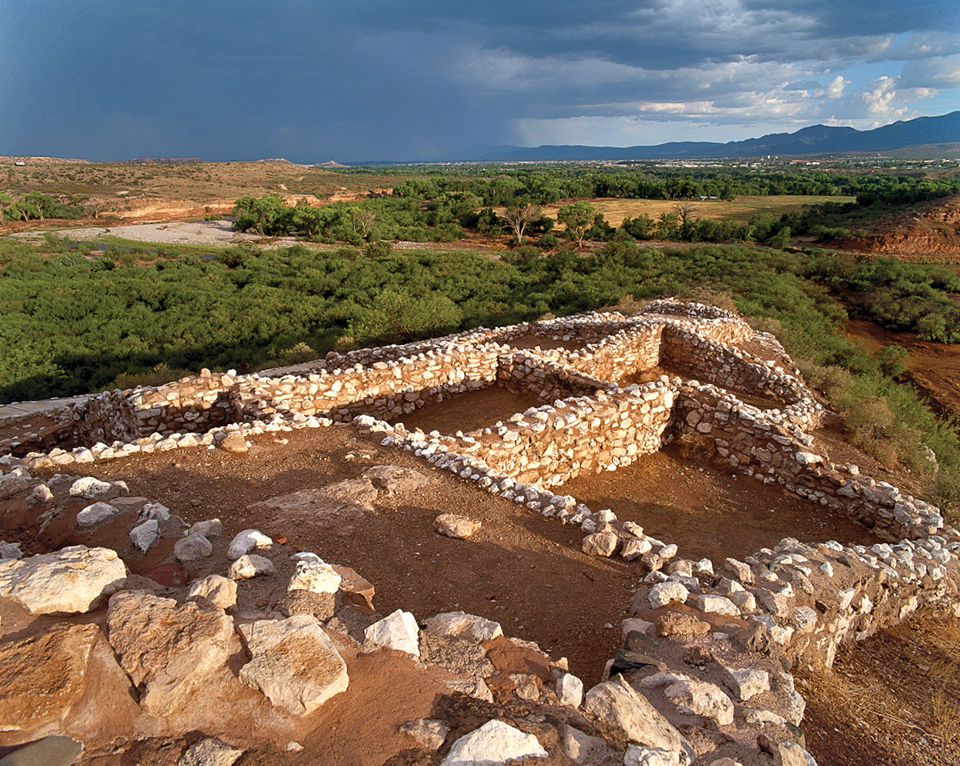
These ancient condos took dramatically different forms, depending on who built them and where. Tuzigoot, built in Arizona’s Verde Valley beginning in 1076, crowns a ridge by stairstepping up the land’s natural contours; it fulfills Frank Lloyd Wright’s dictum more than eight centuries later, which stated, “No house should ever be on any hill . . . it should be of the hill, belonging to it, so hill and house could live together each the happier for the other.”
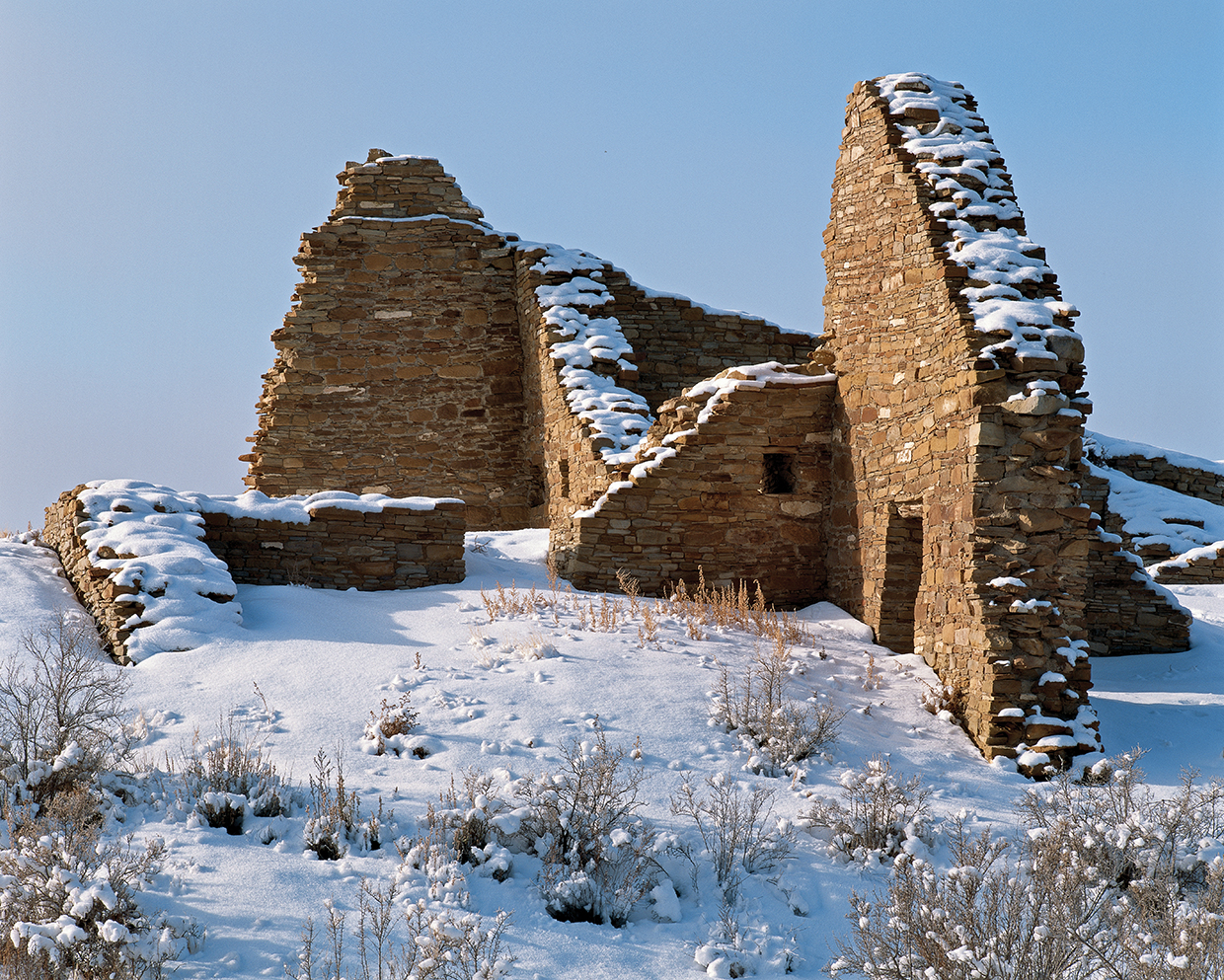
New Mexico’s Chaco Canyon was a ceremonial center with “Great Houses” of enigmatic geometry with up to 800 rooms on five stories. Taos, the most famous living pueblo, is a syncopated stack of adobe cubes that seems to echo the form of the mountain looming behind it.
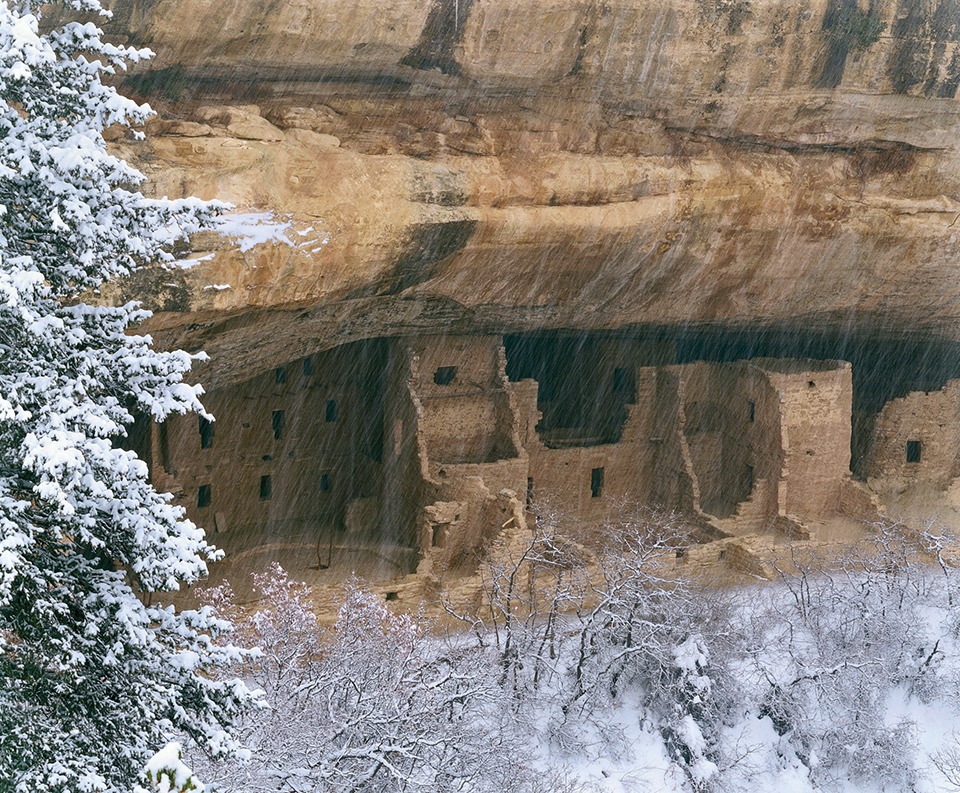
And finally came the cliff dwellings, an architectural form that materialized and spread throughout the Southwest, wherever there were alcoves in cliffs and canyon walls, in a curiously short bracket of time. Tree rings recorded a furious construction boom between 1200 and 1280. Then even more quickly, by 1300, they were abandoned.
Despite how tour guides and even some museums play it, the abandonment isn’t much of a mystery. Too many people, too few resources. Toward the end, the cliff dwellers could have found themselves combing a radius of several miles just for firewood. A tenacious drought from 1276 to 1299, also recorded in tree rings, probably caused repeated crop failures. James Charles, superintendent of Navajo National Monument, reduces it to common-sense archaeology. “I tend to look for the simple reasons,” he says as we walk into Betatakin. “They used up their welcome and moved on.”
For me, the compelling question is why they were built in the first place — shelter, defense or sheer beauty? The romantic in me asks for beauty. I want to believe that even people living on the rocky edge of survival found joy in architecture, the most enriching of all the arts. But I’m nagged by a line I remember from Marc-Antoine Laugier, the 18th-century Jesuit philosopher whose Essai sur l’architecture offered profound observations on civilization and building. “A building is neither more nor less magnificent,” Laugier wrote, “than is appropriate to its purpose.”
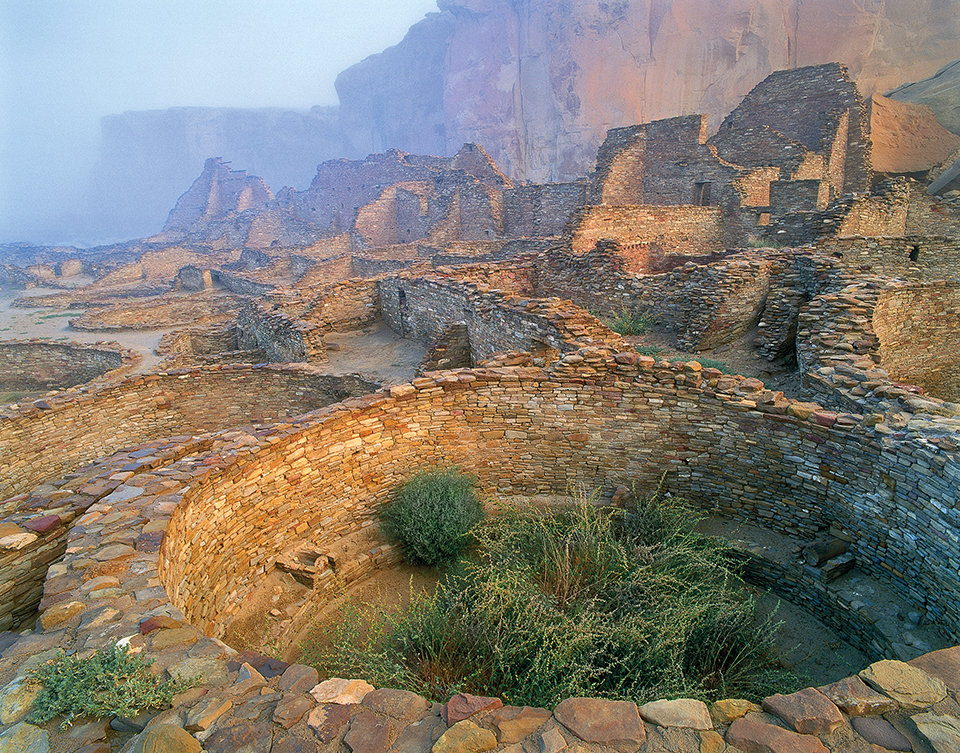
ONE OF THE FIRST EUROPEANS to see a pueblo immediately inferred that it was designed for defense. In 1540, one of Coronado’s lieutenants, Hernando de Alvarado, reported finding “an ancient building like a fortress” in western New Mexico (the exact location is unknown) and then scrambling to another pueblo “on a very high rock, with such a rough ascent that we repented having gone up to the place.”
Later explorers made the same instinctive assumptions. Charles Lummis, the newspaperman who hiked from Ohio to California in 1884, reported from Canyon de Chelly that the pueblos “are usually high up from the bottom of the cliff, and between them and the foot is a precipitous ascent which no enemy could scale if any resistance whatever was made.” In 1891, Gustaf Nordenskiold, the self-taught but meticulous archaeologist who investigated Mesa Verde, declared that “Nothing short of the ever imminent attacks of a hostile people can have driven the cliff-dwellers to these impregnable mountain fastnesses.”
This tide of theory turned in the 20th century. A persistent problem was that archaeologists had failed to dig up any evidence of those “hostile people.” Ancient warfare also became politically unfashionable. The Hopis, Zunis and New Mexican Puebloans, apparent descendants of the cliff-dwelling Anasazi, had cultivated the modern image of peace-loving people, and this tinted the research into their past. Romanticization was spinning white America’s view of Native America, as it always has.
What were the other possible reasons for the rush into the cliffs? Superior shelter was one, an idea that occurred to the novelist and naturalist Mary Austin. Cliff dwellings were “an easy adaptation to local advantages,” she wrote in 1924. “Why dig a hole when there is a hole in a wall already dug for you?” The alcoves would have kept the rain and snow off and the wind out, and at least the exposed rows of dwellings would have enjoyed solar heating in winter — most large cliff dwellings face south.
Another reason leaps out at anyone who’s ever suffered a flooded house: to raise the pueblos off low-lying flood-plains. And the more people there were to feed, the more valuable this farmland would become — too valuable, perhaps, to spend on housing.
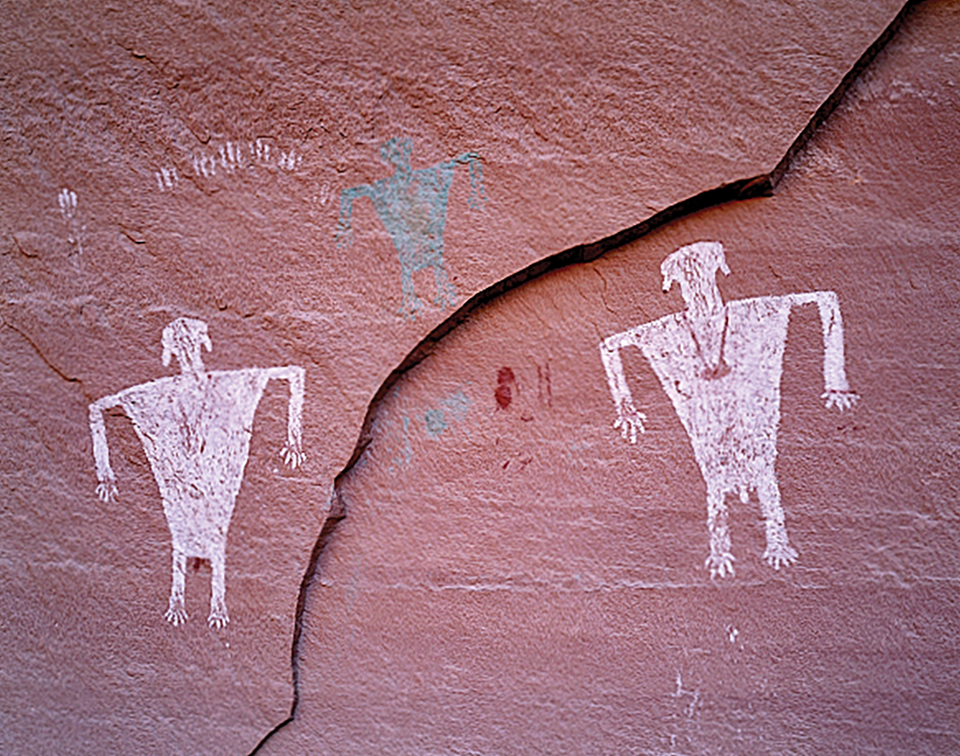
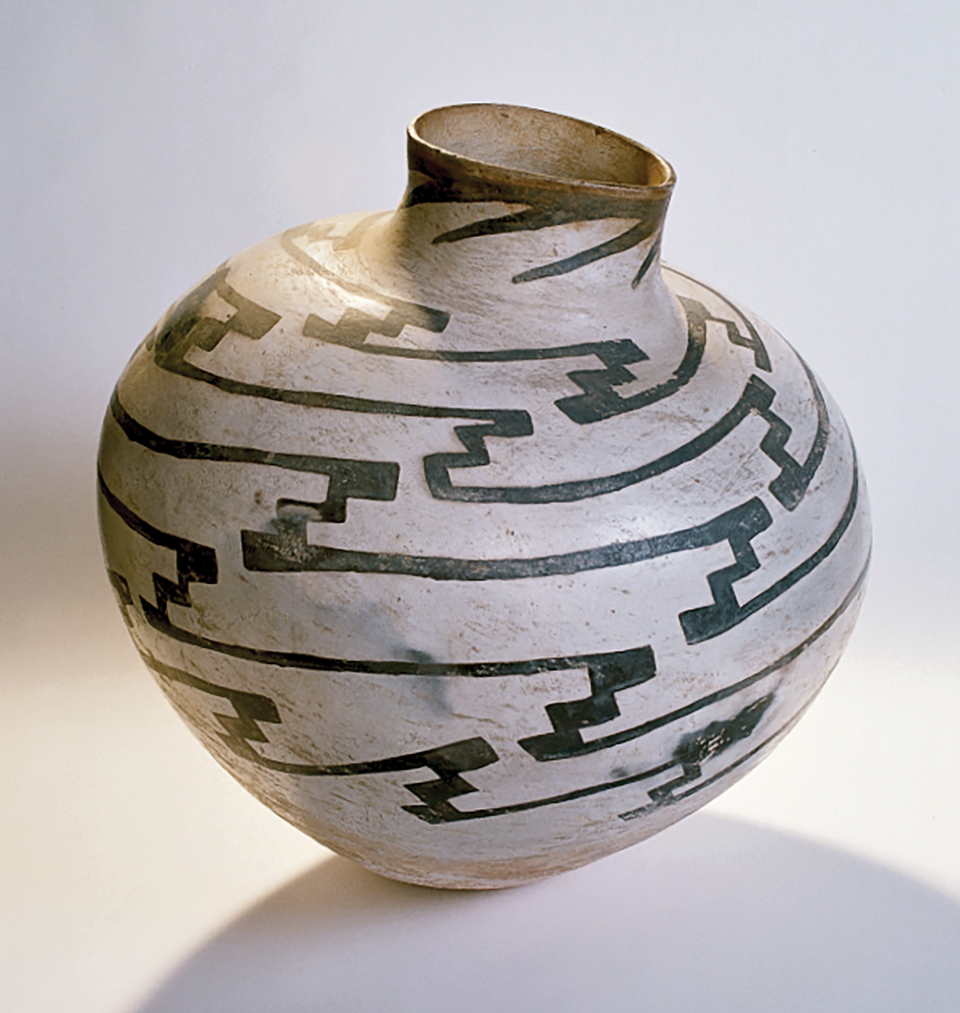
And what about beauty? We know from their surviving basketry, pottery and even clothing that the ancient Puebloans had an appreciation of fine design and proportion, and it became more sophisticated over time. The tense, parallel figures painted on Puebloan jars and bowls — triangles, ziggurats, rectilinear scrolls — are first cousins to the architectural composition of pueblos such as Keet Seel and Betatakin. It doesn’t seem farfetched to imagine that the architects of these containerized cities took some care to plan and organize their lines.
The trouble with all these theories is encapsulated in one word of that last sentence: imagine. We amateur archaeologists — and sometimes professionals, too — can easily color our thinking by what we want to see, or expect to see because we peer through the prism of our own time and culture. Where we perceive beauty, people in utterly foreign circumstances might have seen only terrible necessity. We tend to romanticize art and architecture in their ruined forms.
“It’s like the Greek statues, which actually were painted and had clothes on them,” says Peabody Museum curator Steven LeBlanc, a prominent Southwest archaeologist. “What the cliff dwellings might have looked like when they were occupied, with all the laundry hanging out, is not what we see today.”


THE CLIFF DWELLINGS INDEED offered terrific protection from storms and floods, but at quite a price. In my research for the book A.D. 1250, I climbed to many cliff dwellings that (a) required serious effort, (b) scared me witless, or (c) both. I pondered the additional burden of hauling up an antelope carcass or an armload of firewood, and envisioned toddlers scampering on a narrow plaza with a 300-foot drop to the canyon floor.
Some of the professionals believe in what might be called “common-sense archaeology,” and this seems like a good place for it. Northern Arizona University archaeologist Chris Downum is one of them. “There are some sites in the Grand Canyon located in unbelievably dangerous, difficult-to-access sites,” he says. “There was no reason on earth people would have built there unless they were afraid for their lives every night when they went to sleep.”
In the late 1990s, the warfare theory suddenly revived, although it’s still furiously controversial. Among other advocates, LeBlanc published an enormous book forthrightly titled Prehistoric Warfare in the American Southwest and laid out the archaeological evidence: burned villages, mutilated and unburied human remains, patterns of population clustering and defensive sites. LeBlanc believes that beginning around a.d. 1250 the entire Southwest was engulfed in warfare, not with “foreign” invaders but among neighbors fighting for survival over dwindling natural resources.
It wasn’t anything like the contemporary warfare of medieval Europe; the Americans didn’t have the communications, the technology or the sophisticated command structure to hurl massed armies at each other. If the horse — the catalyst for so many advancements in Europe — had been native to the Americas, the story might have been different. Here, warfare was opportunistic: hit-and-run pillage, captive-taking, ambushes and massacres. Apparently nobody conceived of the siege strategy, which would have been effective against cliff-dwellers. When Coronado’s troops besieged a New Mexico pueblo, the defenders seemed unprepared — they quickly ran out of water.
But the fighting was serious and deadly. Between 1250 and 1400, the people of the Southwest abandoned thousands of villages, moved around in flurries and imploded in population. Provocatively, LeBlanc says that modern warfare disturbs us because it usually isn’t about survival, and therefore it seems senseless. But the ancient Southwest had no Red Cross to provide
relief and no United Nations to mediate disputes, and fighting was about living or dying. “Just because we live in an era of senseless wars,” LeBlanc says, “does not mean war was always senseless.”
On the morning of my prowl through Betatakin, the ruin seems reluctant to whisper of violence. The canyon air is crisp and silent, and the relic aspens are putting out the first tentative shoots of spring. A snow field, preserved in a shady corner, is punctuated by a fox’s delicate pawprints. These rhythms of life seem intact and perpetual. Romanticism, as usual, rears its pretty head.
I contemplate why, and how, a primitive people in desperate circumstances would build such an elaborate and beautiful fortress, if that’s what it was. Did the beauty occur as a coincidence, are we imagining something that isn’t there or were these canyon pueblos designed to look impressive as a territorial statement to potential enemies?
Amazingly, Laugier’s principle explains it all. The cliff dwellings are magnificent because they needed to be for all the reasons we can imagine, environmental and social. They were a last, great effort of people squeezed by circumstances beyond their control. If their builders considered them beautiful, it was an act of faith in their civilization — something we romantics can’t prove, but must believe.