
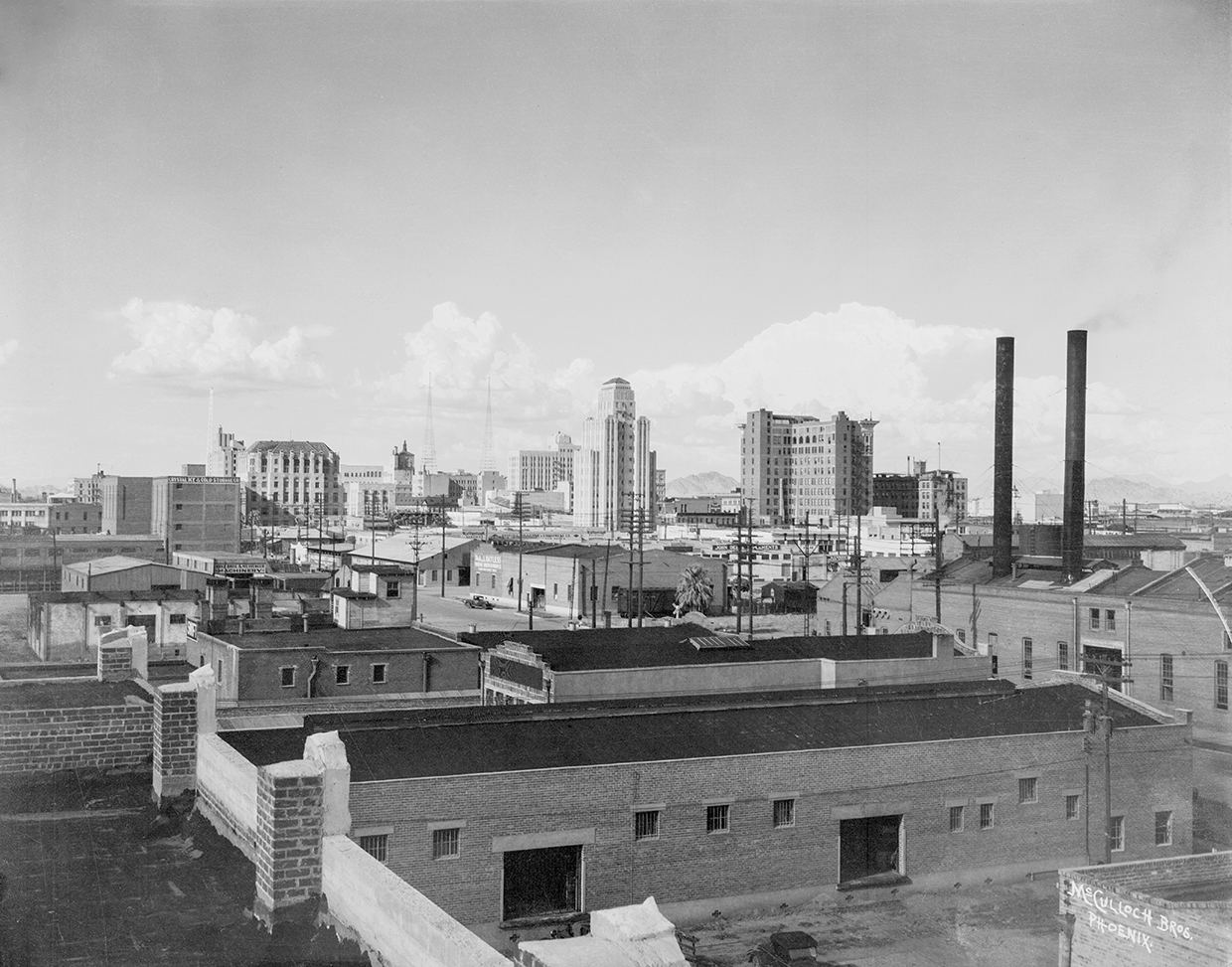
PHOENIX LOOKED VERY DIFFERENT 100 YEARS AGO. And thanks to the work of two Scottish brothers, there’s abundant photographic evidence of just how different.
William McCulloch and his older brother James immigrated to the U.S. from Glasgow with their parents and younger siblings in 1887. The family settled in Pennsylvania, where Will and James were exposed to photography after their mother bought a camera at an auction.
Will’s story of how he got to Arizona variously involved either a stop on a trip to visit a friend in California or a relocation for his health. In both versions of events, he stepped off the train in Phoenix in 1904 and found himself “in the midst of a group of citizens organizing to defend themselves against cowboys who had been terrorizing the town.” After witnessing the ensuing shootout, he recalled, he was so taken by the city and surrounding desert that he decided to set up a photography studio in the area.
Researchers at Arizona State University, though, suggest the story recounted in James’ 1941 obituary is more likely. That would mean Will, drawn by glowing reports of the region’s economic potential, actually reached Phoenix in 1908 and persuaded James, who arrived a year later, to join him.
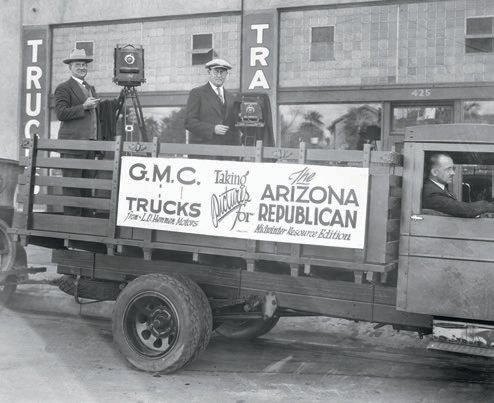
In 1913, James and Percy Howard started McCulloch and Howard, a commercial photography business. At the time, The Arizona Republican described James as “one of Arizona’s best known camera experts ... [whose] work has been seen in almost every magazine or booklet issued here since his coming and is much appreciated for its high quality.” Howard left the firm in 1914, and in 1919, Will and James joined forces, renaming themselves McCulloch Bros. Inc.
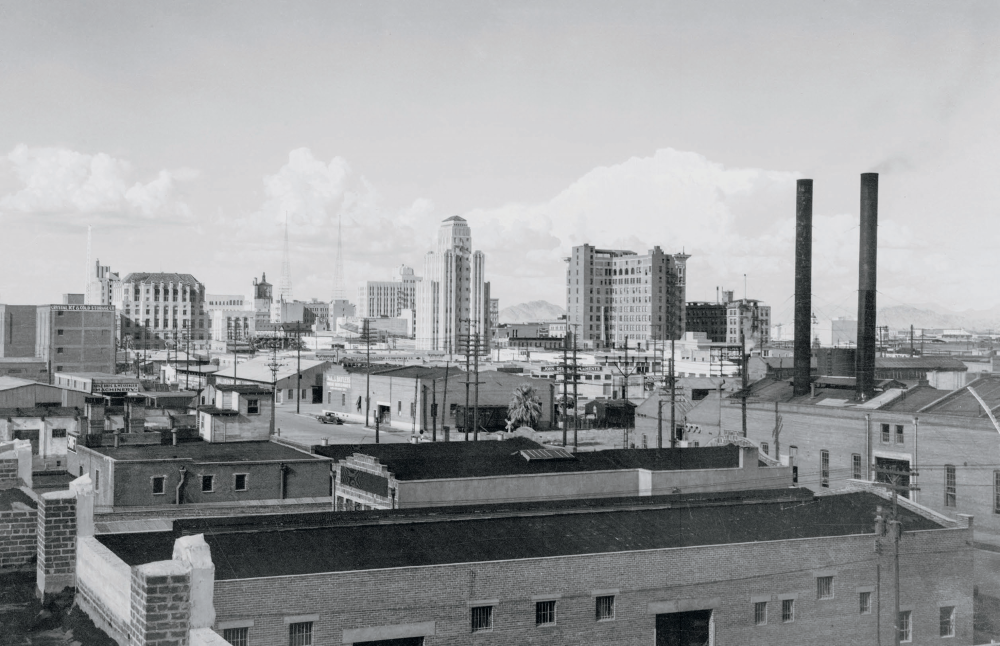
When the McCullochs first got to Phoenix, the population stood at about 29,000, a far cry from today’s 1.6 million. It was a time of remarkable growth and transition that included construction of Theodore Roosevelt Dam, an important component in the Valley’s water supply. Plans were also underway for the Cactus Derby, a Los Angeles-to-Phoenix desert road race described in the Republican as “bound to be one of the most exciting and furious exhibitions of speed and endurance that has ever been seen in the Southwest, or for that matter, in any part of the country.” And amid all that excitement, in 1912, Arizona became a state.
The McCulloch brothers shot much of the action, but according to academic researcher and collector Jeremy Rowe, they also were aggressive in buying stock photos and creating their own stock file. In many instances, he says, the brothers would reshoot the stock images themselves.
“They were the major commercial photographers at the time,” Rowe says. “And they were part of the next generation of photographers in Arizona, providing continuity between what had been shot before they arrived and what would come after them.”
In 1946, after the deaths of his wife and brother, Will sold the business to Hobart Pribbenow, who operated under the McCulloch Bros. name for a year before selling to a young photographer from Indiana named Herb McLaughlin, who’d just made his photographic debut in the pages of Arizona Highways. As part of the purchase, Herb acquired the McCullochs’ extensive negatives collection. Herb and his wife, Dorothy, would go on to play a key role in the history of this magazine.
Some 4,500 McCulloch Bros. photographs were digitized and released for public use by ASU Libraries in 2016. The images in the collection show hotels, hospitals, high schools, churches and businesses; Arizona landmarks, such as Phoenix’s Orpheum Theatre; landscapes of the Grand Canyon and natural bridges; and shots depicting Arizona’s “Five C’s”— copper, cattle, cotton, citrus and climate. In the words of ASU associate librarian Matthew Harp, the collection offers an important view of Phoenix and other parts of Arizona during a “time of transition from cowtown to emerging metropolis.”
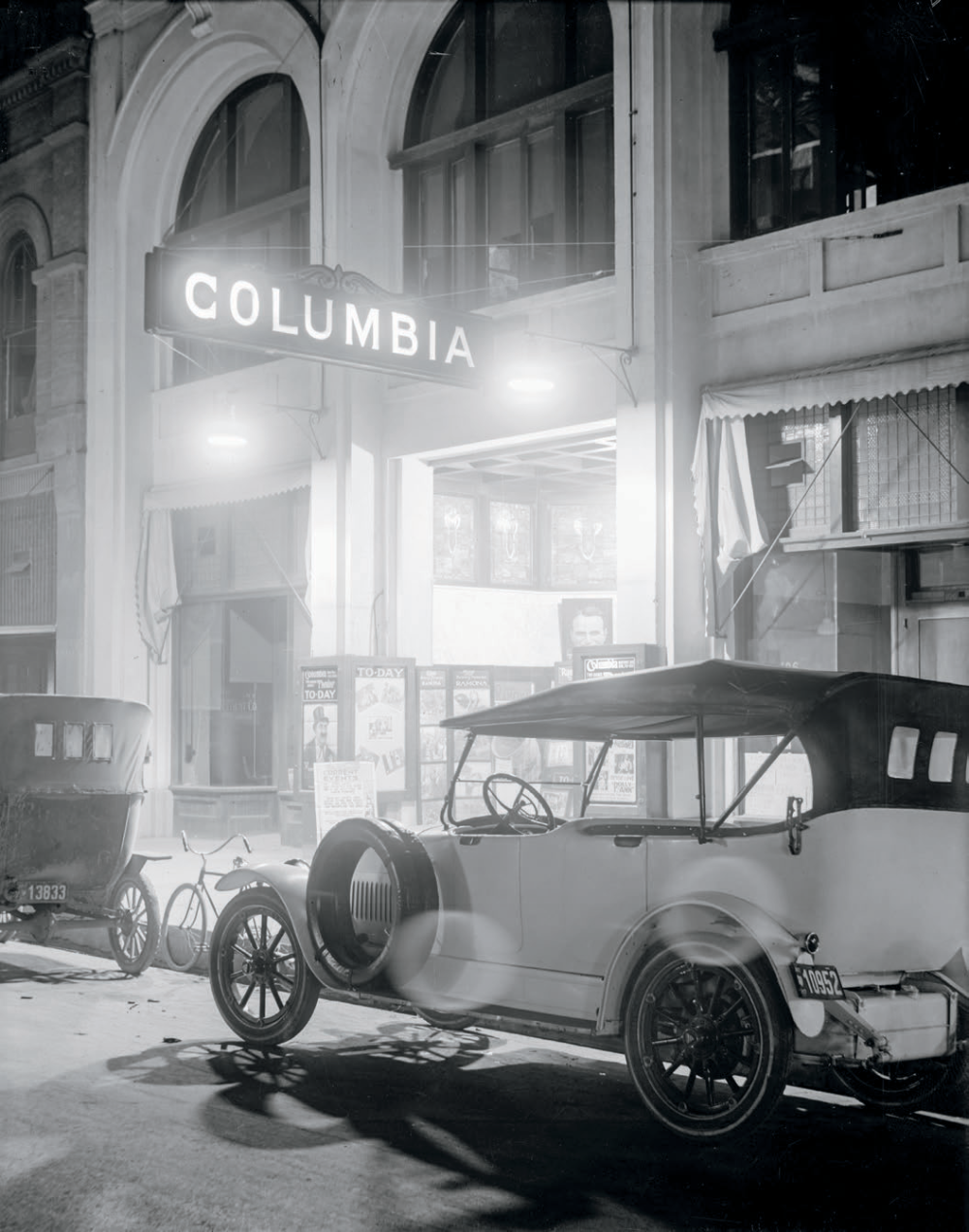
Lights from the Columbia Theatre, once located at 108 W. Adams Street, in Phoenix, illuminate a Hudson Touring car in November 1917.
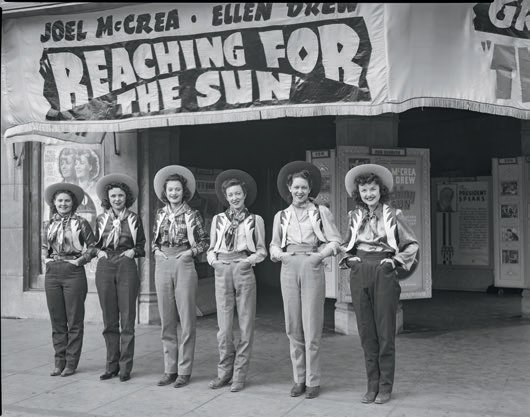
Ushers at Phoenix’s Orpheum Theatre wear Western attire to promote Reaching for the Sun, which was released in May 1941.
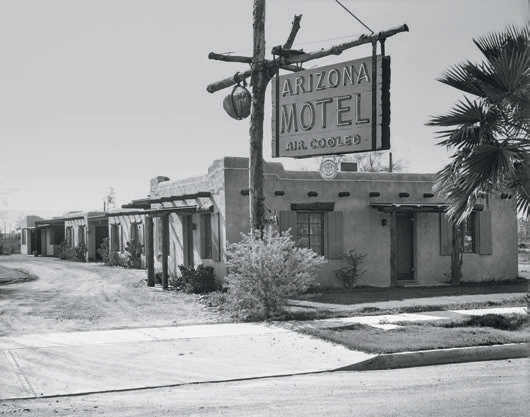
East Van Buren Street, in Phoenix, once was known for its roadside motels and neon signs. The McCulloch brothers photographed the Arizona Motel in December 1941.
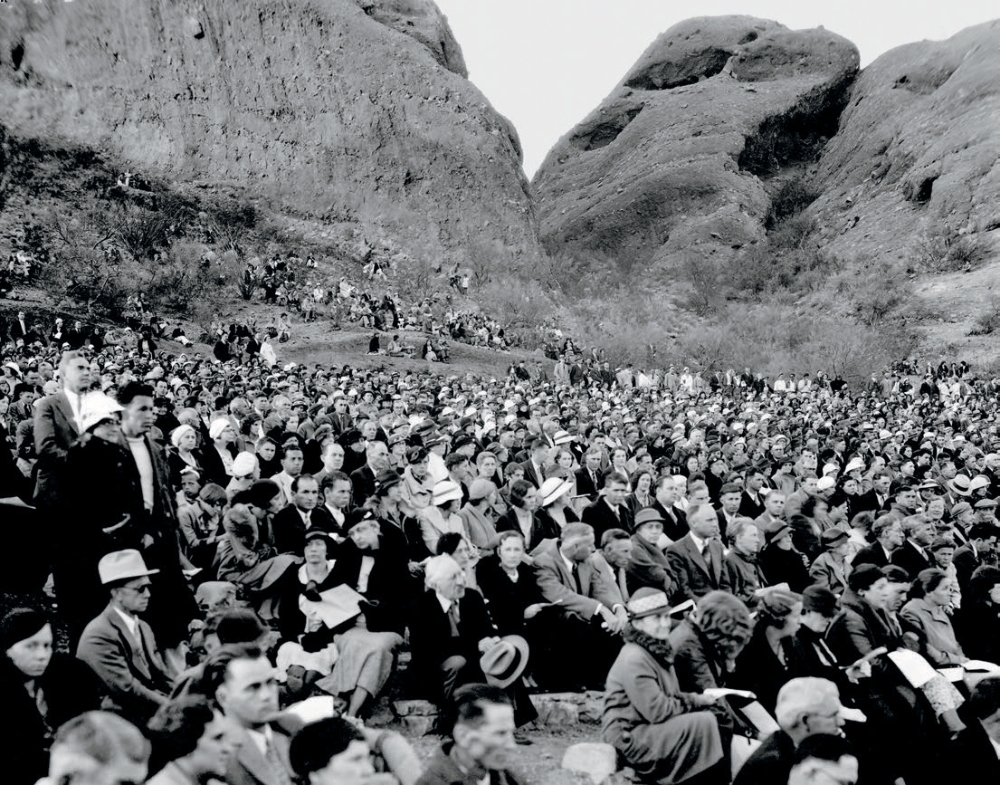
Worshippers gather for a sunrise Easter service at Papago Park in April 1934.
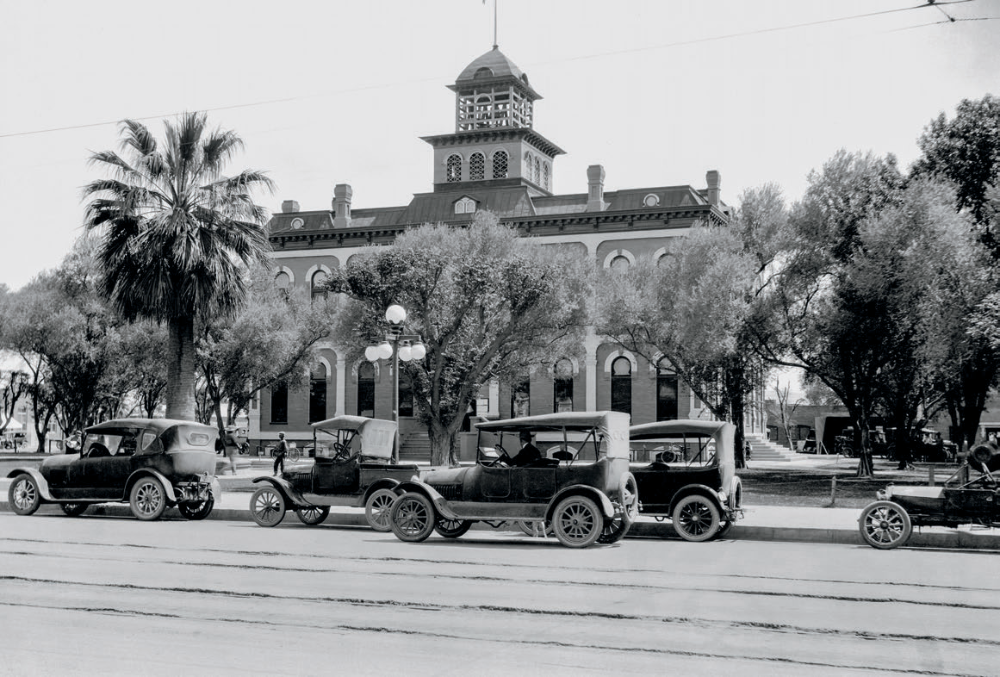
Cars line the street in front of Phoenix City Hall in 1922. The building, located on the southeast corner of First and Washington Streets, was built in 1888. Municipal government offices were moved in 1929 and again in 1994.
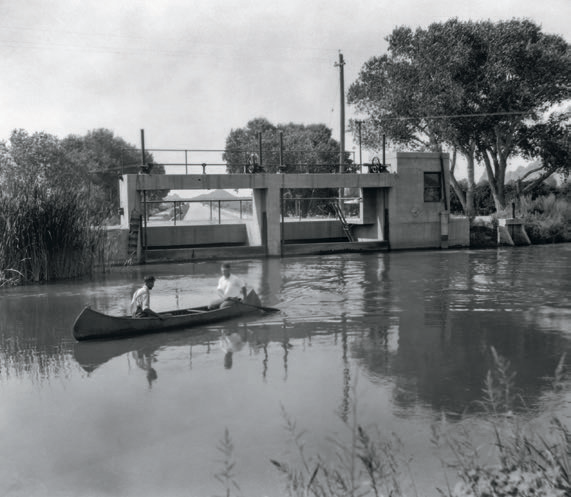
Two men paddle the Arizona Canal, near 68th Street and Thomas Road, in a canoe in 1920.
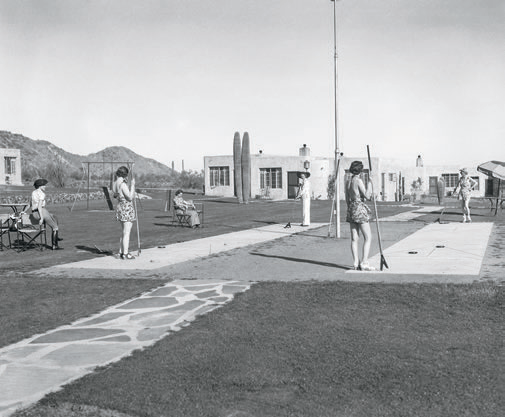
Long before the surrounding area was developed, Camelback Inn, in Paradise Valley, was a popular destination for visitors to the Valley of the Sun.
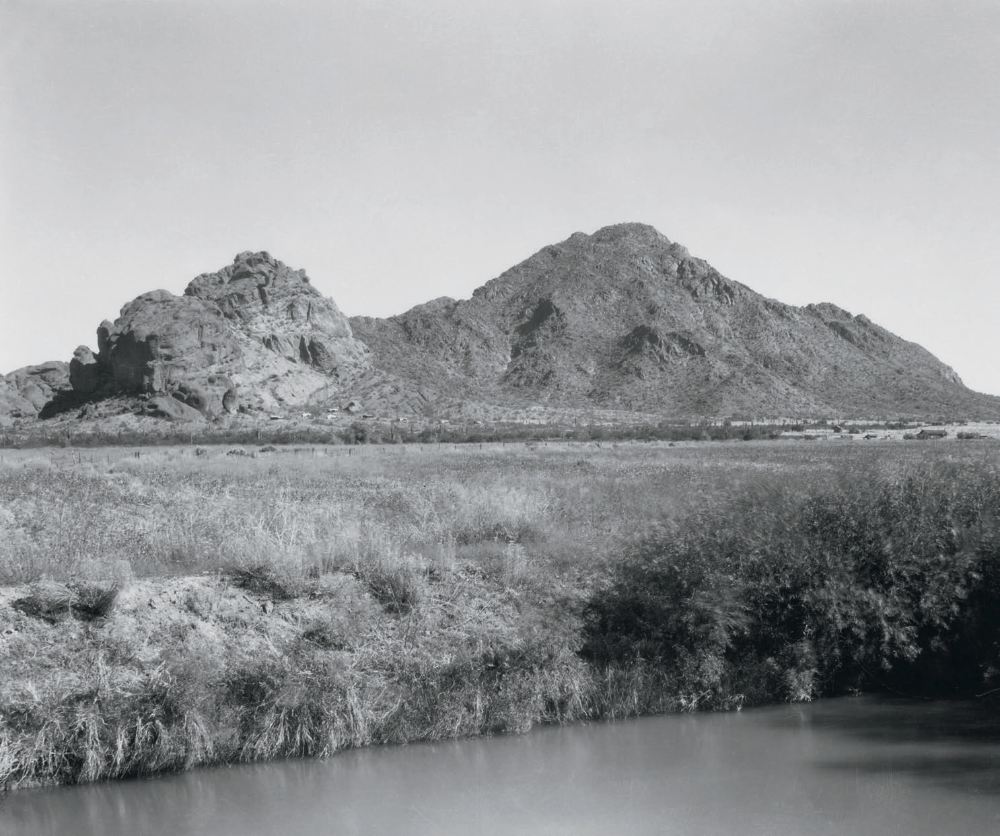
Phoenix’s landmark Camelback Mountain emerges from the desert in this view from a nearby canal.
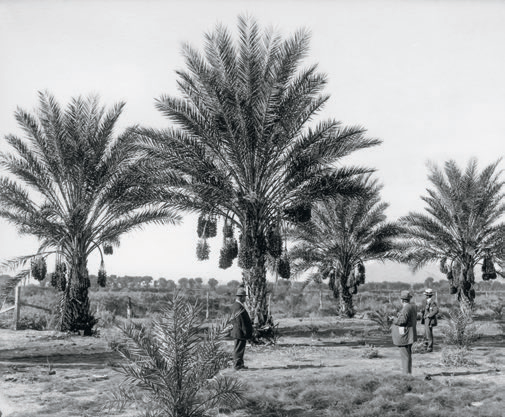
Three men stand in a date palm orchard in 1930. Date palms, which are native to the Middle East, were brought to Arizona in the 19th century.
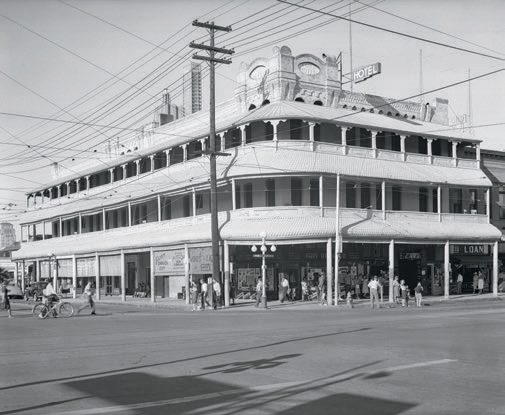
The Ford Hotel, located at Second Avenue and Washington Street, in Phoenix, once was considered first-class, modern lodging. It was built in the 1890s and demolished in the late 20th century.