
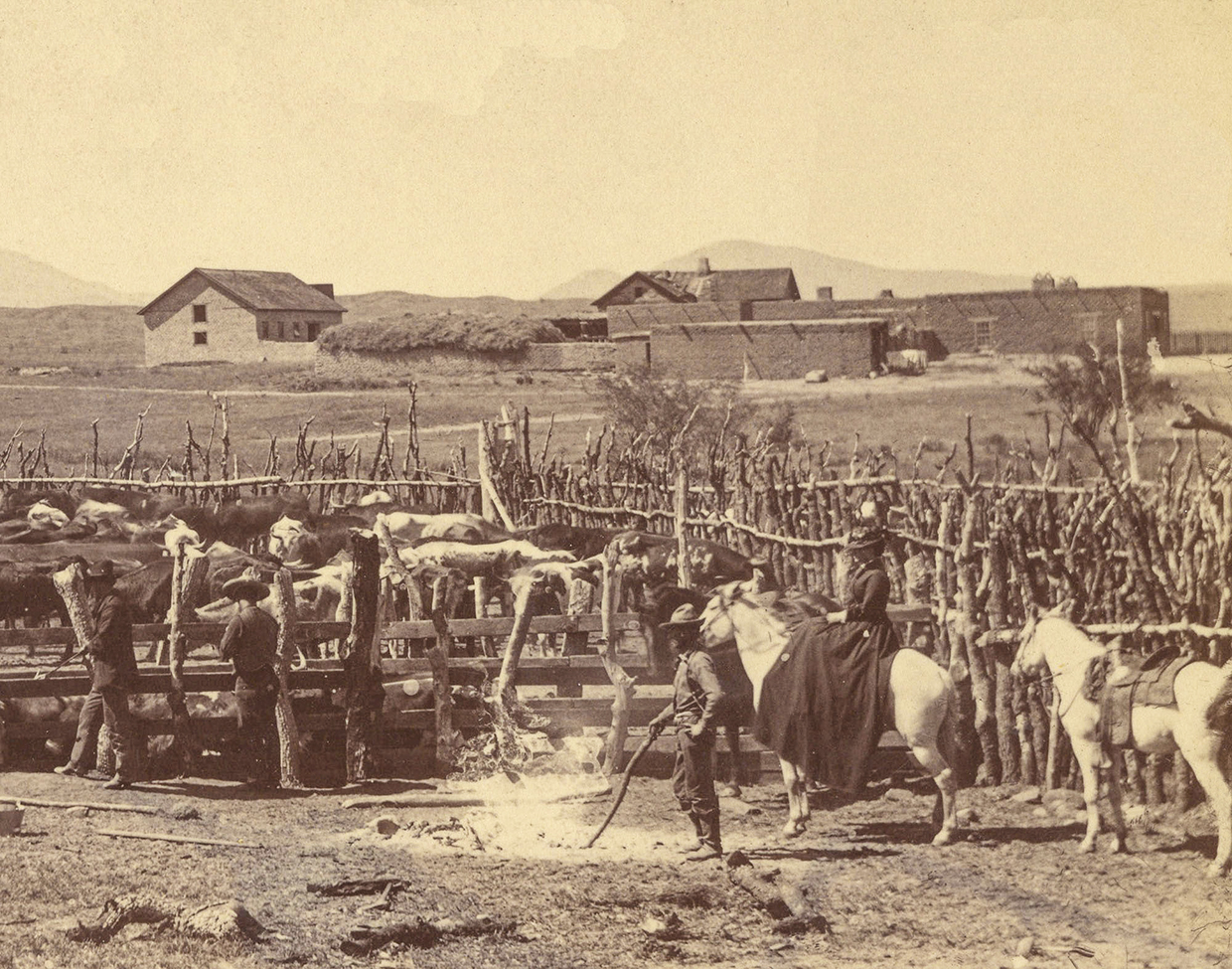
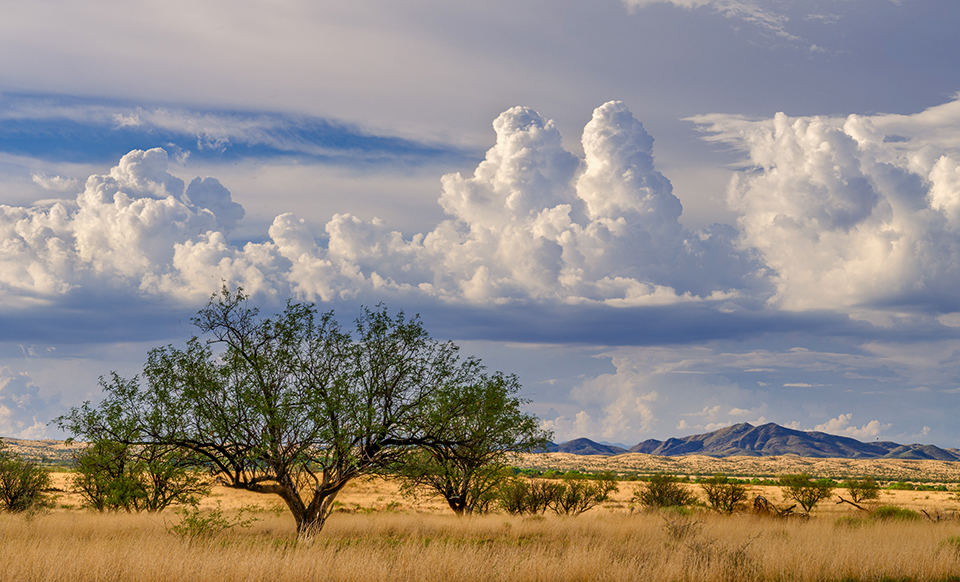
In the grasslands near Sonoita, a windmill rises from the desert landscape, marking the entrance to the historic Empire Ranch. Beyond it, old corrals, wooden barns and single-level houses rest against the Southern Arizona horizon. And inside the main house, historical furnishings and artifacts offer glimpses into the ranch’s nuanced past.
Located in Las Cienegas National Conservation Area, the ranch has stood for 150 years and remains open to the public year-round thanks to volunteers with the Empire Ranch Foundation, which helps to maintain the site’s historic buildings and surrounding landscape.
Since its founding in 1997, the ERF has worked not only to maintain the ranch, but also to piece together its history. Via donations and historical archives, volunteers have collected letters, photographs and records that define what everyday life on the Empire Ranch was like — from cattle drives and homesteading to the backgrounds of the people who lived and worked there.
“The volunteers collected a lot from families who donated items,” says Kimberly Patterson, the ERF’s administrator. “We did interviews with all of the family members and cowboys who worked here and the people who lived in the area, so all of it is pretty well documented.”
The ranch began as an adobe homestead with a modest four-room house and a corral. But after it was purchased by Walter L. Vail and Herbert Hislop in 1876, it became one of the largest and most influential cattle ranches in present-day Arizona, with more than 100,000 acres stretching from the Rincon Mountains to the Mexican border.
“[Vail and Hislop] were 23 and 24 years old, and they came and wanted to be cattle ranchers because they were trying to figure out how to make money, and everyone said, ‘Go West, young man,’ and they did,” Patterson says. “They came and bought the ranch and then immediately started buying up other pieces of property.”
The discovery of silver deposits further fueled the ranch’s growth, with the new Total Wreck Mine bringing in revenue that helped fund expansion across the property. But in 1928, the Vails sold the ranch to the Boice family, who continued cattle operations and upgraded the living quarters of the home — remodeling the kitchen, dining room and living room, and even adding a swimming pool.
After the Boice family sold the land in the late 1960s to the Gulf American Land Corp., plans emerged for a large residential community to replace the ranch — an idea that didn’t sit well with area residents and others with memories there. “When they tried to turn it into a subdivision with a bowling alley and a golf course, luckily, there was enough pushback,” Patterson says.
Instead, the ranch house was listed on the National Register of Historic Places in 1976, and eventually, the land was acquired by the federal Bureau of Land Management. And today, the house is maintained by the ERF, in coordination with the bureau. But preserving the ranch’s collection of buildings, barns and corrals — and even its windmill — is an ongoing challenge due to overwhelming maintenance needs.
Rick Collins, vice president of the ERF, says “demolition by neglect” is the foundation’s biggest enemy. “Buildings want to fall back into the ground — especially adobe [buildings], because they want to become dirt again,” he says. “It’s always an uphill battle, because we have a lot of buildings, so which comes first on the list?”
In the meantime, volunteers such as Collins and Patterson use preserved rooms in the ranch house and barns to display artifacts that include wagon repair tools and a telegraph in Vail’s original office. Currently, they’re working to expand the site’s exhibits and add a film display that highlights the movies shot on the ranch — from the 1976 version of A Star Is Born to the popular John Wayne Westerns Red River and The Cowboys. Volunteers also lead field trip tours and ensure that the property is kept up for visitors, especially those looking to explore the ranch’s nearby walking trails.
On August 22, the foundation will celebrate the ranch’s 150th anniversary with walk-throughs of the house, docent readings of diary excerpts from former residents, and interactive exhibits. But the anniversary is more than a milestone celebration. It’s also a reminder that landmarks such as the Empire Ranch survive only because of the people willing to care for them.
NEAR SONOITA Empire Ranch Foundation, 888-364-2829, empireranchfoundation.org