

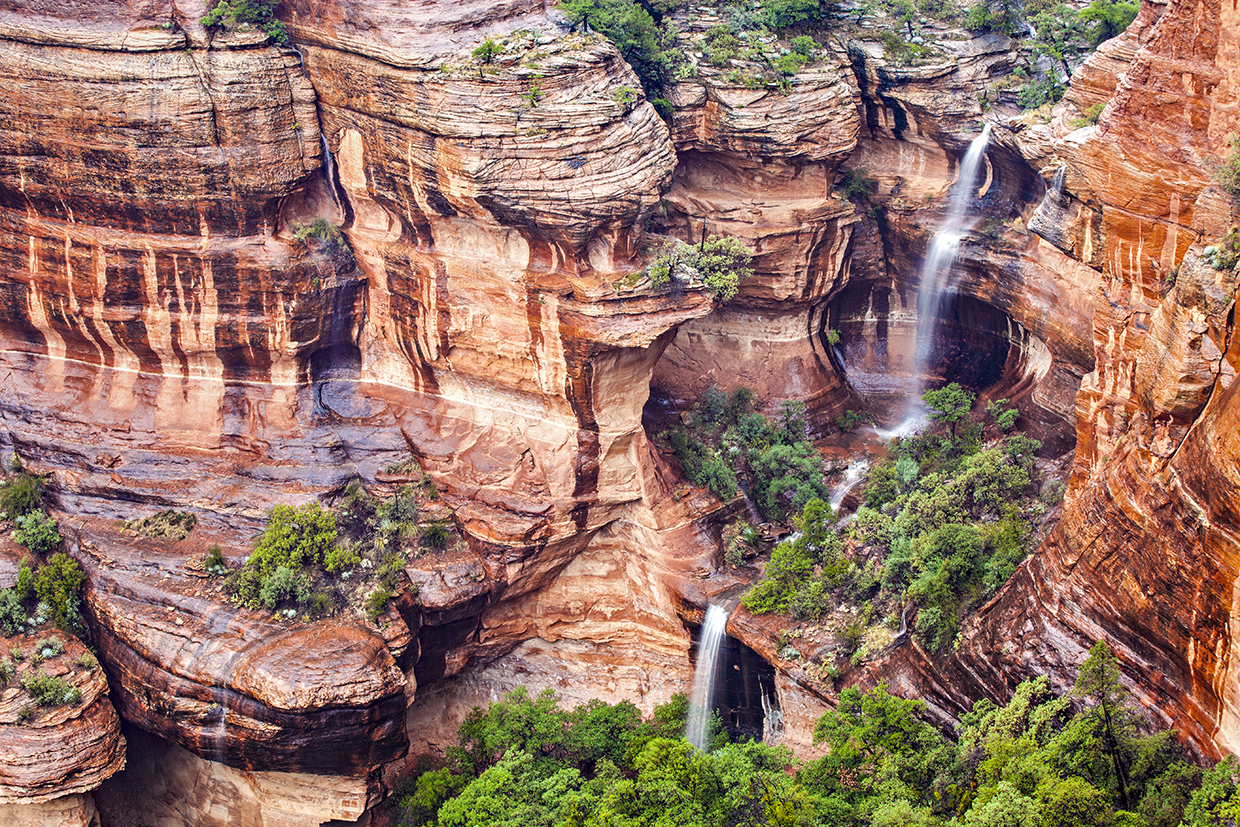
I’m a retired landscape architect, so when I’m composing a photo, I often think about the rules of design. That was the case for this image. I’ve spent a lot of time hiking and photographing in and around Red Rock Country, but I wasn’t familiar with this location in Boynton Canyon, northwest of Sedona, until some hiking friends and I stumbled on it one day. But the discovery was just the first part of my photographic process.
I knew that if I wanted to make a photo of waterfalls on the slick-rock, I’d need to be there when it was raining; unless there’s very heavy rain in this area, the falls quit when the rain does. But I also knew I didn’t want to make the 2-mile hike to this location in the rain. Instead, I wanted to wake up, walk 100 yards or so and be at my chosen spot. Thus, I made an additional trip to the site to find an overhang where I could spend a dry night.
After that, I waited for a forecast that offered a good chance of morning rain. Thankfully, the clouds came through and I was able to make this photo — although it was challenging to hold an umbrella and keep my equipment dry while making camera adjustments. Given that rain was falling, the Dehaze slider in Adobe Lightroom improved the image immensely when I processed my photos later.
The rules of design — four of the seven, in particular — came into play here:
Focal point: The falls create a center of attention.
Movement: The eye moves from the falls to the cliff slick-rock areas.
Balance: The falls balance with the large area of slick-rock on the left.
Contrast: The use of different elements, such as the falls, the slick-rock and the plant material, creates interest.
In all, it was a worthwhile and rewarding endeavor — and a reminder that there are countless visually appealing scenes still waiting to be discovered in Red Rock Country.