
EAST OUT OF KINGMAN, I’m swimming upstream on Historic Route 66. It’s the weekend of the Route 66 Fun Run car rally, and two-toned Bel-Airs and big-finned Caddies, hot rods and pick-ups and stray VW vans, are coming at me in waves.
The car buffs in their buffed cars have hit the road to mark the centennial of Route 66, a high-revving celebration of manifolds and Manifest Destiny.
I’m out searching for something different: the Route 66 that’s been around forever and the road that never died. To talk to people whose lives and traditions are linked to the lands this highway crosses through the territories of the Hualapai, Navajo and Hopi peoples. Because if Route 66 is the Main Street of America, it was the Main Street of Indigenous Arizona first.
I pick up Route 66 at the Colorado River, dodging burros in Oatman (there are a lot of burros in Oatman) before switchbacking down from 3,586-foot Sitgreaves Pass and into the high-desert flats of the Sacramento Valley.
The 158 miles between the river and Ash Fork is the longest-surviving unbroken stretch along the highway's original 2,448-mile run from downtown Chicago to the shores of Santa Monica Bay. Everywhere I've been so far — everything I've seen — is part of the homelands of the Hualapai people, whose 14 bands ranged across 7 million acres.
There's no road trip without a soundtrack, and I flip to KWLP, 100.9 on your FM radio dial. The Hualapai station hops from George Strait's Amarillo by Morning and directly into Green Day, with interludes of tribal chanting, a break for the Hualapai phrase of the day, and a Hualapai kid interviewing local pastor Steven De Ford — who, for the record, doesn't have a favorite animal, though he does like ferrets.
Beyond Hackberry, Route 66 winds between slopes strewn with ruddy boulders before entering the million-acre Hualapai tribe's land and Peach Springs, the tribal headquarters. The town prospered during Route 66's heyday. Greyhound buses connected Peach Springs to the outside world, and the town served as an oasis for Route 66 travelers making the passage through the wild country.
A few landmarks survive from that time. I walk past the Pueblo Revival-style Peach Springs Trading Post, which opened in 1928. Its walls of rough cobbles are punctuated by ponderosa pine vigas logged on the northeast part of the tribe's land. Hualapai means “People of the Tall Pines.”
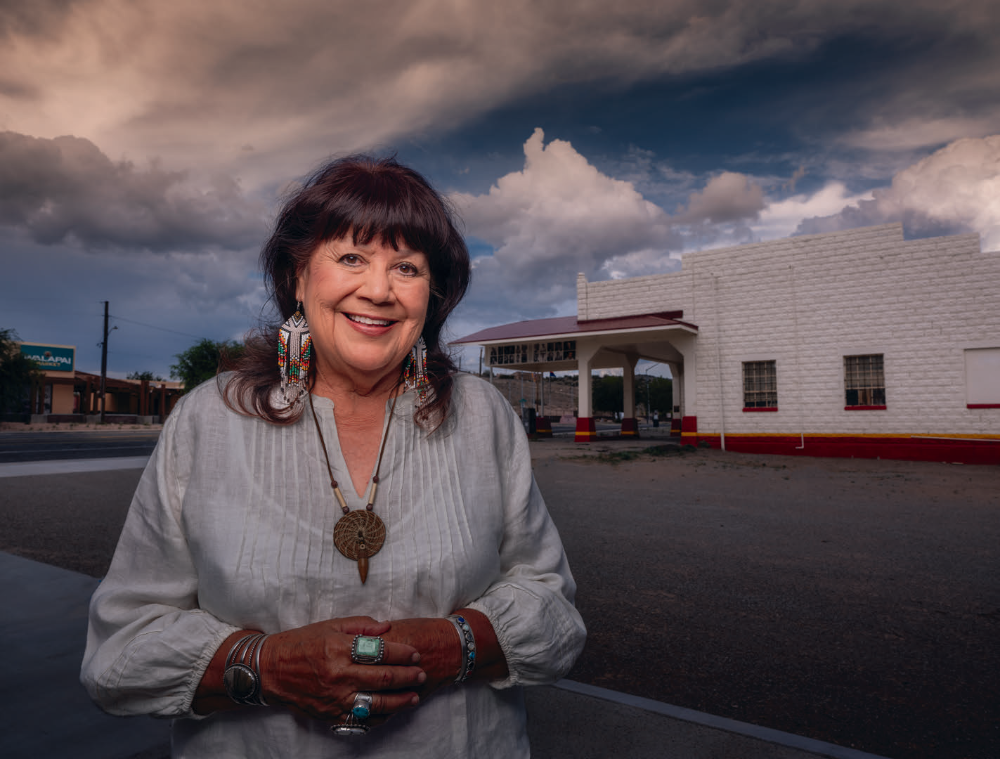
Across Route 66, the 1929 Osterman Gas Station was built of concrete blocks ordered from the Sears, Roebuck and Co. catalog. The last time I came through, the station looked banged up, especially after a microburst and windstorm a few years back. Since then, it has been stabilized and is looking sharp, with fresh white paint and red-and-gold trim, plus a new roof above the forebay.
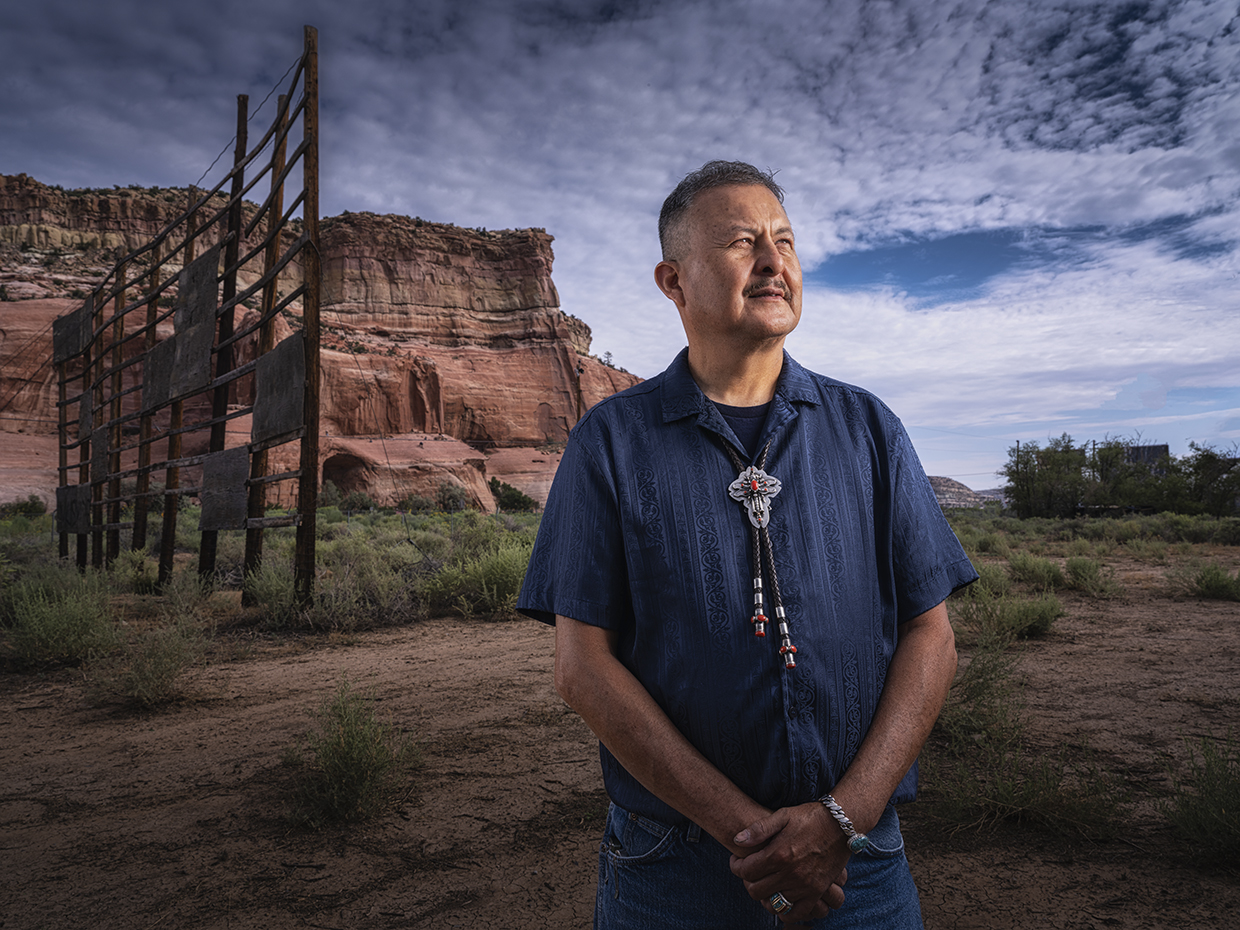
I stop by the radio station to meet on-air personalities Casey Shultz (aka Casey Jay) and tribal cultural specialist and media manager Lyndee Hornell (DJ Chica). The station's old logo of a smiling peach wearing headphones and talking into a microphone still hangs on one wall. Before long, I'm in front of the microphone as Shultz interviews me about my visit.
Hornell wants me to meet tribal elders at the Hualapai Cultural Center, a contemporary Southwestern building on Route 66. Among them is Marcie Craynon, who had been weaving rope from yucca fibers in her office. She delivers a crash course on Hualapai and Route 66 history, invoking everyone from President Chester A. Arthur to Kevin Costner and his film Dances With Wolves.
“I don't even know why Kevin Costner bothered with the Lakota,” she says. “He should have been finding out about our story. Because we are really the storytellers about what happened with Indian country.”
Craynon starts from the beginning, explaining, “The first trails were the animal trails.” People followed those rough tracks across a rugged land, creating footpaths that became part of a trading network extending to the Pacific Coast and into Mexico.
When the Spanish and Americans arrived, they used these same trails, coming into contact and eventual conflict with Indigenous people. In 1857, Lieutenant Edward F. Beale, with camels as pack animals, laid out the wagon road that established the corridor the Santa Fe Railway and Route 66 would later travel. Craynon says you can still find sections of Beale's road around Peach Springs.
The opening of the West meant displacement for the Hualapais. They battled U.S. troops and were forced from their lands, suffering and dying on a long march in 1874 during an event that the Hualapais came to call Yu' Nyihay Jamj Vo:jo (the Path of Tears Falling). Even after returning from internment camps on the Lower Colorado River and the 1883 establishment of the tribe's land, the Hualapais faced threats to their way of life well into the 20th century.
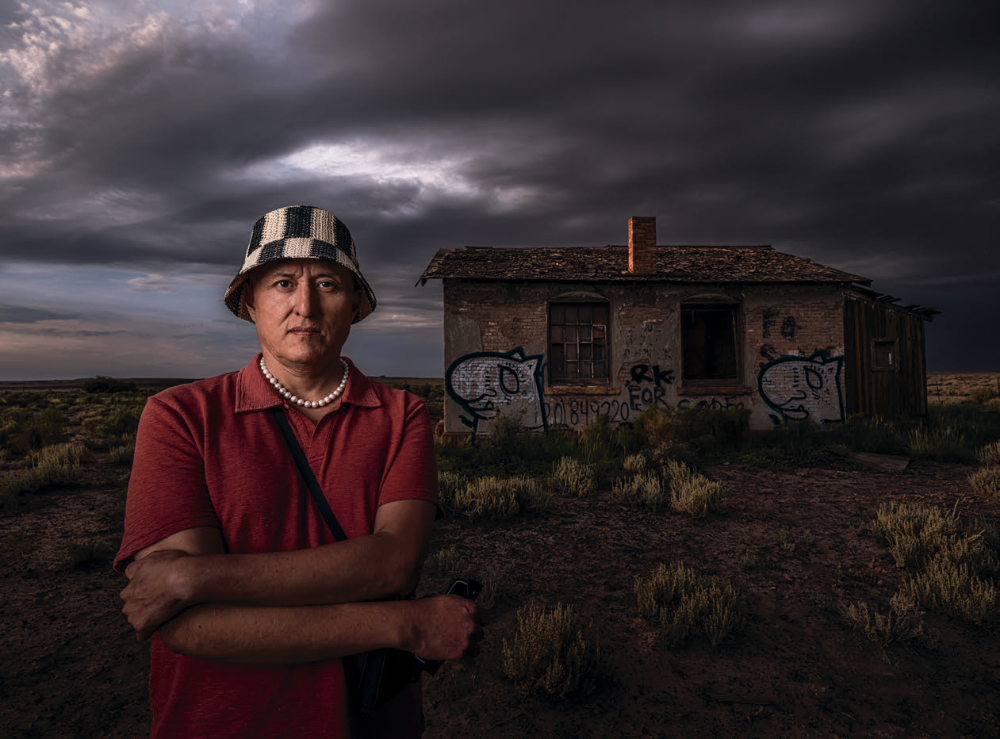
On the way to Peach Springs, I had stopped at a brick Colonial Revival building, brooding and haunting, with boarded-up windows and a faded, deflated basketball sitting in dusty brush near an old carousel. Built in 1903, this was the Truxton Canyon Training School, where three decades of Hualapai children were separated from families and forced to give up their language and traditional ways.
Hornell has prepared a two-page account of Hualapai history that she reads aloud. Her voice is filled with emotion as she tells a story that sweeps from those ancient animal trails to the Hualapais' creation of the Skywalk attraction at Grand Canyon West. She concludes: “We are still here. We are moving forward. And we will continue to adapt — not because we must leave our past behind, but because we carry it with us into everything we become.”
Hornell hands me a copy with the tribal seal underneath her signature, and I get back on the road. Route 66 crosses the Aubrey Valley, where Gunnison's prairie dogs stand sentry from low mounds of red dirt that go on for miles. I slow-roll through Seligman as the town flexes with Detroit muscle — Mustangs, Barracudas and El Caminos, too — before leaving Route 66 at Ash Fork for the late-afternoon run on Interstate 40, bound for Winslow.
Housed in the renovated 1930 depot behind La Posada Hotel, the Affeldt Mion Museum displays a room-sized weaving known in Navajo as Diyogí Tsoh. The Big Rug.
Seeking to draw visitors to his Route 66 trading post, Lorenzo Hubbell Jr. commissioned Greasewood weaver Julia Bah Joe and her daughter Lillie Joe Hill to create the enormous weaving. It turned into a community effort, as Greasewood residents spent two years shearing sheep and dying the hand-spun wool yarn in the familiar red, black, gray and ivory of the Ganado style. Then the women worked for three years to weave the 250-pound, nearly 700-square-foot rug before finishing it in 1937.
I stop by the old trading post, now a tribal center, where the brick parapet still bears the Hubbell name and advertises Navajo rugs in faded letters, before meeting Winslow artist Marlowe Katoney. Although he began his career as a painter, Katoney has been celebrated for weavings that blend traditional Navajo techniques and contemporary imagery.
He's a town kid. Katoney's father, Wilson, worked for the railroad, going from conductor to brakeman to engineer. His mother, Pearl, born on the Fourth of July and named for Pearl Harbor, sold cars.
Katoney experienced tribal life while visiting his grandparents at Sunflower Butte and Twin Buttes north of Winslow. Both his grandmothers were weavers, and when it was too hot to play outside, Katoney recalls, he watched his maternal grandmother, Mary Ann Morris, work.
“I would be on the bed, not too far away,” he says. “That beating, the sound of the beating comb, would lull me to sleep. It was the repetition of the comb on the weft that helped me sleep. Just watching her, I kind of knew what the tools on the loom did.”
In junior high and high school, his paintings won awards from the Heard Museum and he considered attending Santa Fe's Institute of American Indian Art. Then a guest instructor from Tucson made a comment that Katoney says “changed the course of how I would approach my art forever.”
The instructor told the Indigenous students that most artists struggle to earn a living. “She told us a story about someone saying to her, ‘Put a feather in your work. That will sell,’ ” says Katoney. “Deep down I knew that wasn't right. It was unsettling for me.”
Drawn by the school's prominent Native American artists, Katoney became the first in his immediate family to attend college and studied painting at the University of Arizona. The artist's life did in fact prove to be a struggle, and Katoney later returned to Winslow, working for La Posada and as a registration clerk at Winslow Indian Health Care Center.
One day in 2010, while he was visiting his maternal grandmother, she pulled out a loom. It was fully set up, and she told him, “See what you can do.” Katoney started on an ambitious storm pattern rug that took six months to finish.
That was a turning point. He began to meld painting and weaving into something different, explaining that he “deconstructs old ideas to create new ideas ... I approach my weavings like a painting, with color and contour, composition and chiaroscuro.”
His works reflect the pop culture influences that he assimilated as a self-described Gen Xer: MTV, graffiti artist Jean-Michel Basquiat and the rave scene. Along with traditional Navajo design elements, Katoney's pictorial weavings have incorporated skateboarders and breakdancers.
We head across Route 66 to meet his brother Yancey, a muralist and tattoo artist who operates Winslow's Spotted Toad Tattoo Shop. One of Yancey's murals runs the length of an alley and, like his brother's weavings, jumps cultural boundaries with traditional basketry imagery, a Frida Kahlo portrait, and, tucked underneath an air conditioner, R2-D2 in a headdress.
Katoney remembers that after Interstate 40 opened, “This part of town died out.” But as we walk, Winslow is busy with plenty of visitors standing on a corner and taking selfies while a guitarist shuffles through the Eagles' greatest hits.
Katoney later texts, suggesting I look for a building east of town with the roof caving in — the one-room schoolhouse that his mother attended — as well as a community past Jackrabbit known as Manila. Home to Navajo and Latino railroad workers, that's where his mom grew up.
“It's really important to catch the humanity of something like Route 66,” he says, “because it's not all restaurants and museums. It's more about the people.”
I CRUISE ACROSS RED EARTH, beneath a cloudscape of billowing white and deep blue sky, driving sections of Route 66 before reaching Sanders for one last look at the R.B. Burnham & Co. Trading Post.
Operated by fourth-generation trader Bruce Burnham, the business is closing next week. Katoney buys his skeins of yarn here, and locals always found the basics, whether bottles of Pennzoil, ramen, or sacks of Bluebird Flour for fry bread.
I sometimes detoured here from 100 miles away, then walked past the locked pawn room with stacks of vintage rugs in paper bags and into Burnham's wareroom, looking for such finds as the Teec Nos Pos-style weaving now hanging outside my office.
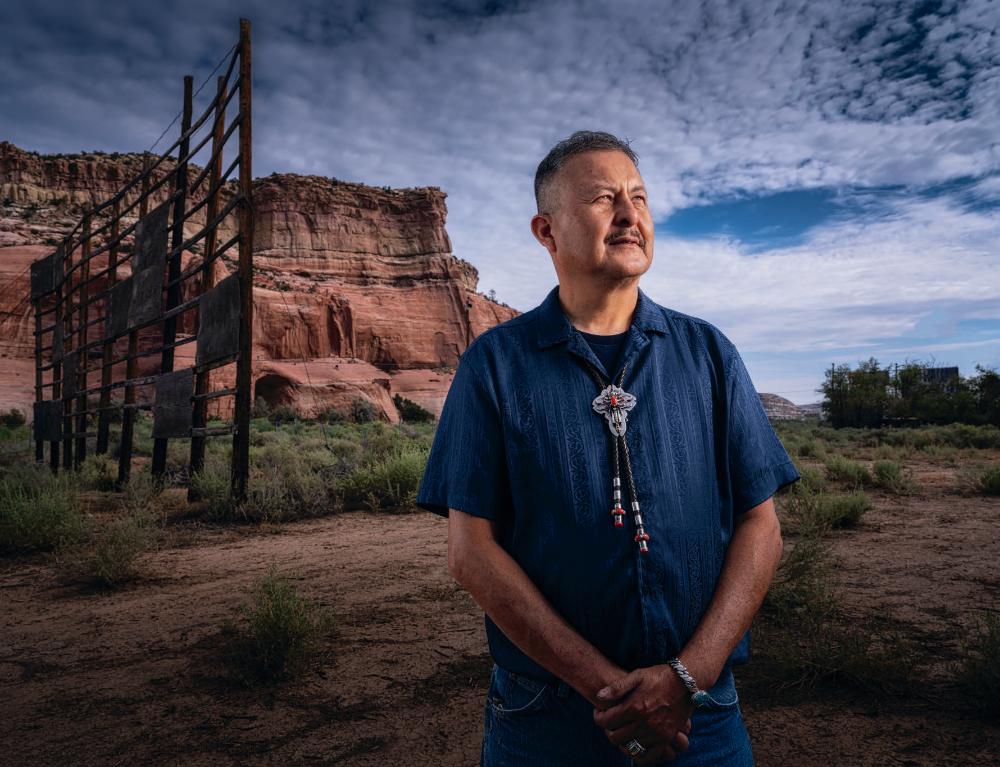
With New Mexico coming up fast, I exit at Lupton, where John Ford used the Painted Cliffs as a location in his 1940 film version of The Grapes of Wrath. The cliffs rise nearly 600 feet, dwarfing the Route 66 businesses clustered along the base of the mesa selling jewelry and jerky, dream catchers and kachinas. The message is clear: “EVERYTHING MUST GO SALE SALE SALE.”
Inside a building more shack than cottage, I find Navajo master silversmith Alvin Yellowhorse in a back workshop where the music is so loud I can’t even identify what’s playing. Wearing magnifying goggles, Yellowhorse hunches over a worktable, concentrating on a turquoise bracelet, and doesn’t notice me until I wave my arms and stomp one foot.
Yellowhorse is down with loud. He rides motorcycles and operates Lupton’s Bone Yard Speed Shop, where the crew stays busy with diesel truck repairs, tire blowouts and transmission rebuilds. Anything that needs fixing.
Yellowhorse is a true son of Route 66 and says, “We were raised here on the highway,” where his father, Frank, sold jewelry and rugs. Always looking to lure customers, Frank kept a covered wagon. Yellowhorse and his brother would hitch up two donkeys, white with dark spots, then help tourists onto the wagon for pictures before asking for donations.
“When the tour buses came off the highway,” he says, “my dad would yell, ‘All right, boys! Get your headdresses on! Get up on that wagon and wave!’ That’s kind of how we made money on Route 66.”
Yellowhorse started silversmithing after high school, and today he’s celebrated for his intricate inlays and contemporary pieces that integrate elements of Navajo, Hopi and Zuni styles. Yellowhorse keeps jars filled with different varieties of turquoise — Lucky Lynn, Sleeping Beauty, Northern Lights and Candelaria. He loves stone and travels to mines to dig his own turquoise, with hands roughened and darkened from handling uncut rock.
While I’m not in the demographic for one of Yellowhorse’s museum-quality pieces, I had noticed a sign out front touting “Jewelry repair while you wait.”
Years ago I purchased a Zuni ring from the late trader Bill Malone at his Gallup shop. Sometimes Route 66 feels like one long small town: Turns out Malone was Yellowhorse’s uncle and a close friend of Burnham’s, too. Yellowhorse says he and other local kids used to tag along when the men went hunting and fishing.
One of my ring’s 16 inlaid pieces is missing, and Yellowhorse finds a matching stone, then goes to work, grinding and shaping the turquoise to fit the gap. Ten minutes later, he’s done. We’re outside admiring the ring when an explosion echoes through the canyon, followed by the unmistakable sound of a shredded tire flapping and slapping against pavement at 75 mph.
“Blowout!” Yellowhorse declares. There might be some work for the crew over at the Bone Yard.
That night, with the flower moon rising above the clouds, freight trains rumble past La Posada, their cars tagged with graffiti painted during stopovers in big-city railyards far from Winslow.
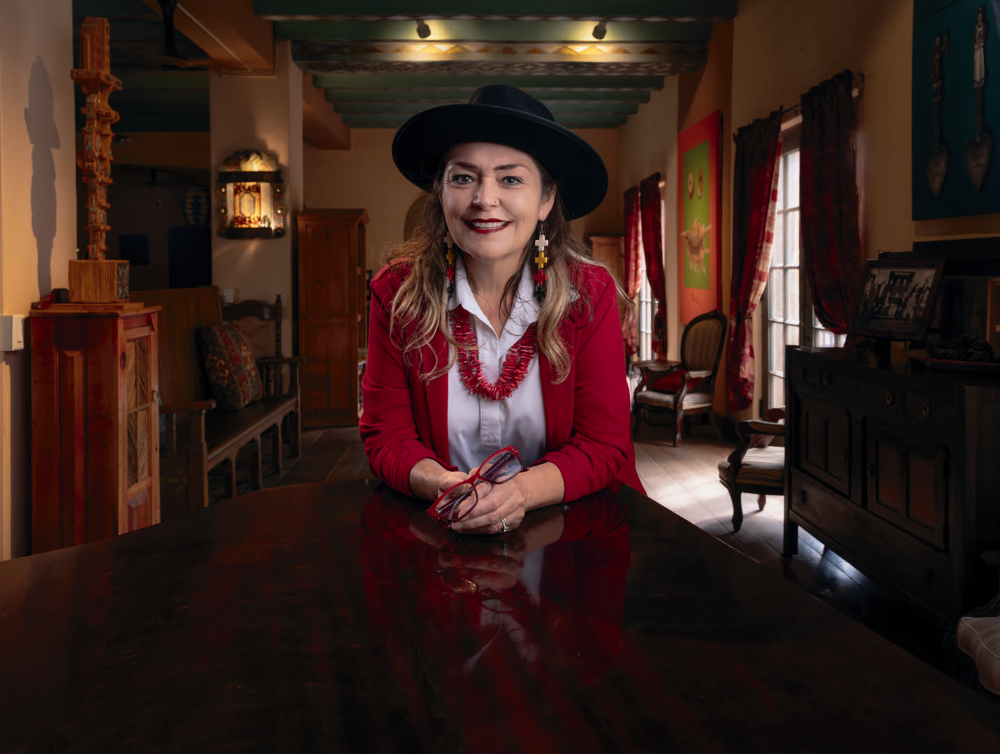
In the morning, Winslow Mayor Roberta Wilcox Cano, known to everyone as Birdie, stops by. Her mother’s ancestors were Mormon settlers, and she’s of Navajo and Pueblo descent on her father’s side, making her the first Native American mayor in Winslow — if not in all of Arizona, according to some sources.
Wilcox Cano’s grandfather grew up at Steamboat on the Navajo Nation but was sent to boarding school, where he was given the Wilcox name. “He made it known to his children that you will be Americanized,” Wilcox Cano says. “If you don’t assimilate, you’re not going to become anything.”
Wilcox Cano grew up in Winslow, singing in high school show choir with her good friend Marlowe Katoney. She remembers a time before Interstate 40, when people still came into town on Route 66. There were powwows, and Navajo and Hopi craftspeople sold authentic turquoise jewelry and weavings from open-air stands, like something out of Santa Fe.
She’s wearing her grandmother’s necklace, beautiful with three long strands of turquoise stones. “This is so old,” she says, “and I never appreciated these things as a kid — all of the treasures that were here.”
Wilcox Cano says locals were excited about Interstate 40, an infrastructure project that promised jobs. “They didn’t grasp that it would devastate downtown and the vibe, the gas stations and motor courts,” she says. “People thought Winslow had always been so busy, that there was no way things wouldn’t continue. Then everything became all ‘hurry up and get there.’ No stopping to hang out in Winslow.”
Wilcox Cano is seeing a cultural resurgence in Winslow. The Tribe of Many Feathers, an intertribal club at Winslow High, just held a powwow, and the school offers a Navajo language class. Visitors are looking for authentic experiences, such as trying traditional crafts.
“You get the why, you get the how,” she says. “You get the story of what our work was, what came from the earth. I even reached out to Marlowe and said that I wanted to learn weaving. He said, ‘Girl, you don’t got the time.’ Yeah, maybe not right now. But I see the value in his knowledge. How he learned it from his family.”
Wilcox Cano is the kind of person you talk to for 45 minutes, then feel like you’ve known for years. We say goodbye, with a selfie and a hug, and I head west on Interstate 40 before hopping off at Winona, the town famously name-checked in (Get Your Kicks on) Route 66. The road climbs toward Flagstaff, the San Francisco Peaks dead ahead, reaching town near the 1,000-year-old Sinagua site at Elden Pueblo.
For all the kicks and kitsch, history hides in plain sight along Route 66. Built in 1936, Flagstaff’s El Pueblo Motor Inn looks like just another motor court far past its prime. A cyclone fence encages the property, and there’s a “For Sale” sign out front.
But the motel played a critical role in Native American history during World War II. El Pueblo’s owner, Philip Johnston, a civil engineer raised on the Navajo Nation, is credited with proposing the use of the Navajo language to transmit undecipherable messages. That led to the establishment of the famed U.S. Marines’ Navajo Code Talkers, and El Pueblo was where Johnston recruited and housed tribal members before they shipped out.
Outside Williams, I pick up Route 66 to reach the trailhead for Keyhole Sink. I hear freight train whistles calling in the distance, as Harleys rumble by on Route 66 and Jake brakes jackhammer along Interstate 40. Once on the trail, that all fades away.
There’s a forecast of snow, and a cold wind blows hard through the ponderosas, even as early spring wildflowers, blue flag and phlox, sprinkle color around the forest.
After the parched winter, Keyhole Sink’s waterfall is dry, and the pond at the base of the box canyon’s lichen-glazed basalt cliffs remains muddy and shallow. I climb up the boulders to see petroglyphs etched by the Cohonina people as far back as 1,300 years ago. Some images are cryptic and abstract, others clearly recognizable: bear paws, lizards, frogs and a deer herd entering the dead-end canyon during a hunt.
Route 66’s centennial is a time to reflect on everything that has changed and what hasn’t changed at all. I think about my parents migrating west on the highway, Chicago to L.A., in a Chevy woodie with a bad radiator, posing 76 years ago at places I visited yesterday: the Painted Desert Inn, the petroglyph panel at Newspaper Rock, and Agate House, a 1,000-year-old pueblo built of petrified wood.
Keyhole Sink is another reminder that people have been passing through here pretty much forever. How 100 years is a long time in our lives. Just not in the life of an old road.