
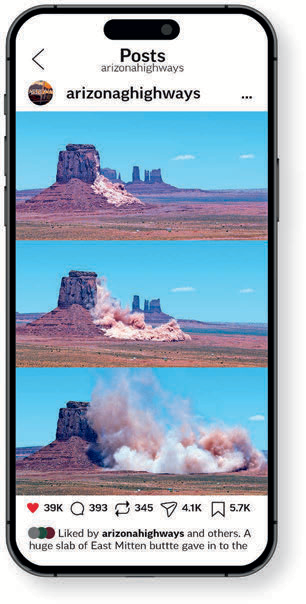
1. The most-viewed image over the past year was captured serendipitously. The series of three shots was made at 12:45 p.m. on May 18, 2006, in Monument Valley. In that moment, a few lucky observers witnessed a once-in-a-lifetime occurrence. A huge slab of East Mitten Butte gave in to the effects of wind and weather and came crashing down in a sandstone avalanche. By all accounts, it was a spectacular event, leaving in its wake barely a scar on the face of the vast plateau. Among those present that day were Craig and Roylene Garrett of Madison, Wisconsin, and their guide, Kent Hugh. Roylene had the presence of mind to capture the avalanche on film and generously shared it with us.
Roylene Garrett
Views: 4,382,382
Post Date: November 10, 2025
Publication Date: September 2006
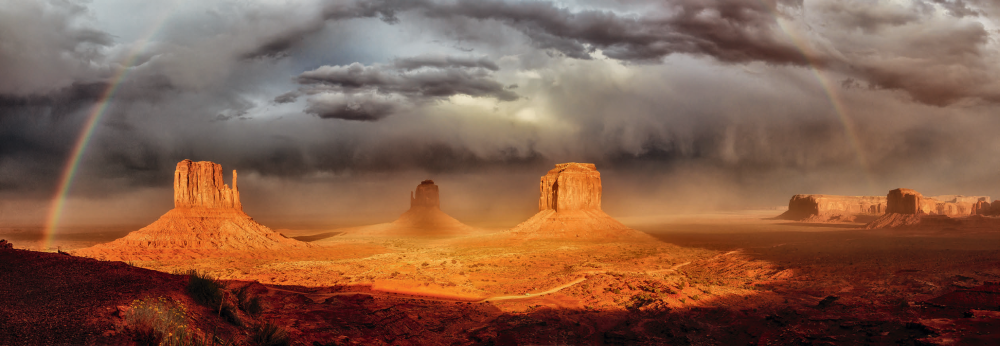
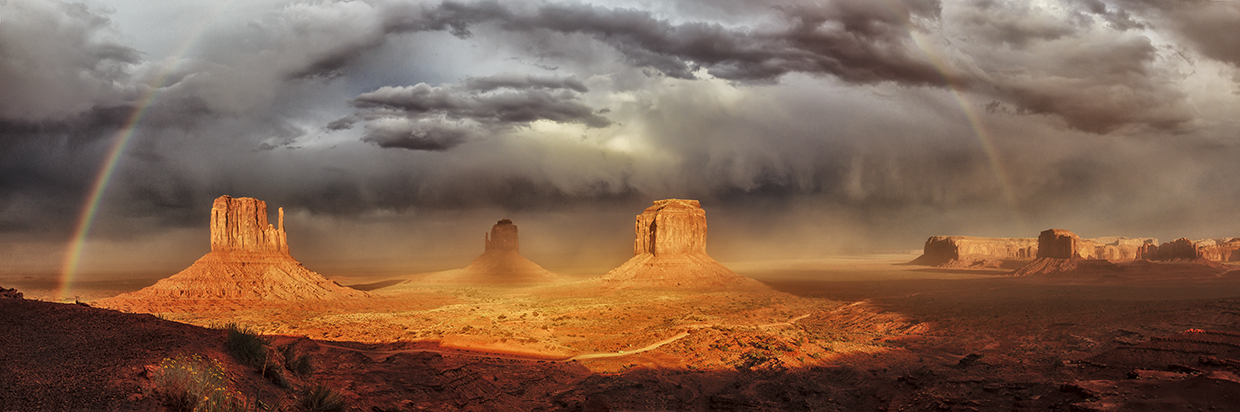
2. It isn’t often that the term “perfect storm” can be applied literally, but this image, a stitched panorama of three photos made during an autumn storm, is one of those instances. As photographers know, landforms are unlikely to change in the span of a human lifetime, which means much of scenic photography is about changing weather. Here, the Mittens and Merrick Butte in Monument Valley become anchors for everything else happening in the photo: dust, rain, virga, a rainbow and late-afternoon light. It all adds up to an incredible image. This image was ranked one of the “100 best photographs” in the history of Arizona Highways.
Enio Lanaro
Views: 421,178
Post Date: December 28, 2025
Publication Date: April 2014
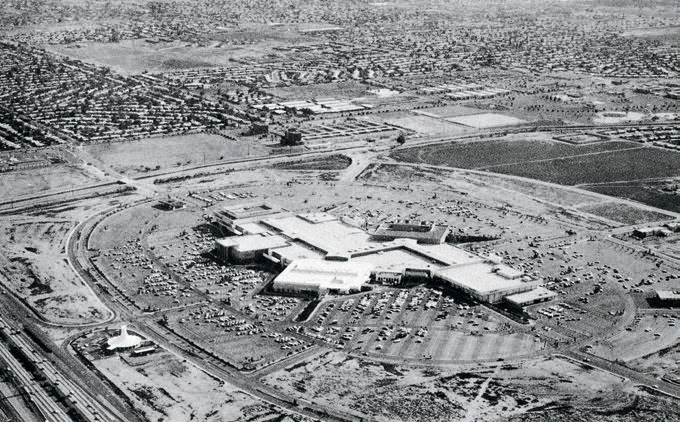
3. We posted this image of MetroCenter, a beloved mall in Phoenix, as it was about to be torn down — 50 years after its grand opening. Hundreds of people commented. “Wowza,” Keith Sanders wrote. “I remember driving to MetroCenter from Wickenburg to this magical place where everything you wanted to do was there. Movies, ice skating, shopping for school clothes … all in one place.” Shagufta Mulla weighed in, too. “I miss MetroCenter!” she wrote. “Peggy Fleming visited the skating rink, and my elementary school class took a field trip to see her. That was in 1982 or 1983, I think.”
Gene Frank
Views: 397,493
Post Date: December 8, 2025
Publication Date: May 1970
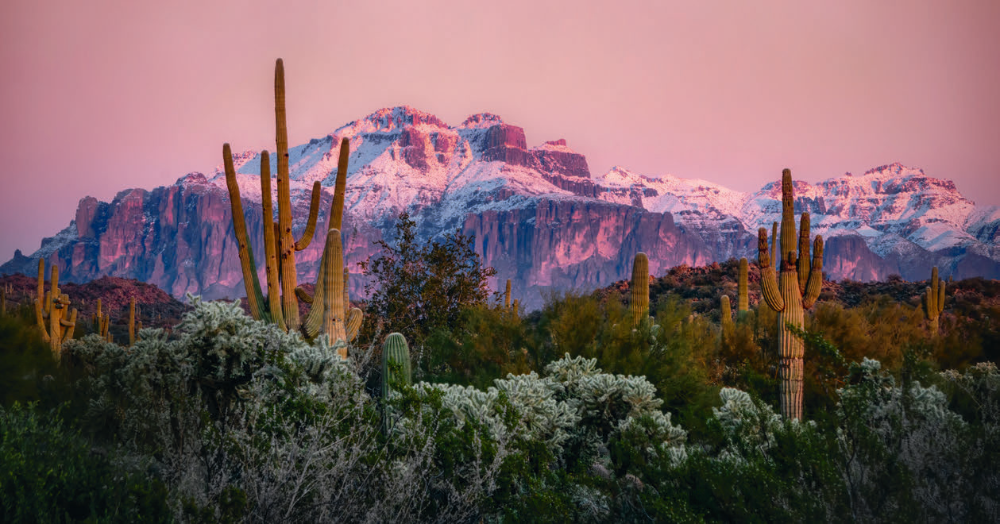
4. Saguaros and chollas contrast with the snowy Superstition Mountains, east of Phoenix, around sunset. “I call this image Superstition Alpenglow,” Saija Lehtonen says. “This was one of those rare, magical winter evenings in the desert when the Superstition Mountains were frosted with snow. A beautiful rosy light engulfed the Superstitions after sunset, and the desert came alive with a warm pinkish glow.”
Saija Lehtonen
Views: 395,305
Post Date: January 22, 2026
Publication Date: January 2023
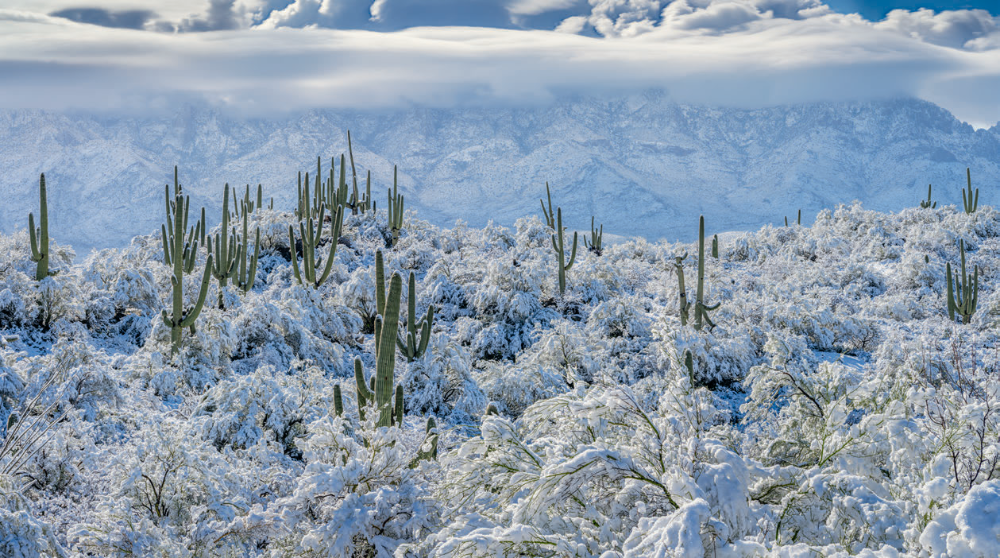
5. A late-winter storm leaves heavy snow on saguaro cactuses and other desert plants at Honey Bee Canyon Park, in the foothills of the Santa Catalina Mountains. The park is also home to hiking trails, petroglyphs and a historic dam. The Santa Catalina Mountains, one of several “sky islands” in Southern Arizona, range in elevation from 2,724 feet in Sabino Canyon to 9,157 feet at the top of Mount Lemmon.
Jack Dykinga
Views: 326,254
Post Date: December 18, 2025
Publication Date: December 2023
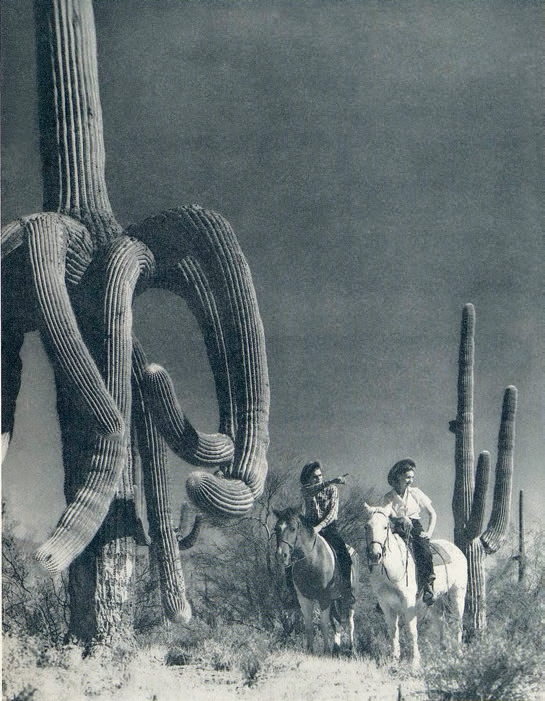
6. This is one of the first photographs we ever published by Esther Henderson, who was inducted into the Arizona Highways Hall of Fame in 2025. The caption from the magazine in 1939 reads: “The Arizona desert in midwinter has an attraction and fascination that cannot be equaled. The stately saguaro is your companion. The desert, warmed by a friendly sun, invites contemplation and it offers you rest and quiet and surcease from hurry. The desert air, clear and aromatic, is light and zestful and seems to give you wings.”
Esther Henderson
Views: 263,834
Post Date: August 15, 2025*
Publication Date: February 1939
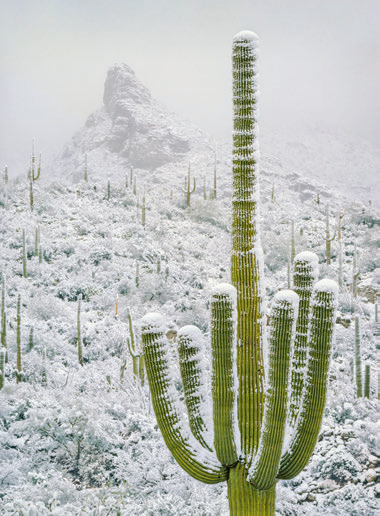
7. Snow-covered saguaros and other desert plants stand on a hillside in the Santa Catalina Mountains, near Tucson. “What sets Jack Dykinga apart is that he’s always looking for a narrative,” says Jeff Kida, our photo editor. “He tells stories with his images. Because of that, there’s an added layer of interest to his work.” He’s also a master of lighting and composition. He understands the balance between art and technology. And he studies his subjects the way Galileo studied Orion and the Pleiades.
Jack Dykinga
Views: 216,005
Post Date: December 8, 2025
Publication Date: December 2020
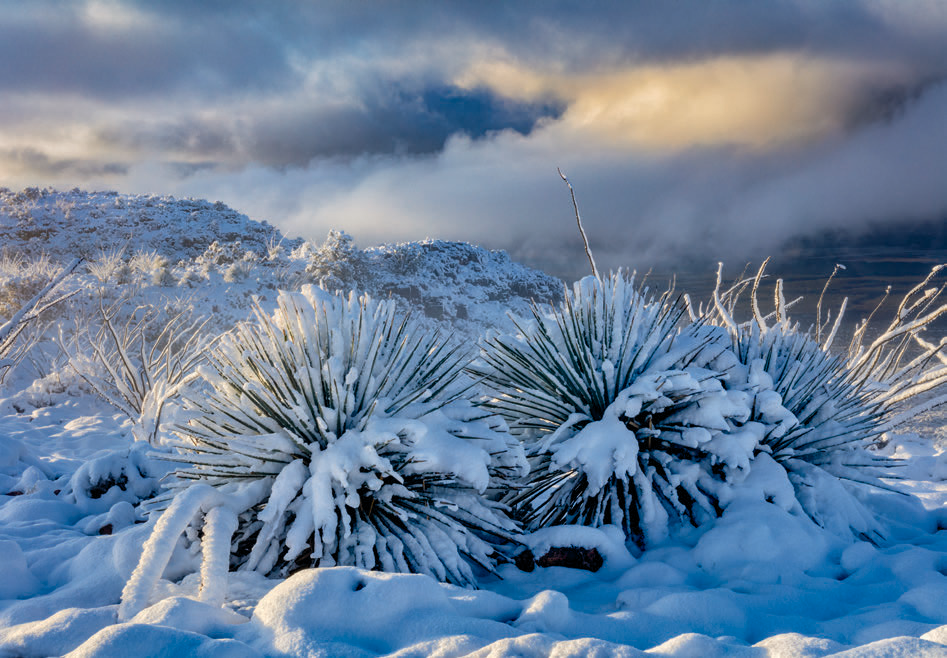
8. Snow blankets yuccas and ocotillos in Parker Canyon, a remote canyon in the equally remote Sierra Ancha of Central Arizona. Known for its steep canyons and numerous archaeological sites, the Sierra Ancha is protected by a 20,000-acre wilderness area managed by the U.S. Forest Service. “I was immediately drawn to this area because I could drive right up to these incredible photo opportunities and photograph to my heart’s content,” Claire Curran says. “I soon discovered that every season provided wonderful clouds, mild to ferocious storms, unique weather like fog over the lake, and the most colorful sunsets that are every photographer’s dream. My favorite season is winter when a snowstorm moves in.”
Claire Curran
Views: 191,543
Post Date: December 17, 2025
Publication Date: December 2025
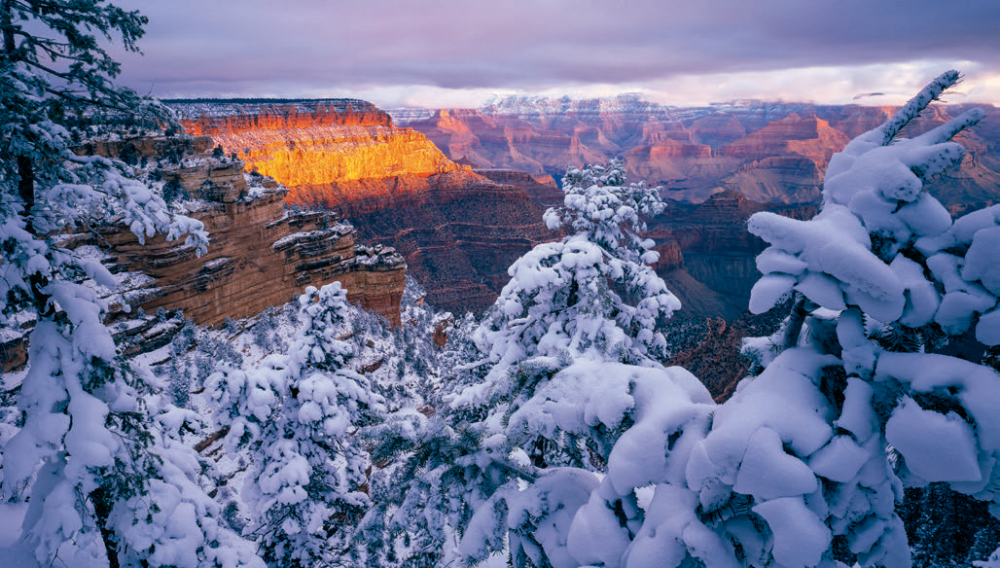
9. This photograph of the Grand Canyon was made at Shoshone Point, on the South Rim. “It seems a gigantic statement for even nature to make all in one mighty stone word,” John Muir said. “Wildness so Godful, cosmic, primeval, bestows a new sense of earth’s beauty and size ... but the colors — the living, rejoicing colors, chanting morning and evening, in chorus to heaven! Whose brush or pencil, however lovingly inspired, can give you these? In the supreme flaming glory of sunset, the whole canyon is transfigured, as if all the life and light of centuries of sunshine stored up in the rocks was now being poured forth as from one glorious fountain, flooding both earth and sky.”
Jack Dykinga
Views: 186,090
Post Date: January 9, 2026
Publication Date: January 2026
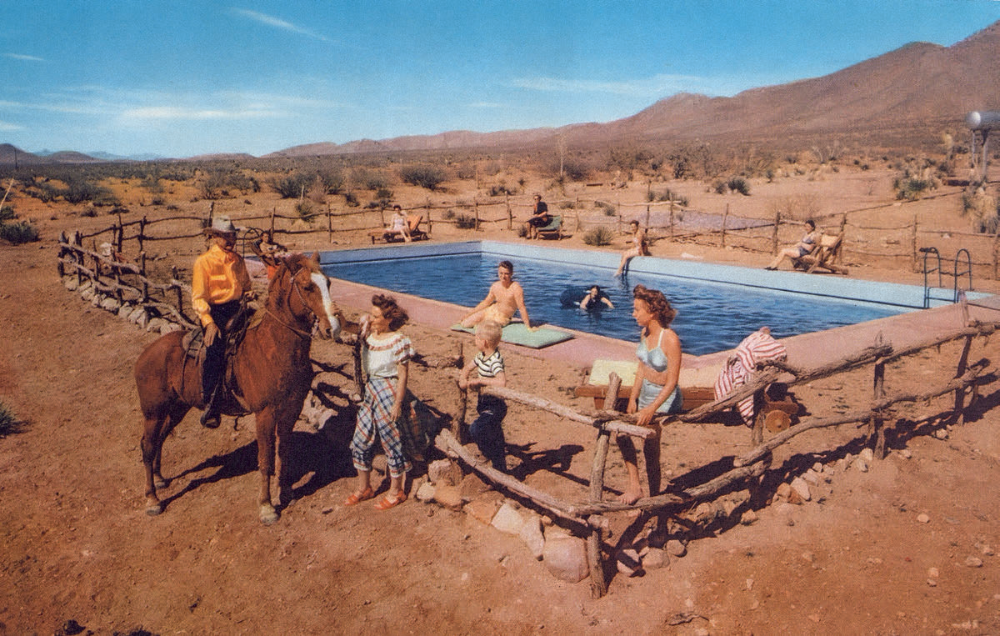
The unlikely swimming pool in this image, plopped down in the middle of the Sonoran Desert, was a decadent feature of the Em-Bar-Bee Ranch, which was located at the foot of the Swisshelm Mountains north of Douglas. In 1948, the ranch was advertised as “one of the newest and finest guest ranches of the Southwest.” It later became the Cochise Lodge and Guest Ranch before closing in 1977, after its owners and two ranch employees were murdered.
Arizona Highways Archives
Views: 184,110
Post Date: September 13, 2025
Publication Date: September 1948
*This issue went to press in July; therefore, our August 2025 issue was in the one-year window.