
Editor’s Note: For almost 90 years now, we’ve been sharing the beauty of Arizona with the rest of the world. It’s something we do every month through the words of writers such as Charles Bowden and Craig Childs, and the images of photographers such as Ansel Adams, Laura Gilpin and David Muench. Their interpretations of places like the Grand Canyon, Sedona, Monument Valley and the Sonoran Desert have inspired other artists to follow in their footsteps.
It’s especially true with young photographers. Whenever we ask about their role models, they usually rattle off names that can be traced to our archives. Marie Baronnet was different. As a 41-year-old Parisian who specializes in gritty photojournalism, Marie was mostly unfamiliar with Arizona Highways and its iconic photographers. And that’s what made her perfect for this portfolio.
We were shooting for something along the lines of A Connecticut Yankee in King Arthur’s Court, with Marie in the role of Hank and the Navajo Nation as Camelot. The one big difference from the Twain classic was that our protagonist — a Frenchwoman on assignment in a rugged foreign land — would be a willing participant. Of all the things we could tell you about Marie, perhaps the most important is that she’s fearless. In fact, she would have gladly ventured to the Navajo Nation alone, but we wanted to give her some guidance, so we set her up with Gary Ladd. But only for a few days.
Gary is one of those iconic photographers who inspires others. He’s also a kind man, a wonderful teacher and an expert on the history, culture and landscape of Navajoland. Although he and Marie have almost nothing in common other than talent, we knew he’d point her in the right direction, give her the lay of the land and introduce her to some of the locals. And, of course, he did. Thank you, Gary. Beyond that, it was up to Marie — she was The Boss.
In all, she spent more than a month on the Navajo Nation, shooting everything from storm clouds and Navajo elders to Japanese tourists and stray dogs. In this portfolio, we feature just a few of her spectacular images. As you’ll see, it’s something different, and that’s exactly what we wanted.

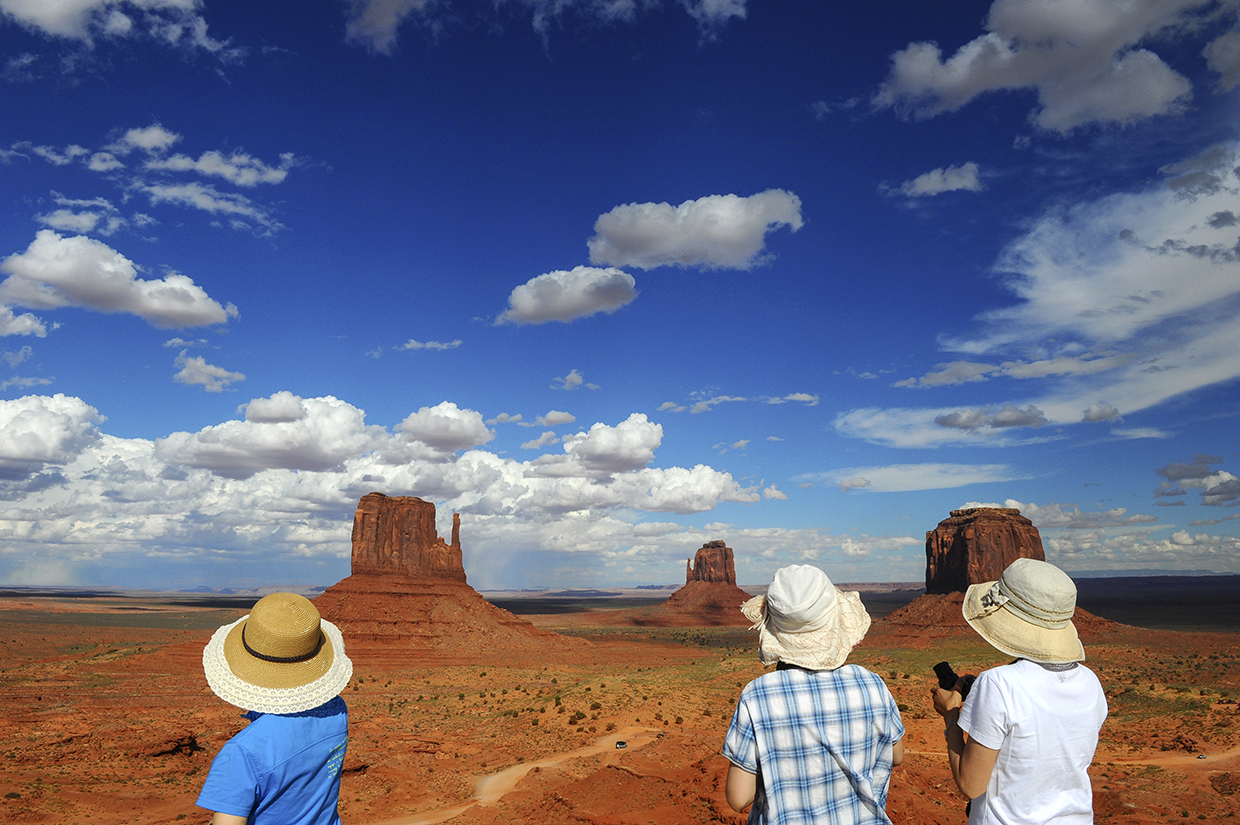
Although Marie had never before visited the Navajo Nation, she was familiar with long views of Monument Valley’s famed Mittens. When she made this photograph, she incorporated a human element — three Japanese tourists. “I’ve seen so much of Monument Valley in photographs and guidebooks,” she says. “I was fascinated by the crowd. It felt like a nice little anecdote that they were all wearing the same type of hat — it was just something that I noticed. If I had been making a photograph of the landscape without the tourists, it would be very beautiful, but something would be missing for me without the people.”
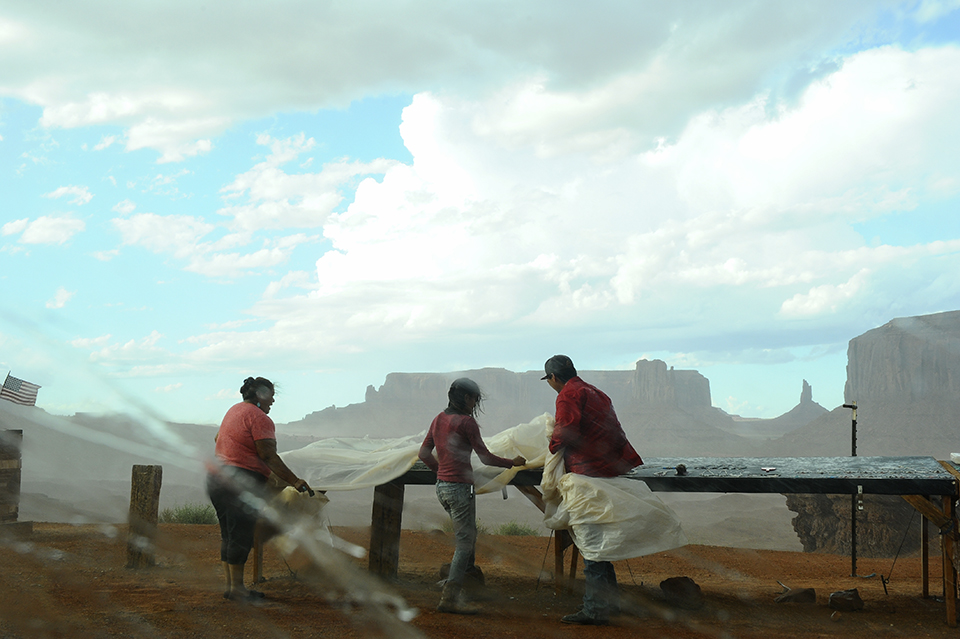
Monsoon season on the Navajo Nation means that dramatic storms consume the landscape as quickly as they do in other parts of Arizona. Marie experienced several storms during her assignment, but this one, in particular, led to a moving shot. “This was a very quick capture,” she says. “This was in September, and moisture was everywhere. We went to this little stand, and rain fell suddenly — and very hard. Everyone moved their things very quickly, with the exception of these people, who were left outside, struggling with their work. I could see how skilled they were in the folding and unfolding of things, taking things apart and putting them back together. And there was a division of worlds. Tourists went back to their rental cars or trucks or the safari-style jeeps, and the artists were struggling to protect their work.”
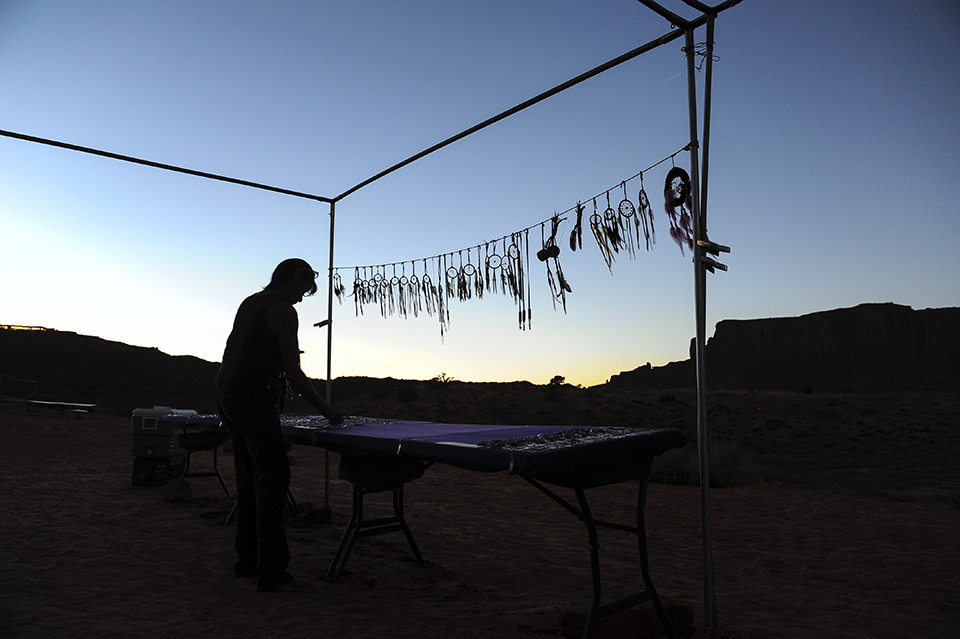
For Marie, this photograph was all about the light. “I had some magical moments where the light was beautiful and soft,” she says. “This was at the end of the day, and this artist was still working. Dreamcatchers are so significant in the culture. Many European tourists buy them and take them home. They followed me everywhere on the Navajo Nation, and they’re nice to have. This picture isn’t really sending a message. It’s just a moment between day and night.”
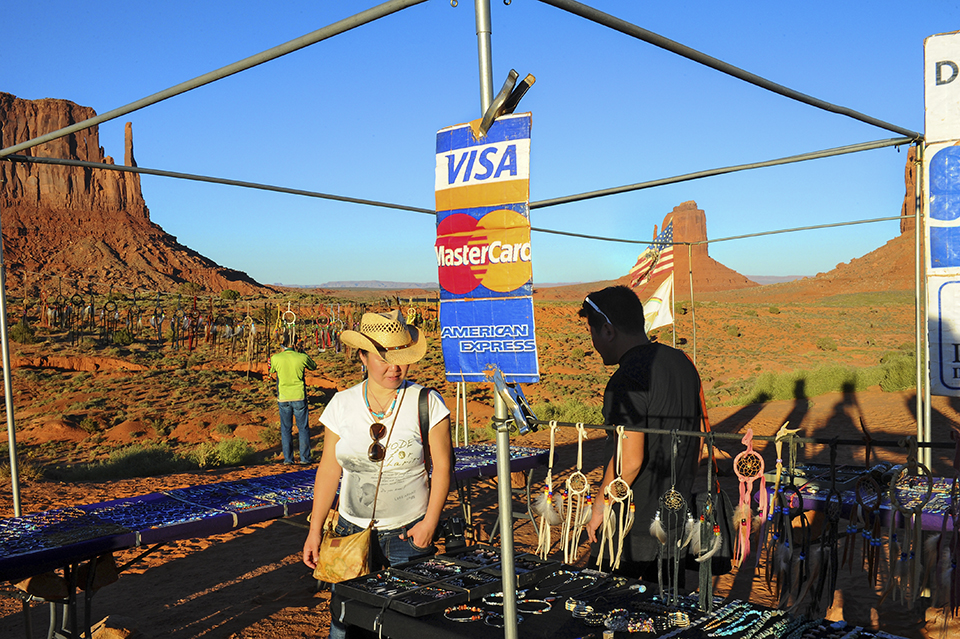
As Marie traveled more and more across the Navajo Nation, she paid closer attention to the Navajos’ interaction with tourists and the delicate relationship between tradition and technology. “I was surprised to see these credit-card signs,” she says. “I presumed that the artists would accept only cash. I was in this wide space — this natural space — and there were credit-card machines. The stand was jam-packed with tourists, and this photograph was about me exploring the relationship between consumers and the Navajos.”
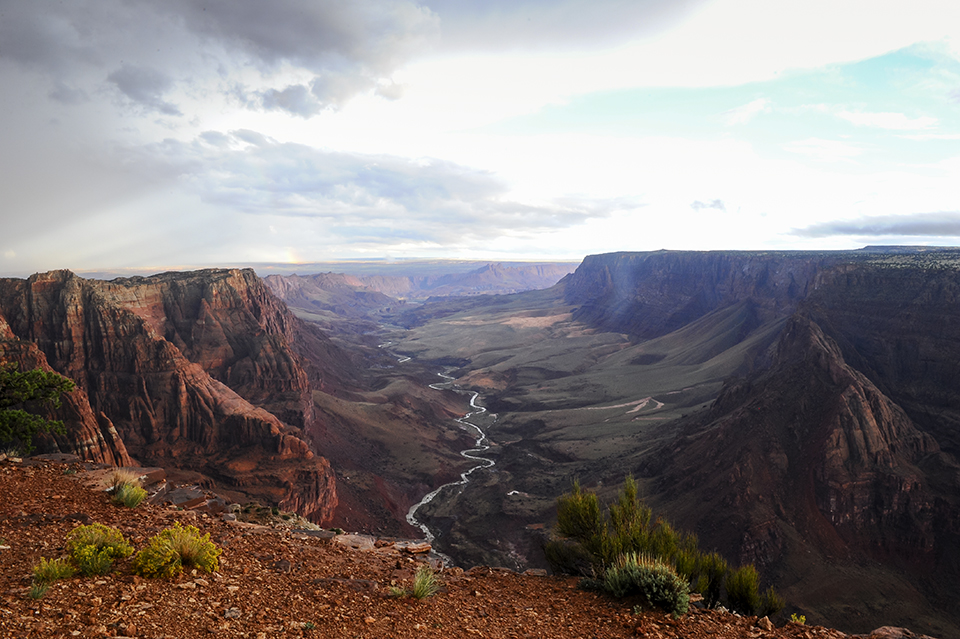
Because photographing people is Marie’s passion, she was hesitant to attempt landscape photography. But with a bit of guidance from Gary Ladd, she made several scenic images. “It was a very different experience for me,” she says. “A few times, I thought: Gary just wants to photograph rocks. I just want to photograph people. But I knew that the landscapes would lead me to the people. One doesn’t go without the other. I love the cinematic effect of light on these landscapes. Many Europeans have seen Northern Arizona in the movies, and when you see it for real, you get the same impression: It’s absolutely gorgeous. They make you dream. They make you want to see them. And they’re bigger than life, so you’re not disappointed. It was also powerful for me to see the landscapes through the eyes of someone who lives for the landscapes. Gary himself became a subject for me. He’s a photographer who works in an old-school format, with a 4x5 camera. He knows well the rocks and flowers and nature, and he couldn’t stop talking about rain. He lives and breathes and archives the landscapes, and he’s documenting a world that could disappear. He’s aware of that, and it makes him sad. Seeing his passion was precious to me.”
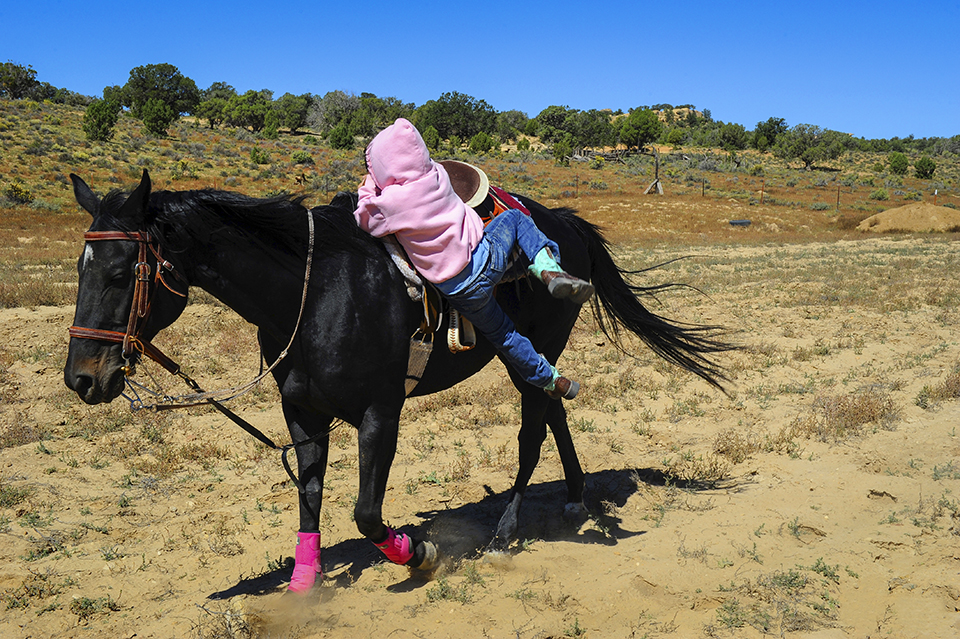
This young horseback rider, Alyia Johnson, lives in Phoenix but frequently visits relatives on tribal land. “I visited this family in Black Mesa,” Marie says. “Alyia was riding a horse like a goddess. I’d never seen someone so confident on a horse at that age. She had attitude. I left, then came back, stayed overnight and talked to Alyia’s aunt, who was training her for a contest in New Mexico — ‘Miss Rodeo.’ It was interesting to me because the little girl travels all the way from Phoenix to ride the horse and see family. Navajo children seem self-reliant. It’s as though Nature gives them the possibility to be stronger, more confident. They’re very special kids, but I felt as though the parents were trustful.”
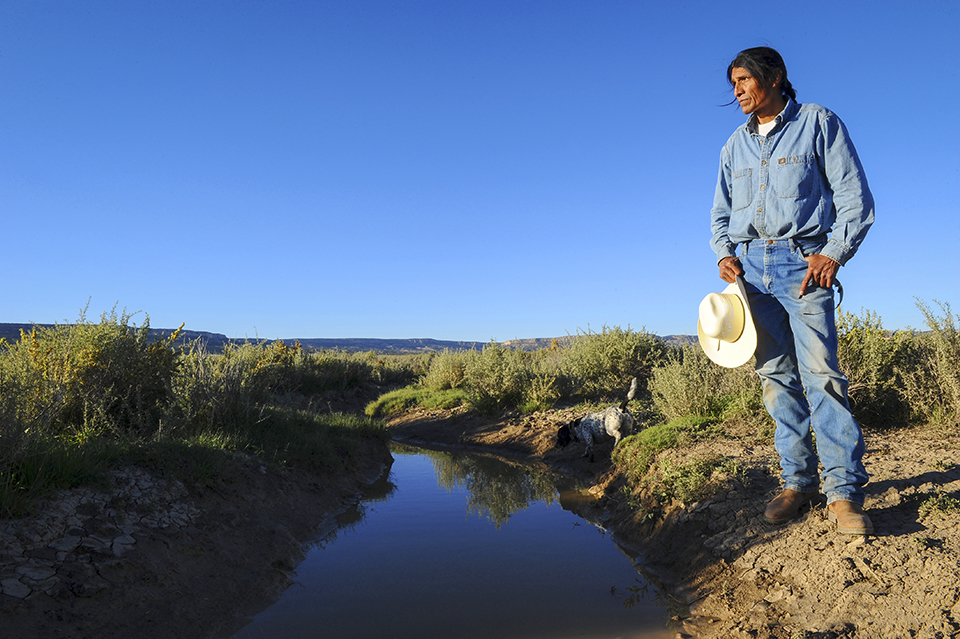
For 12 years, Marshall Johnson and his wife, Nicole, have worked as conservation activists on the Navajo Nation. He was one of several activists Marie met during her assignment. “The Johnsons live with their kids in Pinon, a remote community affected by the [Peabody] coal mine and uranium pits. In this photo, Marshall is showing me earth fissures in Blue Gap, which isn’t far from Pinon. He says they are caused by heavy water-drafting. The earth fissure has been filled with water because of the rain. Marshall explains that before the mine and power plant were built, there was an abundance of vegetation, but now it has disappeared. He also says that the quality of water was ‘the best,’ but now the kids are coughing. Marshall believes that with strong leadership, the Navajo Nation could have running water and low-cost power.”
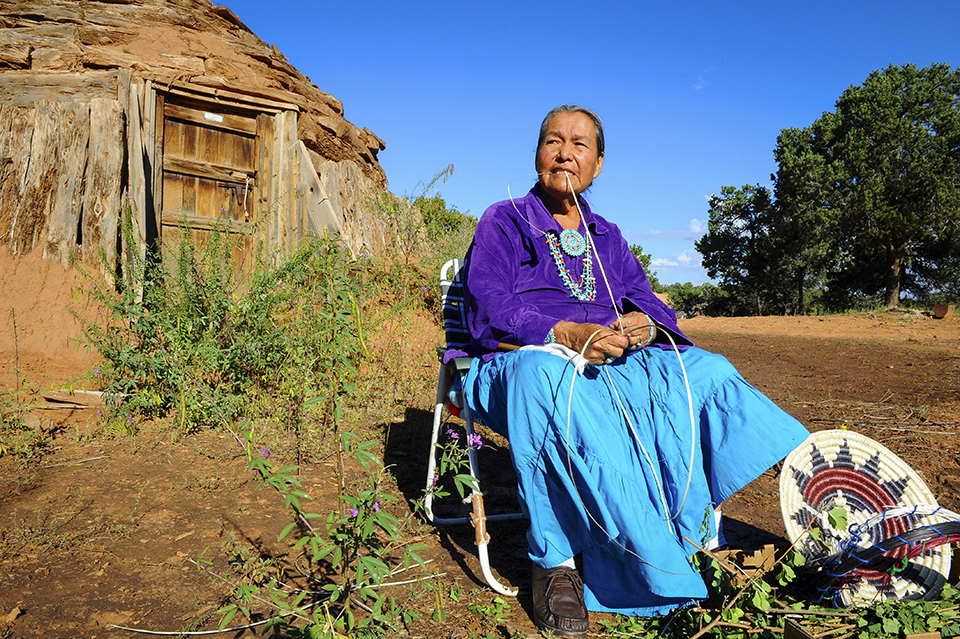
Basket-weaving is a tradition that sustains many Navajos, including Marie Martinez. “I met Marie through a friend, Orletta Slick, and I really wanted to see what she was doing,” Baronnet says. “She showed me some baskets in her home, but we went outside for pictures because the light wasn’t good inside. She started to show me how she was doing it. She was using Mexican cliffrose and juniper ash. I wanted to see the hogan behind her, which her husband built for ceremonies. There’s a tradition of taking care of the elders on the Navajo Nation, which is something that has completely disappeared in France. People there take care of their parents from far away, but on tribal land, people are incredibly bound to their parents. They’re always going back and doing things for them. I found that interesting. In many of the developing countries where I’ve been, the parents are very important. The less the children have, the more the children want to work really, really hard to give back to their parents.”
For more information about Marie Baronnet, visit www.mariebaronnet.com. For more information about Gary Ladd, visit www.garyladd.com.