
I’m on Facebook, one of many social networking Web sites, when I come across a checklist. I think, I’m from Arizona! and open the page. The list includes things such as: “You have no idea why 48 other states insist on changing their clocks twice a year” and “A rainy day puts you in a good mood,” to which I silently nod.
Then I read another one: “You’ve lived in Arizona your entire life and have never been to the Grand Canyon.” That’s when I realize I’m a typical native Arizonan. I’m embarrassed, and in an effort to make myself feel better, I start sending messages to friends who were born and raised in the state, asking if they’ve ever been to the world-famous landmark.
My best friend, Lexi, whom I’ve known for the past 13 years, says no, and so do a couple of other friends. I’m glad I’m not alone, but I’m still embarrassed. So, in yet another attempt to make myself feel better, and escape any further persecution — self-inflicted or otherwise — I decide that the girls are taking a road trip. To the Grand Canyon.
Unfortunately, it’s July when I make my proclamation — too hot to do a big hike — so we start looking at dates. Lexi can’t do it the weekend of her 21st birthday. Lyndsay and Misha don’t really care, as long as it’s not too hot. Eventually, we settle on the second weekend in October, an “ideal” time, we’re told. “You won’t die of heatstroke or freeze to death in a snowstorm.” Uh huh. The plan is to pitch a tent on the South Rim at Mather Campground.
The next time the four of us are together is two days before the trip. We’re in my living room trying to set up my new tent, and it’s not going well. Frustrated, we give up and talk about what we’ll need to pack: food, water, sleeping bags, hiking boots, warm clothes. Temperatures in Scottsdale have been in the 90s, but the first cold weekend of the year is expected, and on television, April Warnecke’s snowy forecast for the Canyon warns of freezing nights and a possible storm. The news is unsettling, but we need to get back to the tent.
After one last attempt, we finally get it. Although it’s designed to sleep three, we decide that spooning will help keep us warm. As a test run, we climb in — shortest (me) to tallest (Lexi) — and lie down side-by-side. It works, and the girls head home feeling less stressed about the whole thing. Our parents’ fears, however, are as strong as ever.
I talk to Lexi’s mom on the phone, assuring her that I’ve carefully planned the weekend and that we’ll all come home alive. I talk to my mom, too. The night before we leave, she’s terrified that the 80 mph wind gusts projected for the weekend will blow my 95-pound body over the rim and into the depths of the Canyon. “It’ll be OK, Mom,” I say.
On Friday morning, I scramble to make sure everything’s taken care of. I set up a time to meet up with the photographer who will document our trip. I text-message the girls, telling them to head over as soon as they’re done with their classes at Arizona State University. And I start packing the car. My only goals are to leave the city before rush hour and make it to the Canyon before it gets dark.
By noon, Lexi and Lyndsay are nowhere to be found, and Misha is waiting patiently for us to pick her up. Finally — after Lyndsay showers, blow-dries and straightens her hair — the two girls show up and we hit the road. Unfortunately, the rocky start only gets worse. Traffic is already backed up on Interstate 17, and the girls are already fighting over who will share Lyndsay’s queen-sized air mattress. Lexi and Lyndsay claim the first night. “I want to be comfortable,” Lexi says. “Or at least as comfortable as I can be.” They offer me a spot that I decline, citing my desire for a more authentic camping experience.
Our first and only stop is the Walmart in Flagstaff, where we hook up with photographer Peter Schwepker, and stock up on supplies. On my shopping list is a box of firewood. For the other three, it’s several copies of US Weekly and People magazines.
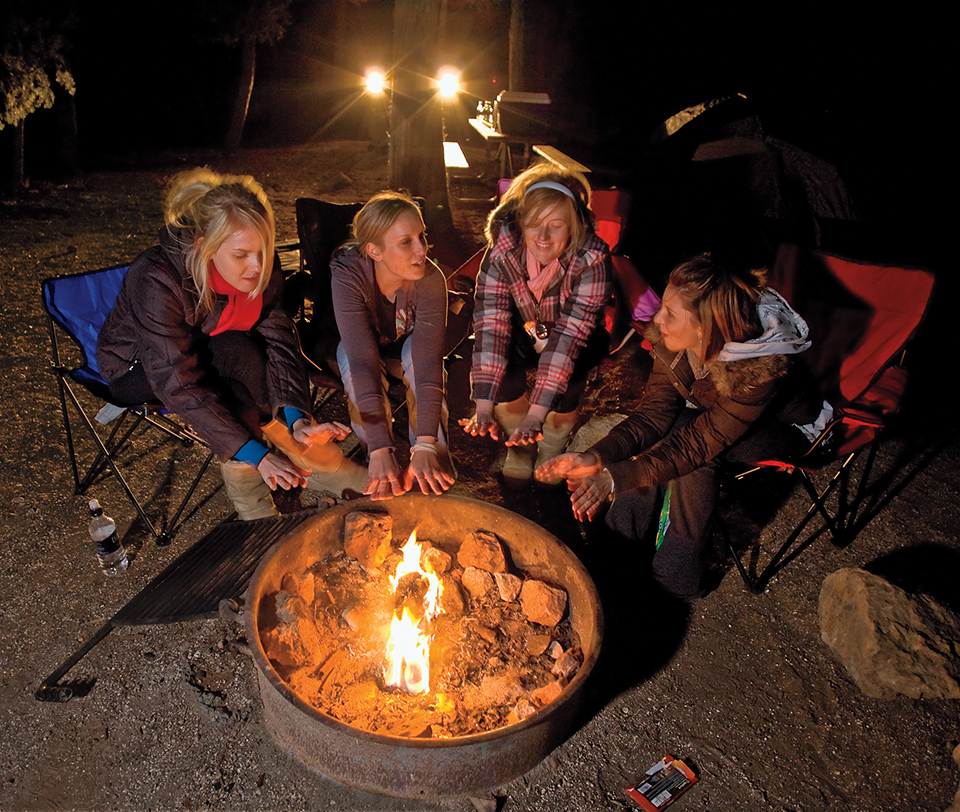
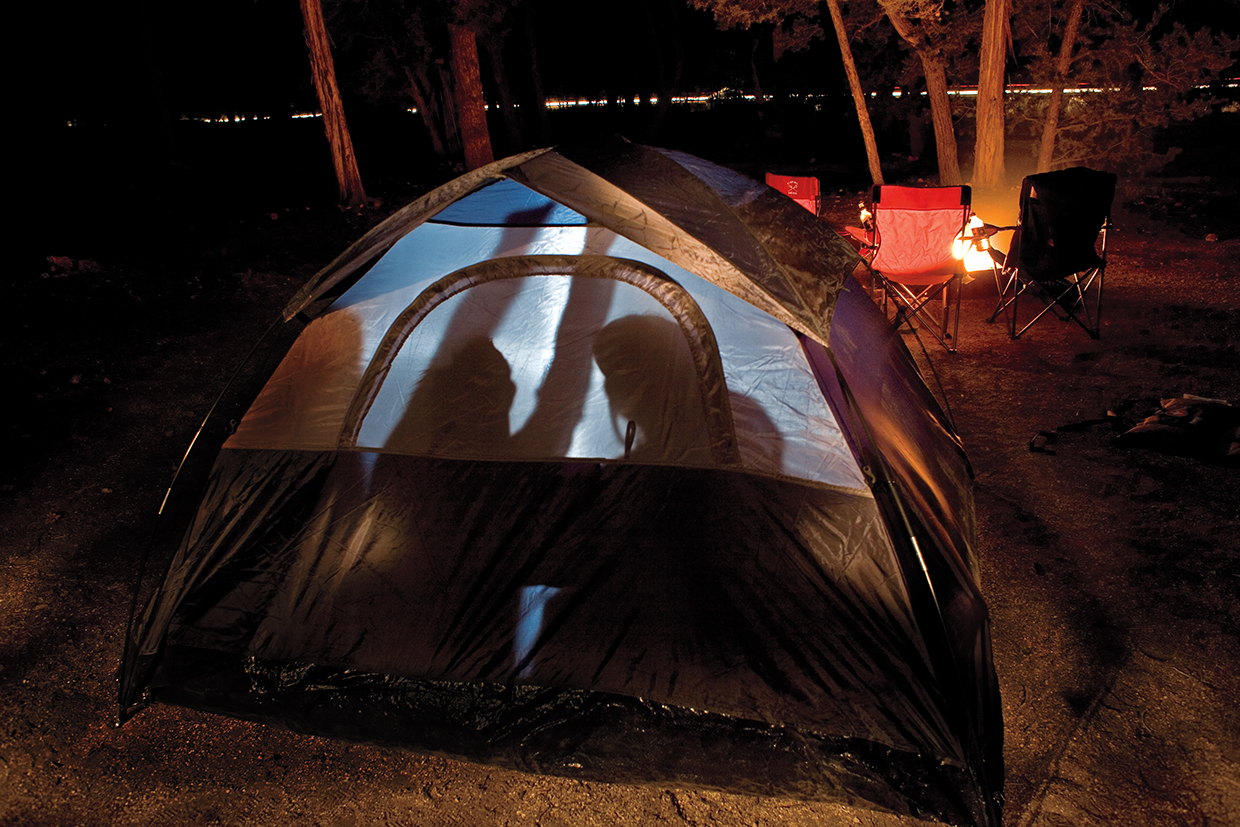
We roll into the campground well after sundown. I set up the tent while Misha and Lexi get a fire started. Lyndsay plugs a pump into the car’s cigarette lighter and blows up the air mattress. Somehow, she manages to fit it into the tent, leaving just enough room for the two outcasts to squeeze in next to it. That is, if we don’t lie on our backs.
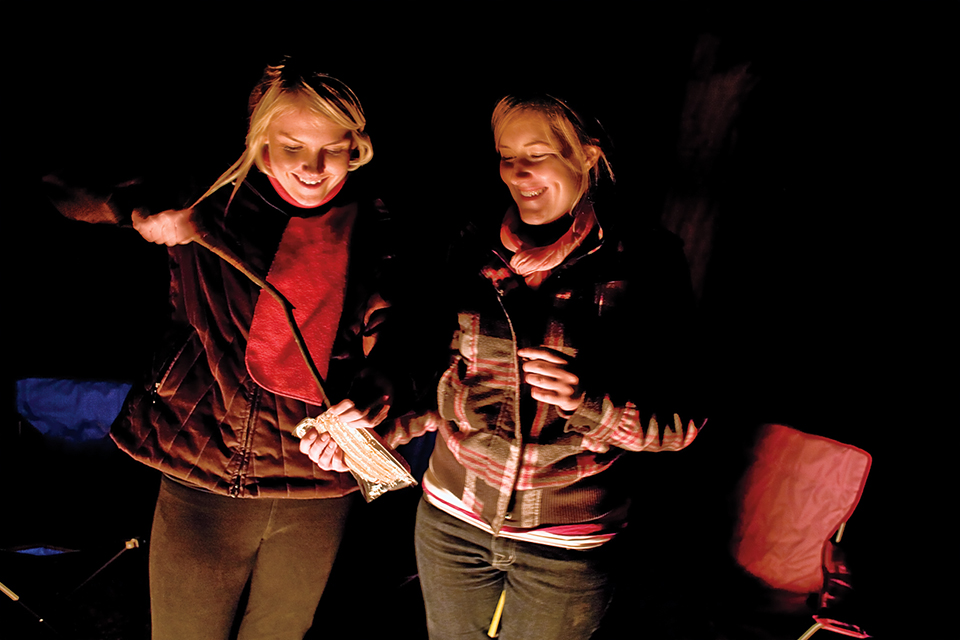
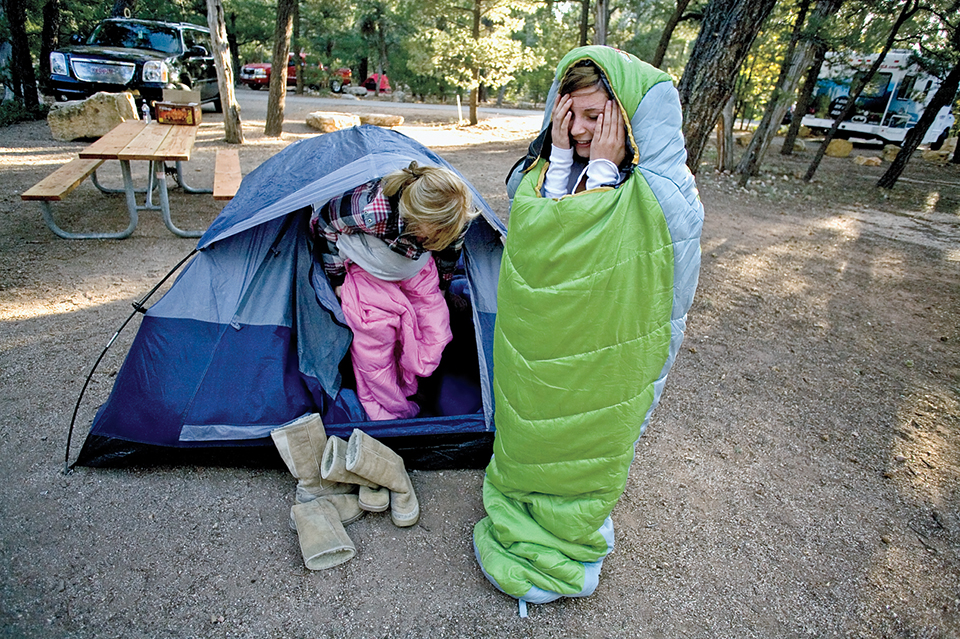
Lexi hunts around our barren campground for a stick to cook some turkey sausage, while I sit back and eat one of my peanut butter and jelly sandwiches. The fire doesn’t exactly keep us warm, and before long, we’re lured into our sleeping bags. One by one, we get ourselves situated, leaving our shoes outside to make more room.
“God, I hope there aren’t bugs in my Uggs!” Lexi shrieks.
Over-concerned, she unzips the tent and pulls our boots inside. As we settle in, each of us is getting nervous about our first night in the woods. The girls, who watch too many Stephen King movies, even start worrying about serial killers and bear attacks. Half-joking, I tell them the only real danger is the wind blowing embers from the campfire toward the tent, setting it on fire. Lexi doesn’t appreciate the humor. “I’m not going to die in this tent!” she screams. A half-hour later, they’re too tired to worry about anything, and we all fall asleep.
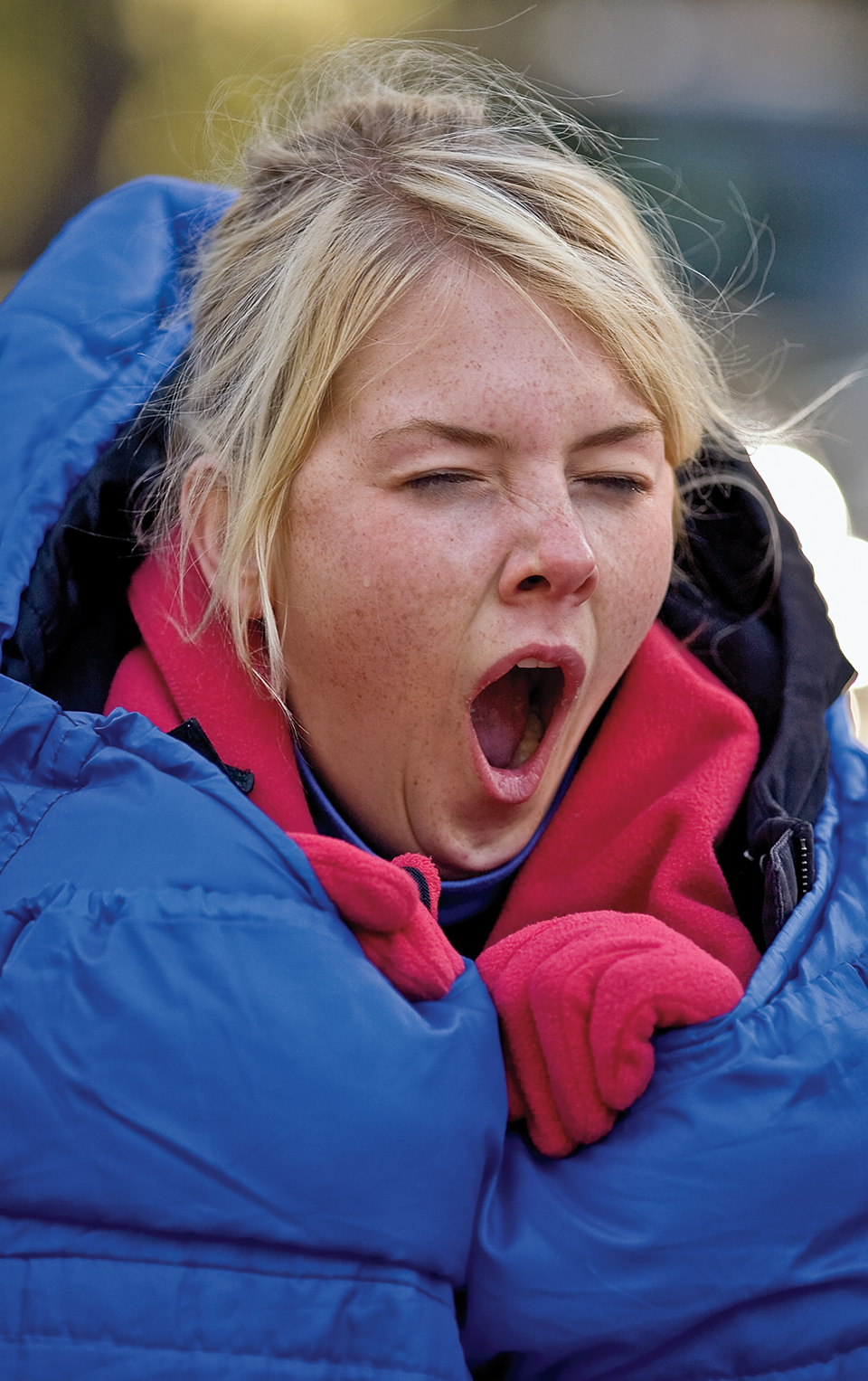
For some reason — a bad omen? — our campfire reignites around dawn. Lyndsay wakes us up, but nobody wants to be the one to put it out. I’m freezing, and the other girls are convinced that a serial killer has come into our campsite to warm himself by the fire. Lexi mumbles something incoherent. Nobody moves, and by the time I’m fully awake an hour later, the fire is out and we haven’t burned down the Kaibab National Forest.
It was a successful night, but it’s still early, and the girls grumble about not remembering the last time they were awake at this hour. No matter, Peter is on his way, and we’re about to erase our scarlet letters by hiking into the world’s Seventh Natural Wonder.
We bunny-hop out of the tent, grab our toothbrushes and makeup (we’re from Scottsdale, after all), and pile into the car, which is dead. Only a tiny clicking sound emerges from underneath the hood of my mother’s SUV. Needless to say, none of us has ever even changed a tire, so I run to Peter’s car as he’s pulling away. He gives me a lift to the home of campground host Kim Ross, who gives us a jump. Meanwhile, my friends — who have been sitting in the car the whole time — rejoice as hot air begins flowing through the vents.
“You’re my hero right now,” I tell Kim.
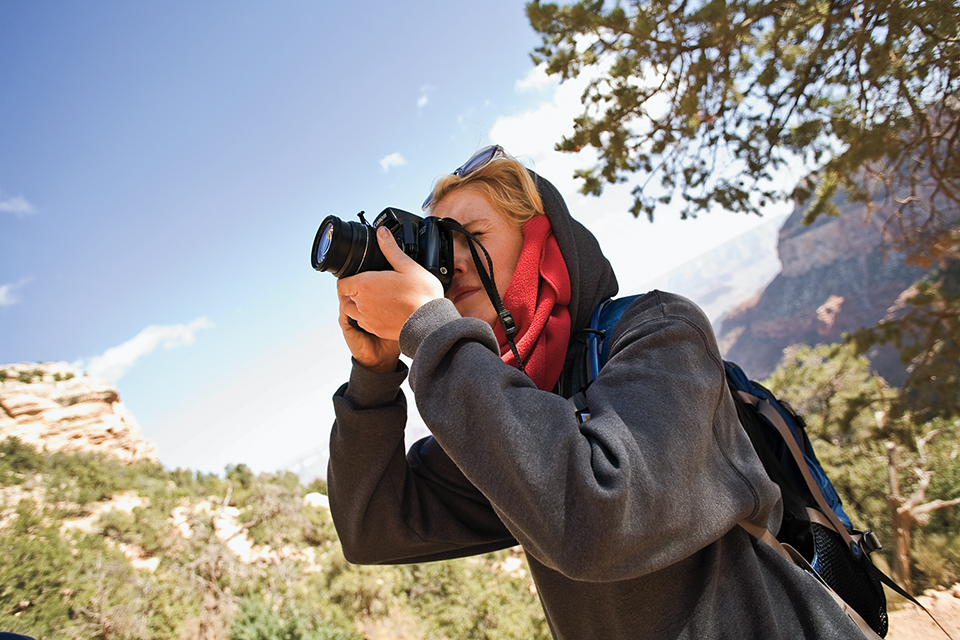
Finally, we make it to the bathroom, get ready and drive to the Bright Angel trailhead. It’s just after 10 a.m., and we walk to the edge of the Canyon together. Earlier, we’d been talking excitedly; now, we’re completely silent. We marvel at the depth, the seemingly infinite chasm before us, the coming challenge and the scope of our own insignificance. In a word, we’re overwhelmed. Peter snaps away as we stand there mesmerized.
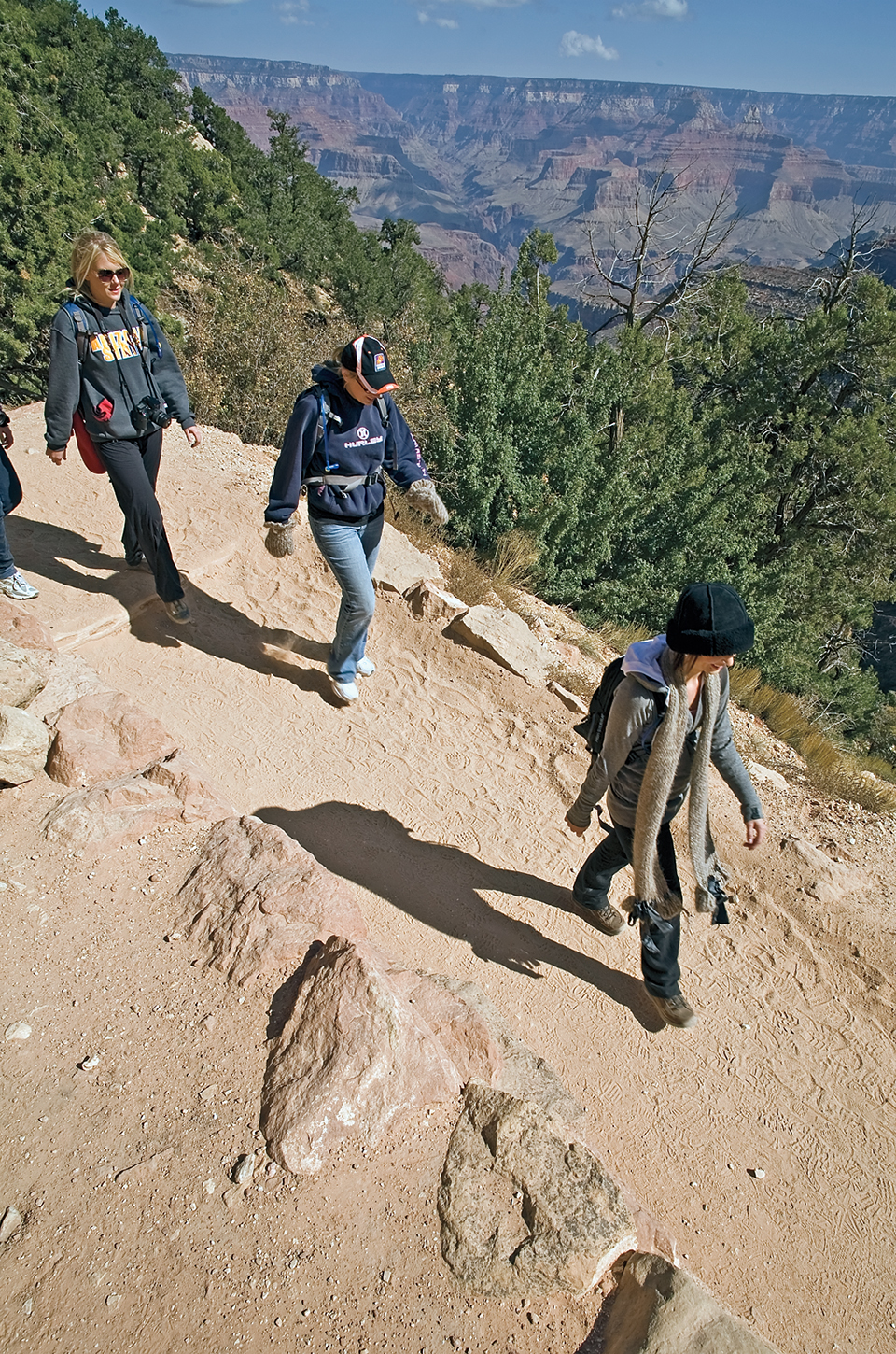
Hiking down to Indian Garden takes longer than we expected, which means there’s no way we’ll make it to the river and back today. We could make a shorter trek out to Plateau Point for our first glimpses of the Colorado River, but we opt for lunch instead. Indian Garden, which is the halfway point to the river, features several picnic tables surrounded by lush vegetation and huge cottonwood trees, signs of life that are barely visible from the rim.
Since the day we planned this trip, everyone told us that going down is deceivingly easy, and they were right. Within a quarter-mile of our hike back out, we start to lose Lyndsay. Misha, Lexi and I wait every so often to make sure she doesn’t fall too far behind. The breaks become less frequent, though, as the wind picks up and the temperature drops.
At the 3-mile rest area, we decide to stop until we see Lyndsay again. While we wait, I read to my friends some of the information that park rangers and volunteers have put on a bulletin board. My favorite is an ominous warning: “If you plan on hiking to the bottom, prepare to suffer the following.” The list includes several extreme consequences, including brain damage. Most of the information pertains to summer hazards.
Finally, we spot Lyndsay’s fiery red hair and pink scarf, stretch, and continue up the trail. The sun is still shining, but a few ominous clouds, armed with what I know must be snow, have begun working their way over the northern part of the Canyon.
As we inch closer to the final mile, we pick a place to sit and wait. Again. After 15 minutes, Lyndsay is still nowhere in sight, and we’re starting to get cold. We talk about leaving and getting out as quickly as possible. We talk about staying and getting colder. And just as Lexi mentions sending down a mule, our redheaded friend reappears.
Each step hurts a little more than the one before, and now it’s my turn to fall behind Misha and Lexi. My frequent pit-stops only exacerbate the fatigue. Still, I force one foot in front of the other until I catch a glimpse of Kolb Studio’s brown exterior. I stop and turn around to face the Canyon. It is grand, that’s for sure. I look down at the tiny green oasis of Indian Garden. I smile. Pride and a sense of accomplishment are a part of it, but mostly it’s the view and how striking the gorge looks to me now.
It’s colorful, full of life; it represents the classic struggle of man versus nature. Despite the 5 million visitors who invade this national park every year, I feel like I’m the only person here; the only person who has ever hiked into the Canyon to learn its secrets and become a part of its mystique.
The sound of fellow tourists speaking foreign languages snaps me back into the real world, and my aching legs somehow feel rejuvenated as I walk up to Lexi and Misha.
The sky isn’t dark yet, but the sun is obscured by light-gray puffs that suggest there isn’t much time left for Lyndsay to finish. Inside Kolb Studio, we thaw out and weigh our options. After about a half-hour, Lexi and I decide to change clothes and move the car a little closer to the trailhead.
Before we finish dressing, we see Lyndsay’s plaid outfit. Whew. We pick up Misha and head to nearby Tusayan for a hot meal. It’s pitch black outside. And cold. Freezing cold.
We pull into the first restaurant we see. The booth is cramped, but it doesn’t matter. We’re warm, and we s-l-o-w-l-y finish our veggie burgers and quesadillas. No one wants to go back outside. Nevertheless, we know we will have to endure another night in the tent.
When we get back to the campground, we decide that it’s too cold to even build a fire, so we pile into the tent. The girls are still nervous about sleeping outside, and again, I’m forced into a corner, while my girlfriends, each of whom is at least 6 inches taller than me, stretch out. Of course, this means that all of our shoes end up at my head, along with other random items that have found their way into the tent: Cheez-Its, bug spray, water bottles.
Several times throughout the night, I wake up to a cuddling Lexi, who wakes up to Lyndsay falling on top of her, who wakes up to Misha inching her off the air mattress. One last snuggle from Lexi ends the night. It’s morning, and both my hair and my blanket are moist.
My first thought is that snow must be melting through the tent’s ceiling and protective fly. Instead, the sides of the tent are melting after having been coated with ice during the night. Despite the polar conditions, we’re all alive. No one has hypothermia.
I stir the girls, who are genuinely surprised that nothing terrible has happened. Shivering, Lyndsay deflates her air mattress and begins systematically loading things into the back of the SUV. Lexi and Misha roll up the sleeping bags, and I take down the tent.
It’s still early when we pull out of the campground and hit the road. Per Peter’s advice, we take U.S. Route 180 into Flagstaff. This, he says, is the scenic route. And it is. Endless forests of evergreens with intermittent clusters of aspens line the road. It’s beautiful.
Despite my pleas to go straight home, the girls want fast food in Flagstaff. We have enough leftovers in the car to feed the Donner party, but my girlfriends need chicken fingers and french fries. I guess they’ve earned them. Two hours later, we’re in Scottsdale. Each girl lumbers painfully out of the car, but with triumphant smiles on their faces. The scarlet letters are gone. We’re now among the natives who have seen the Canyon. We’re no longer embarrassed. And there’s even a sense of pride.
Lexi sums it up best: “We came, we camped, we conquered.”