

On June 23, 1946, Bob James played the role of hero in the nightcap of the Spokane Indians’ doubleheader against the first-place Salem Senators. In the bottom of the ninth, the stocky Arizonan stepped to the plate with the bases loaded, one out and the score tied. He swung at the first pitch he saw, delivering a base hit that scored the winning run.
It would be the last hit of James’ life.
Robert Brice James was born in Phoenix on August 20, 1921. His parents, William and Lela, had moved from Arkansas a few years earlier. William worked as a cotton farmer and cattle rancher while Lela, a former schoolteacher, raised Bob and his two siblings, William Jr. and Eloise. By the mid-1930s, the family had saved enough money to buy a house in Tempe, a city of fewer than 3,000 at the time.
James had blond hair and thick eyebrows perched above blue eyes. He attended Tempe Grammar School and belonged to Boy Scout Troop 79. In the fall of 1936, he enrolled at Tempe Union High School, where he lettered in three sports, sang in the choir, performed in plays and served as class president. The honor-roll student even won a ballroom dancing competition.
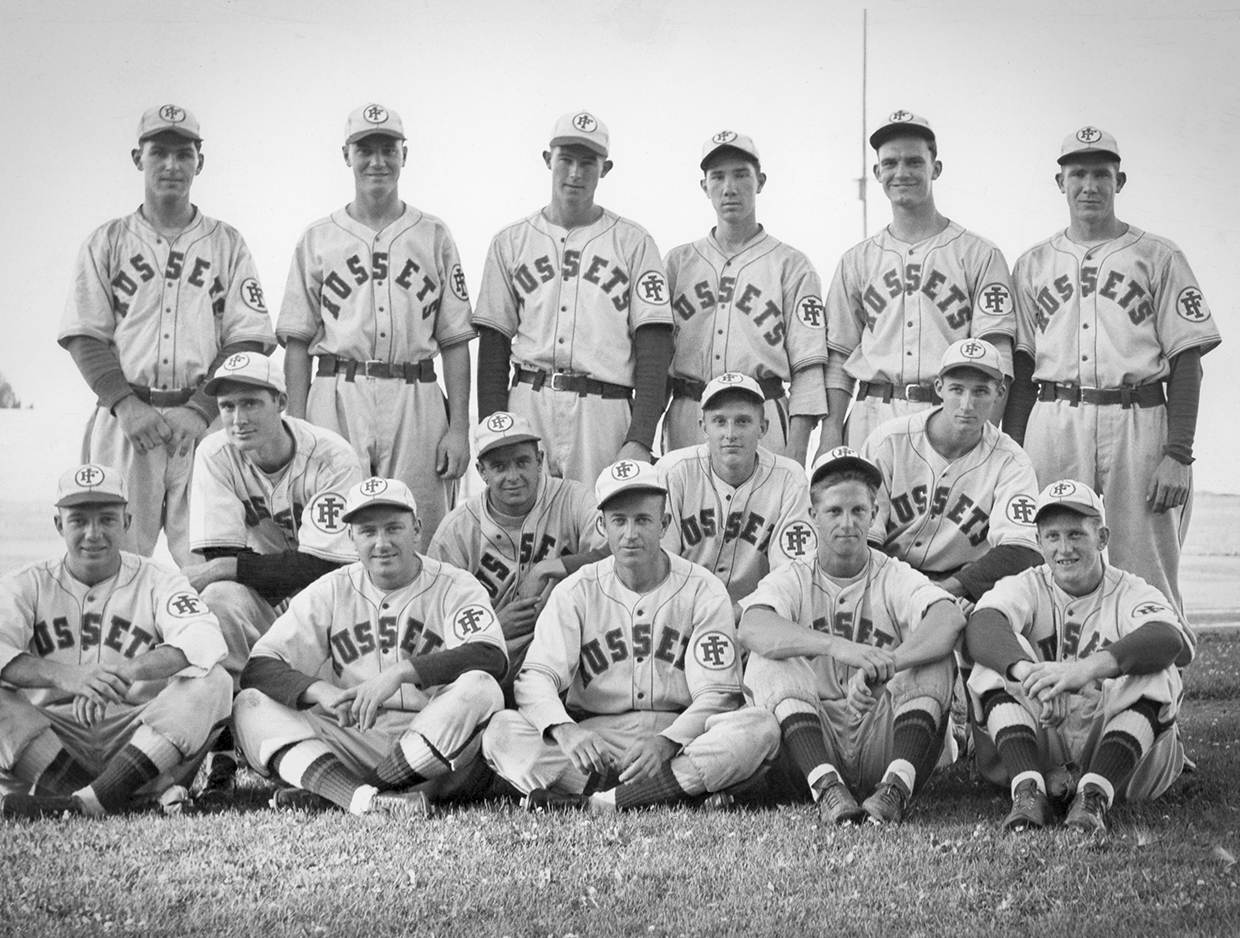
As a pitcher and outfielder for the Tempe Buffaloes, James displayed the tools scouts desire: a strong arm, speed and power. After graduating in the spring of 1940, the southpaw played for the semi-pro Phoenix Thunderbirds. He drew interest from the Cincinnati Reds and Boston Red Sox that summer but turned down scouts’ overtures and enrolled at Santa Clara University. By the following spring, though, the opportunity to play professional baseball proved too enticing. James signed with the mighty New York Yankees, who assigned him to the Idaho Falls Russets, a minor-league affiliate in the Class C Pioneer League.
James paced the Russets in doubles, home runs and slugging percentage while leading the league in outfield assists. His future in baseball appeared bright. But after Japan’s attack on Pearl Harbor and America’s subsequent entry into World War II, everything changed. Over the next four years, most able-bodied men contributed to the war effort. And although Major League Baseball continued at the encouragement of President Franklin D. Roosevelt, most minor leagues ceased operations due to a lack of available players.
James performed agricultural work and attended Arizona State College during the war. In October 1944, he enlisted in the U.S. Navy, from which he received a farm worker’s discharge. Postwar, he joined the legions of ballplayers who rekindled their dreams of playing in the majors.
In 1946, James spent spring training with the Pacific Coast League’s Oakland Oaks under future Yankees manager Casey Stengel. Despite having been out of baseball for four years, he maintained a powerful hitting stroke. His grit and hustle impressed coaches and sportswriters alike. “Bob James is a rough, tough cowpuncher,” the Oakland Tribune reported. “He ran through the fence the other day going after a fly ball but disdained to even rub the bruised spots on his leg. He hits the ball a mile and a half and is learning to field with the best of them.”
When camp broke, the Oaks assigned James to Spokane in the Class B Western International League, where he served as the starting right fielder. After that game-winning hit against Salem, his average stood at .287 and his 41 RBIs ranked second on the team. The 24-year-old had firmly re-established himself as a big-league prospect.
On the unseasonably cool morning of June 24, James and his teammates boarded a coach bus in Spokane and headed west across Washington for their next series, in Bremerton. In the late afternoon, they stopped for a meal at Webster’s Café in Ellensburg. While they ate, a police officer walked in and told James’ roommate, Jack Lohrke, that the team’s owner was trying to reach him — the San Diego Padres, a PCL team at the time, had bought Lohrke’s contract. He shook hands with his teammates and hitchhiked back to Spokane. The rest of the team, meanwhile, continued on their way to Bremerton.
That night, just west of Snoqualmie Pass, an oncoming vehicle crossed the center line, causing the Indians’ bus to swerve. In an instant, the bus broke through a wire guardrail and tumbled 300 feet down a rocky embankment. Nine of the 15 players on board, including James, died from their injuries. To this day, it remains the deadliest accident in the history of American professional sports.
Bob James was buried at Tempe Double Butte Cemetery. His gravestone simply reads, “Beloved Son and Brother.” But there was so much more to his story.