
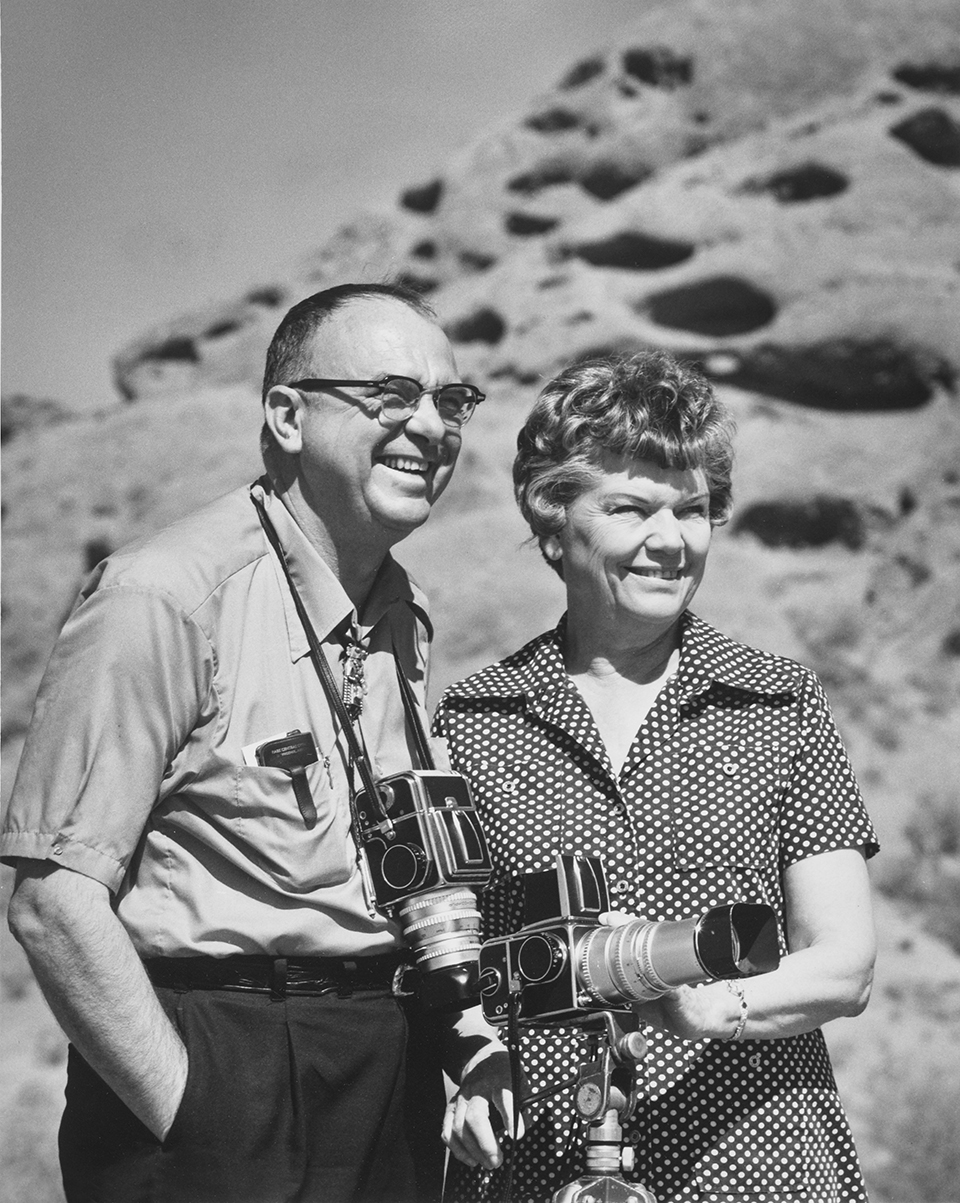
Abercrombie and Fitch, Sears and Roebuck, Mork and Mindy, Ben and Jerry, Simon and Garfunkel … some names are better together. They’re more memorable that way. And over time, it’s hard to imagine one without the other. We’ve had a few: Joyce and Josef Muench, Harry and Ruth Crockett, Herb and Dorothy McLaughlin.
Herb and Dorothy were photographers in the heyday. And they always shared a byline. “The real reason,” Herb said, “is a lot of times, we don’t know who took which photograph. We often hear the shutters on our cameras go off at the same time.”
In the early years, it was just Herb, who made his debut in Arizona Highways in May 1946 with a photograph of Davis Dam. It’s solid, but nothing about it suggests the prolific role he’d play in the history of the magazine. There would be a few more bylines in the coming months. Then, in November 1946, our editor gave him a formal introduction.
“The young man here,” Raymond Carlson wrote — referencing a photograph of Mr. McLaughlin reading a newspaper in a rowboat — “is a photographer by the name of Herb McLaughlin. Don’t let the picture fool you. Herb gets around. He is shown here drifting down the Colorado River north of Marble Canyon after a three-day exploration of the upper river with Art Greene of Marble Canyon and Roman Hubbell of Winslow. We have found that no distance is too great, no obstacle too difficult for Herb to surmount when he is after a picture.
“Herb was born in Chicago in 1918, grew up in Indiana and started professional photography in 1937. He came to Arizona last year, and now wonders why he didn’t come a lot sooner. His work has appeared in newspapers and magazines throughout the country. His photograph, entitled Hot Stuff, of a fireman engulfed in a fiery gasoline explosion, was awarded ‘Best News Photograph’ by Editor and Publisher in 1941. Despite the fact he hasn’t been in Arizona long, Herb has poked his camera in many of the hidden places in the state and is getting the hang of this tricky Arizona sunshine, light and shadow. You may expect to meet him in these pages quite regularly.”
That was an understatement — like saying Hank Aaron would go on to hit a few home runs.
One of Herb’s favorite places to shoot was Monument Valley. His first visit was in the late 1940s with Mr. Carlson and Harry Goulding, the beloved owner of Goulding’s Monument Valley Trading Post and Lodge. As the story goes, the rain was pouring down, like tears from the eyes of Juliet, and it was getting dark. There was no way of knowing whether the next puddle in the road would be 2 inches deep or 2 feet deep.
“While we were worrying about that,” Herb said, “we hit a wash that had literally washed away the road. The front end of the car was hanging over an edge, about 3 feet in the air, but the back end was still on solid ground. We finally backed out of that and drove around the washout.”
The next puddle, however, would be their demise. Like a Ponzi scheme, it sucked them in and bogged them down. “Fortunately,” Herb said, “Harry Goulding was expecting us. When we didn’t show up at his place, he came looking for us. We went back the next day and got the car.”
In 1947, Herb purchased McCulloch Brothers Inc., which had been established in Phoenix in 1912, from Hobart Pribbenow, who had purchased the studio from William Patrick McCulloch in 1946. As part of this purchase, Herb also acquired the McCulloch brothers’ extensive negatives collection. Three years later, on June 3, 1950, the entrepreneur married his second wife, Dorothy, who many knew as “Dot.” “I was impressed that I had seen Herb’s name in Arizona Highways,” she said, “so I knew he was good at what he did.”
By that time, Mr. Carlson and the new groom had become good friends. “Raymond even hired mariachis to sing under our window on our wedding night,” Dorothy said.
Not long after the honeymoon, Dorothy went to work for McLaughlin & Co. At first, she worked in the front office, but she quickly transitioned to caretaker of the firm’s expanding archive. She began her photography career by making a photograph for a public service announcement — Herb wasn’t available — and went on to become an accomplished portrait photographer, specializing in children.
“After so many years of working and traveling together,” Herb said, “we have developed an uncanny communication with each other. We don’t always completely understand each other, but about 99 percent of the time, we do.”
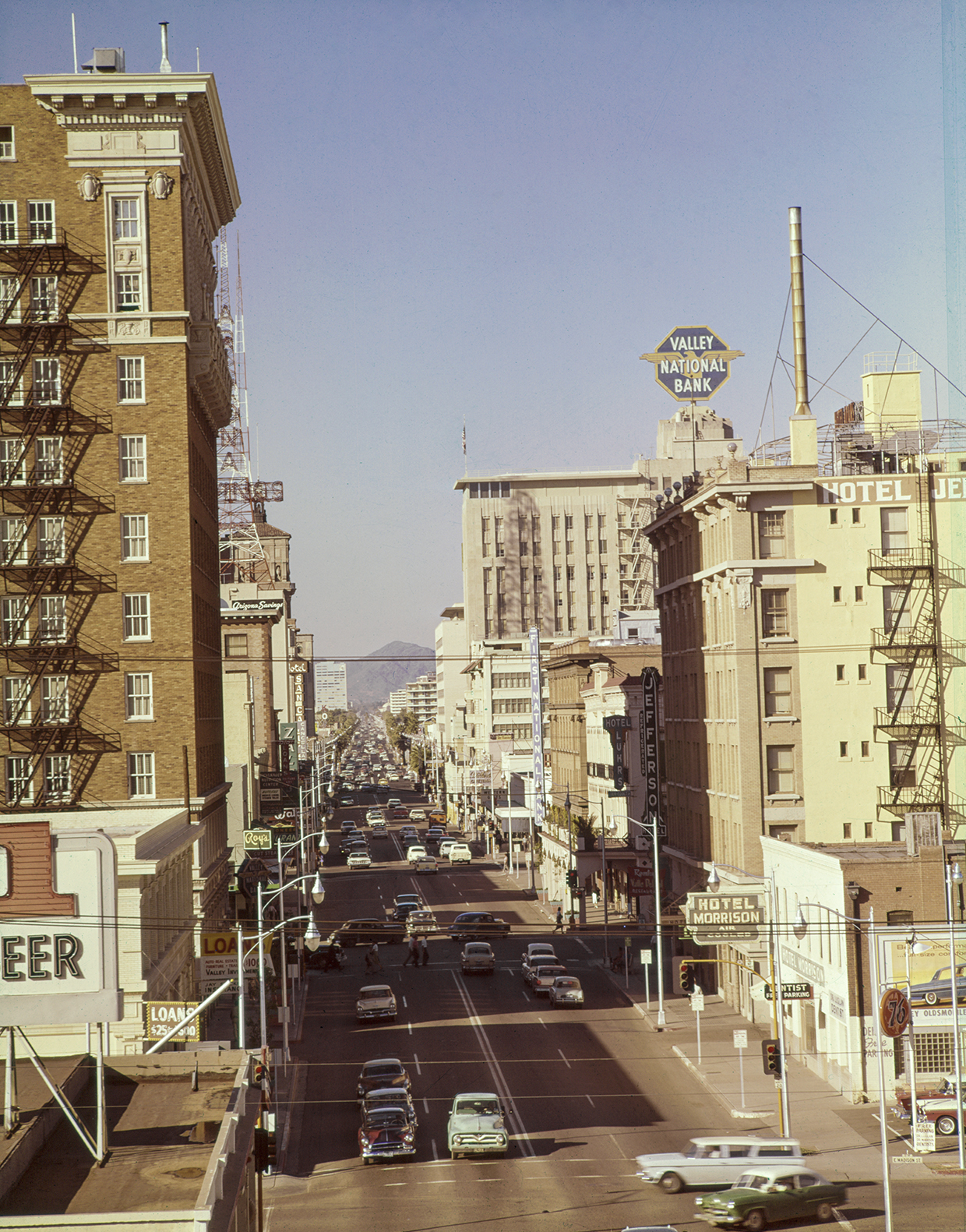
Although their commercial and photojournalism business was extremely successful, they were always thinking about the next thing. So, in the early 1970s, they published two books: Phoenix 1870-1970 in Photographs and Arizona the Beautiful. The second book was written by Don Dedera, a longtime columnist for The Arizona Republic who would later become the 10th editor of Arizona Highways.
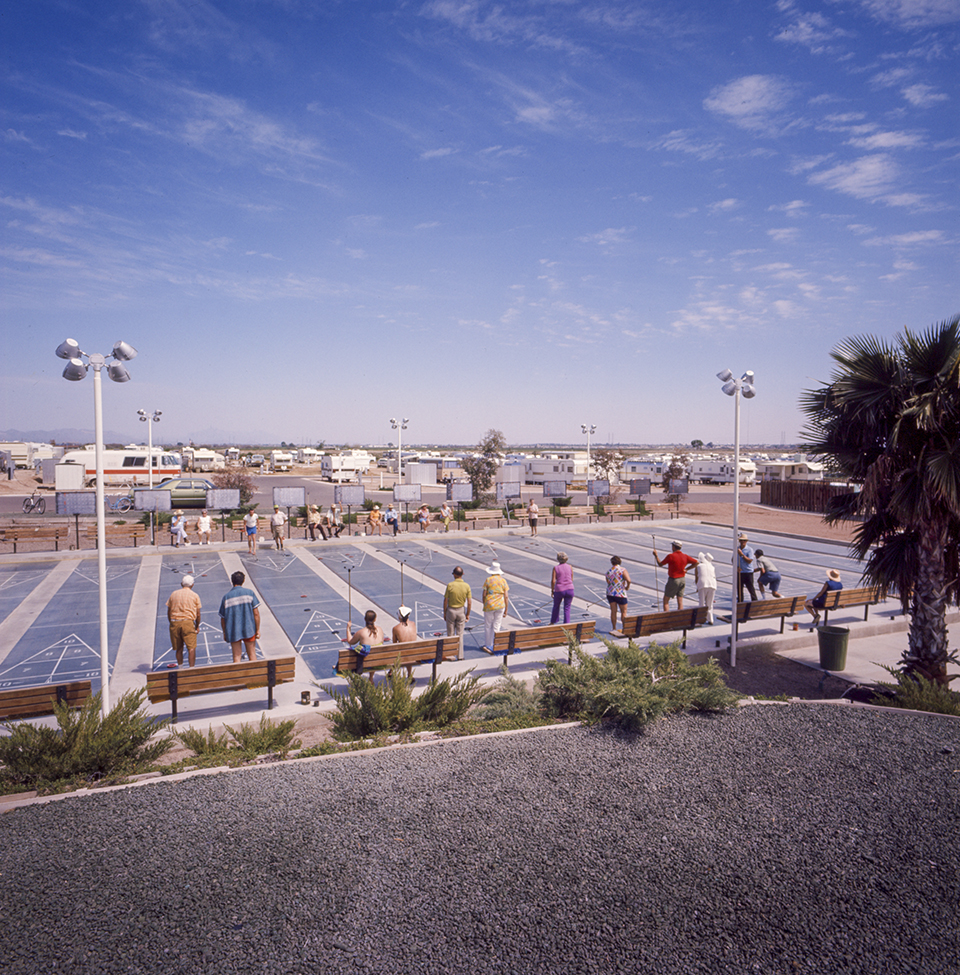
Eventually, the McLaughlins’ library grew to more than 400,000 black and white negatives. Many of those wonderful documentary images, which now are preserved at Arizona State University, found their way onto the pages of our magazine.
One of the couple’s own photos made the cover in November 1971. It’s a shot of the Grand Canyon, looking north from Hopi Point on the South Rim. The image is expectedly nice, but the issue is most notable for having Raymond Carlson’s final byline. On page 15, he wrote a review of Herb and Dorothy’s first book.
“I have known the McLaughlins for two decades,” he wrote. “Herb since his arrival from Indiana, and Dorothy fresh from her turkey queen days in Utah. They’ve both been involved in photography in a rare 24-hours-a-day, 365-days-a-year, mutually compatible relationship. They work at it and live with it. Their love for Phoenix was a love-at-first-sight affair for each of them, and it happened at a time when Phoenix was new and young and growing into the beautiful lady we all love today.”
“Arizona Highways was our showpiece,” Dorothy said. “It made us recognized nationally.”
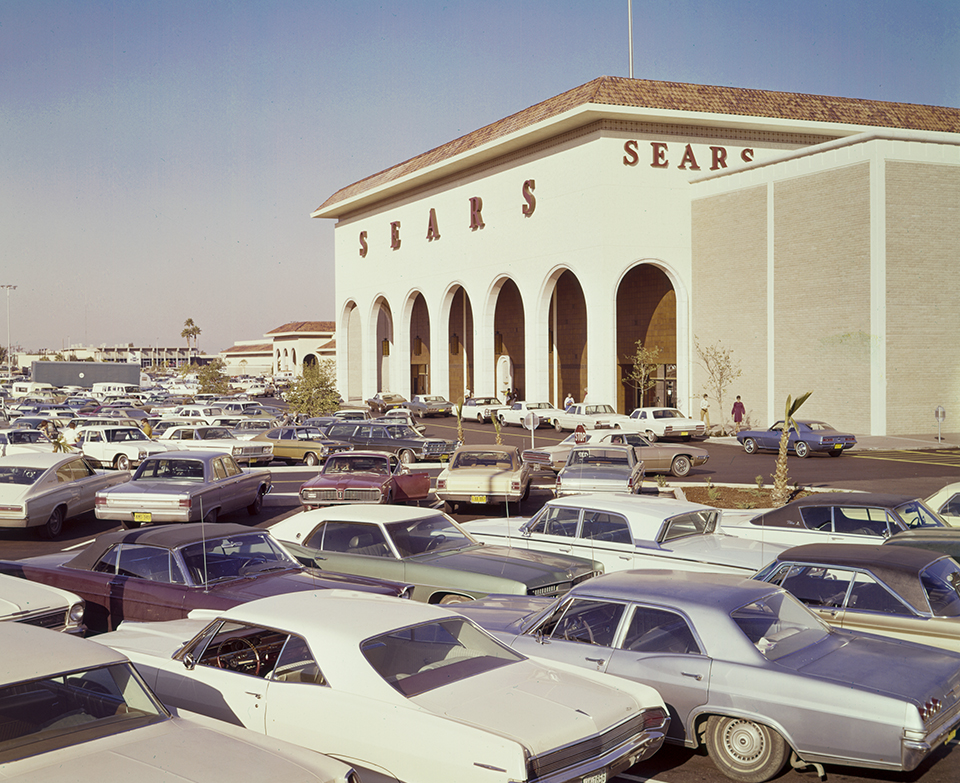
Cars fill the Sears parking lot at Scottsdale’s Los Arcos Mall, which opened in 1969 on the southeast corner of Scottsdale and McDowell roads. The mall closed in 1999 and has since been redeveloped as SkySong, an Arizona State University mixed-use project.
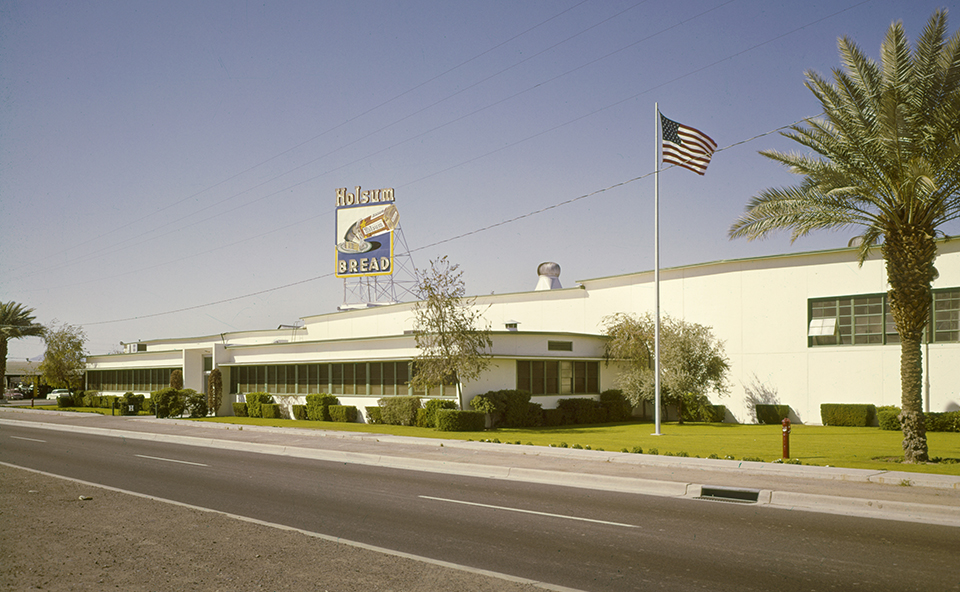
One of the oldest bakeries in Phoenix was Holsum Bakery, which was established as Phoenix Bakery in 1881 and family owned until 2008. It moved to this location, at 2322 W. Lincoln Street, in 1948; its parent company shut it down in 2022, citing the cost of updating bread-making equipment.
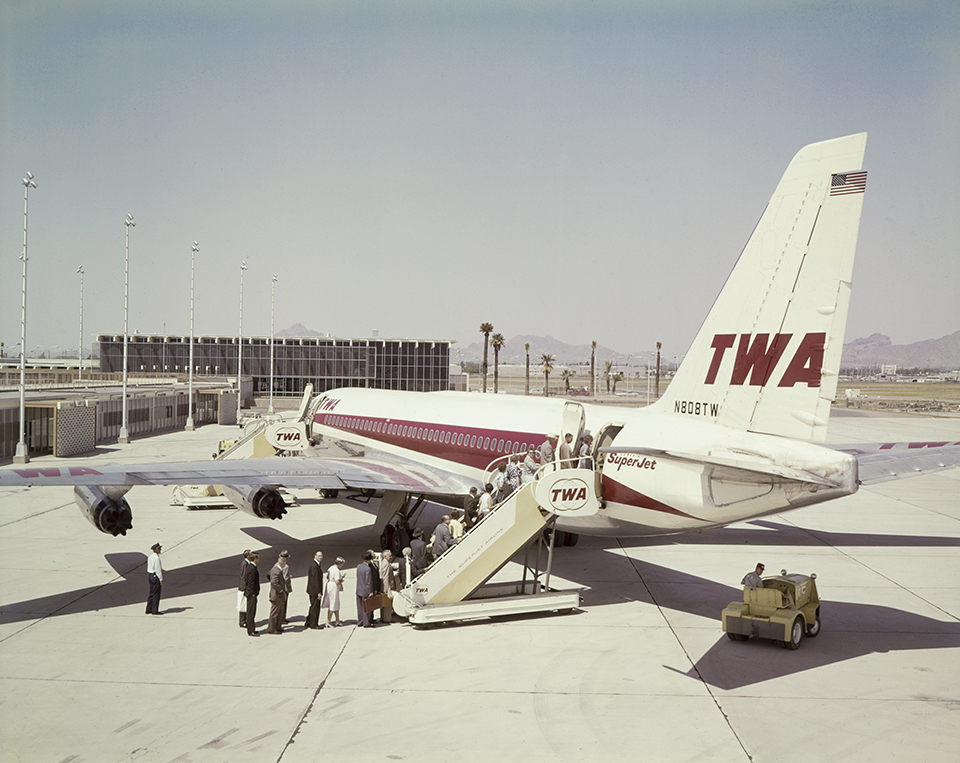
Travelers board a TWA Convair 880 at Sky Harbor Municipal Airport (now Phoenix Sky Harbor International Airport). In the background is the airport’s Terminal 2, which opened in 1962; the same year, Sky Harbor handled more than 1 million passengers for the first time.
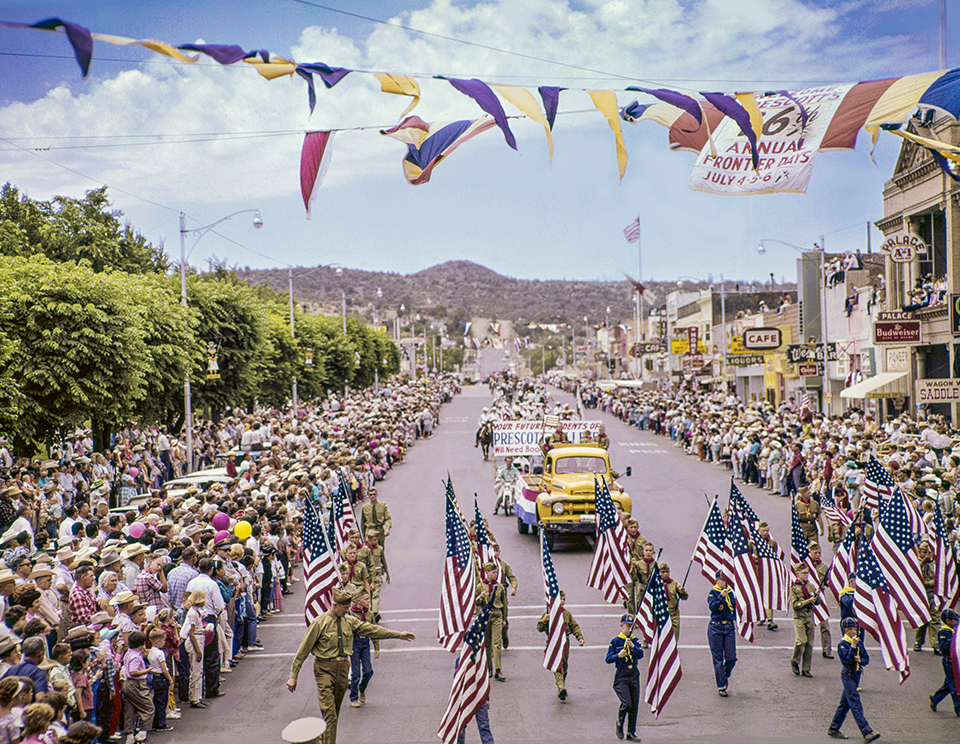
Prescott’s Fourth of July celebrations have always been among the state’s most vibrant, and the 1963 edition was no exception. Here, residents watch the Frontier Days rodeo parade down Montezuma Street; Whiskey Row, including the historic Palace Restaurant and Saloon, is on the right.
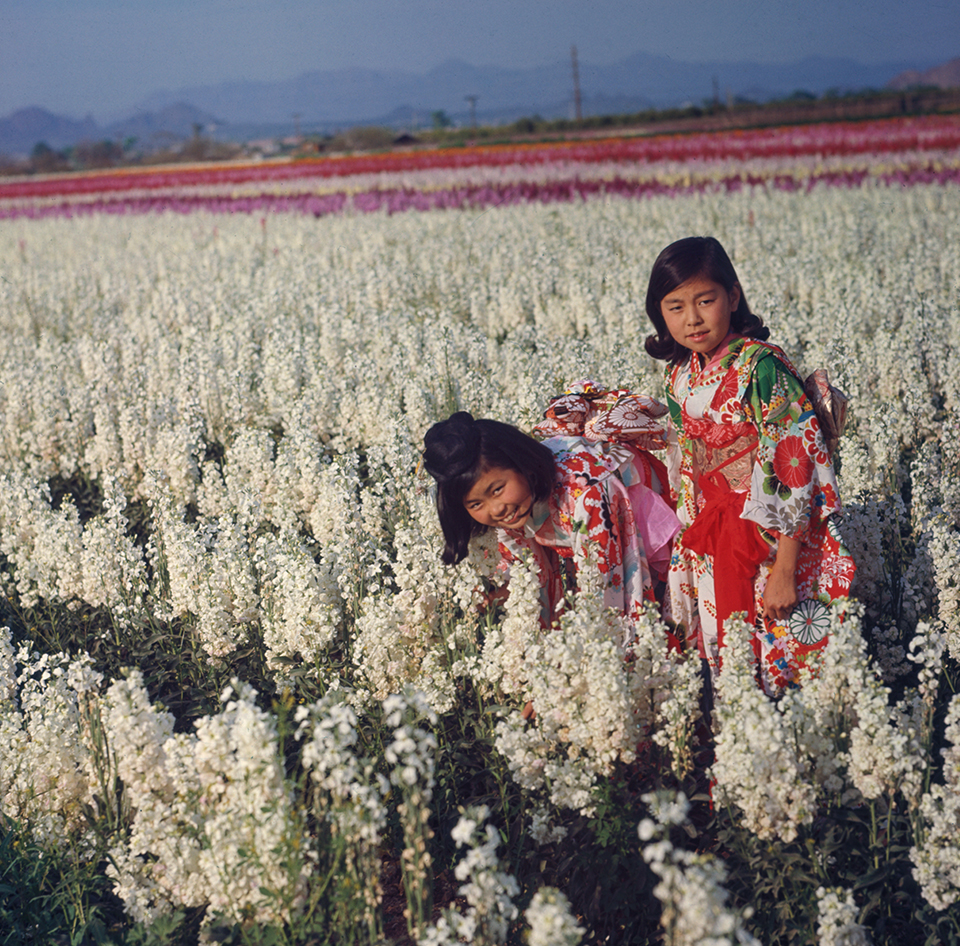
Along with wider shots, the McLaughlins excelled at making intimate portraits of Arizona’s residents. This one shows two girls at one of the many Japanese flower gardens that once operated at the base of South Mountain in Phoenix.
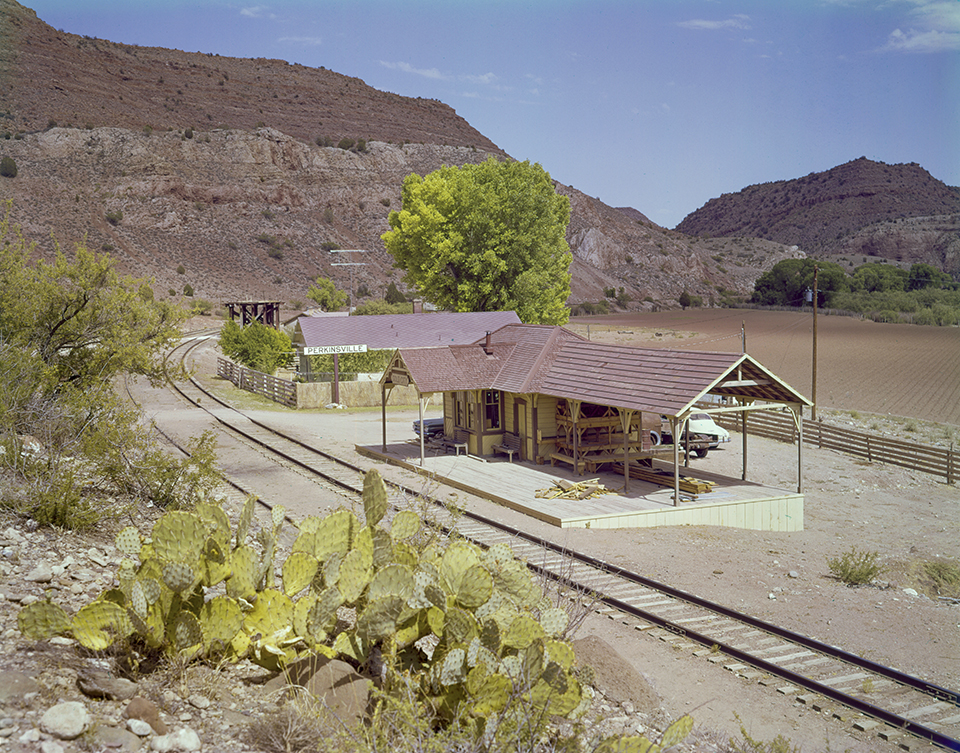
Tracks run past a modest train station in Perkinsville, a small community along the Verde River. Today, this station is abandoned but still standing, and Perkinsville serves as the turnaround point for the scenic Verde Canyon Railroad, headquartered in Clarkdale to the southeast.
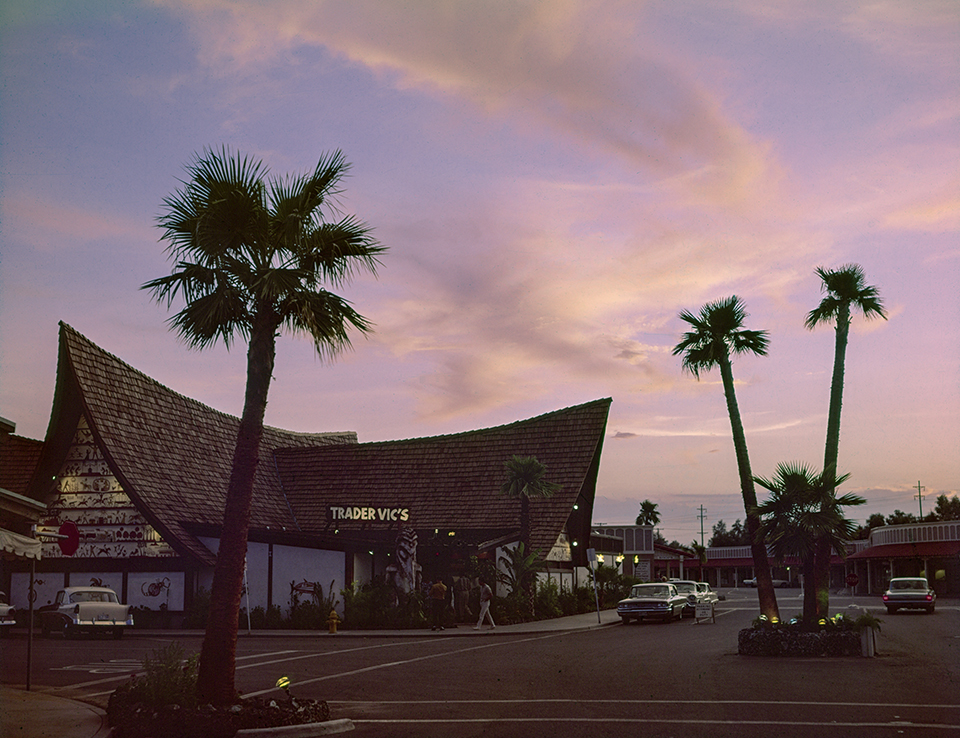
Palm trees mark a sunset view of Trader Vic’s, a Polynesian-themed restaurant on Fifth Avenue in Old Town Scottsdale. The restaurant opened in 1962 and closed in 1990; Citizen Public House now occupies this location.
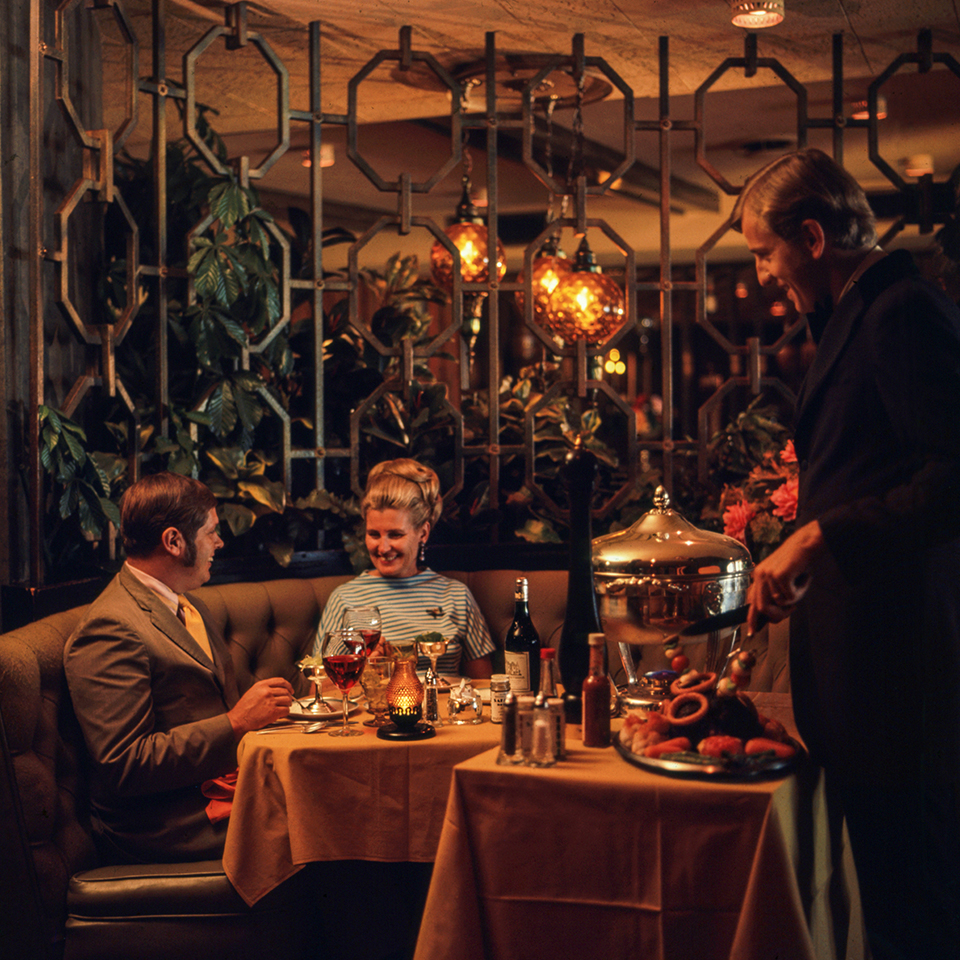
The McLaughlins’ commercial work included this promotional shot for Paul Shank’s, the restaurant at the Safari Hotel in Scottsdale. Designed by prolific architect Al Beadle, the Safari, near Camelback and Scottsdale roads, operated from 1956 to 1998.